

Posted by Spycor LLC on Feb 11th 2025
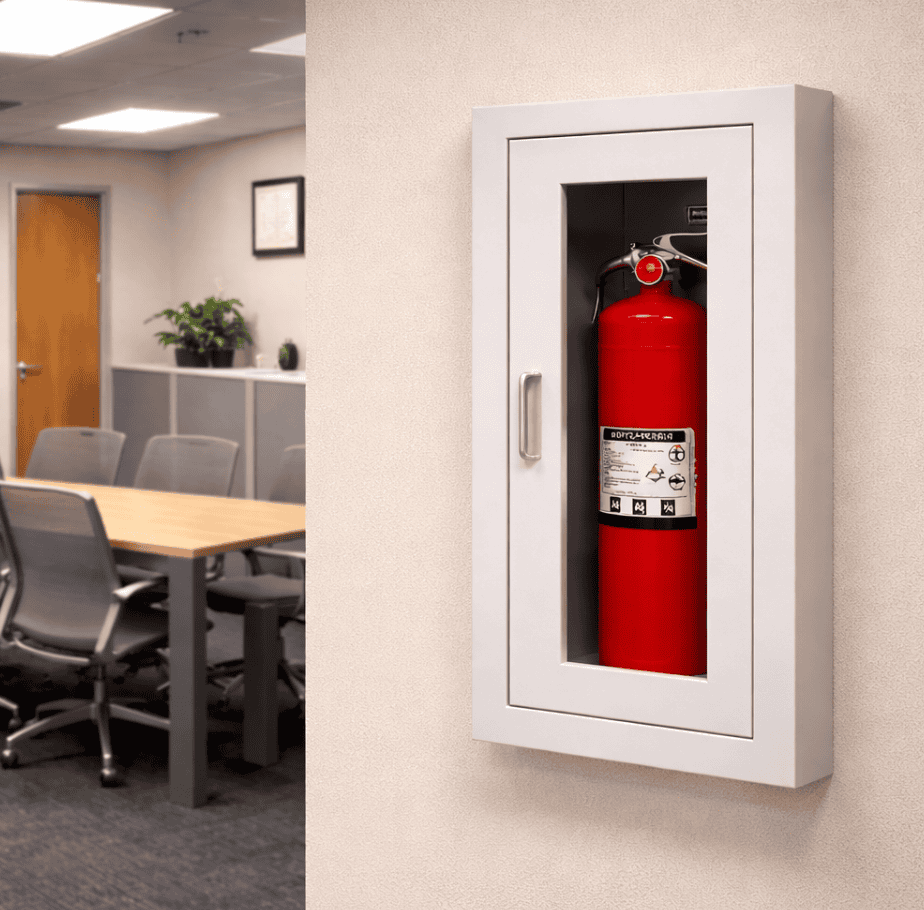
When it comes to commercial construction, a fire extinguisher cabinet is rarely "just a box." For a General Contractor or Facility Manager, the wrong choice can lead to failed inspections, ADA compliance lawsuits, or expensive wall retrofits.
Whether you are finishing a new medical suite or upgrading a warehouse, selecting the right cabinet depends on wall depth, fire ratings, and local codes. This guide breaks down how to choose the best cabinet for your project using the industry-leading Larsen’s lines available at Spycor Environmental.
1. Mounting Styles: Matching Your Wall Depth
The most common mistake in cabinet selection is ignoring the "Rough Opening" (RO) dimensions. You must match your cabinet to your wall's stud depth.
-
Fully Recessed Cabinets: These provide a completely flush look, ideal for clean, modern architectural designs. However, they require a deep wall cavity (usually 6" to 8").
-
Semi-Recessed Cabinets (The Contractor’s Favorite): These are the "problem solvers." If you are working with standard 4" studs, a semi-recessed cabinet allows the tub to sit in the wall while the trim sticks out slightly.
-
Surface Mount: Best for masonry walls or retrofits where you cannot cut into the wall.
Pro Tip: In narrow hallways, ensure your semi-recessed or surface-mount cabinet does not protrude more than 4 inches from the wall to remain ADA Compliant.
2. Fire-Rated vs. Non-Fire-Rated
If your blueprints specify a fire-rated wall (common in stairwells, elevator lobbies, and exit corridors), you cannot install a standard cabinet. Doing so creates a "hole" in the safety assembly, compromising the integrity of the wall’s fire barrier and potentially allowing smoke and flames to spread between compartments. To pass a rigorous Fire Marshal inspection, you must ensure that any penetration in a rated wall is protected by a product tested to the same standard as the wall itself.
You must specify a Fire-Rated Fire Extinguisher Cabinet (often designated as "FX" in Larsen’s models or "FS" in other series). These specialized units are engineered with a double-walled "tub" and are lined with high-temperature, fire-resistant insulation designed to maintain the wall's 1-hour or 2-hour safety rating. Choosing a fire-rated model not only ensures life safety but also prevents costly project delays and the need for expensive wall repairs after a failed inspection.
3. Choosing the Right Material for the Environment
The finish of your fire extinguisher cabinet isn't just an aesthetic choice—it’s a critical factor in the product's lifecycle and maintenance costs. Selecting a material that isn't suited for its environment can lead to premature rust, denting, or peeling finishes.
-
Painted Steel: This is the industry’s cost-effective standard, perfect for temperature-controlled environments like schools, general office spaces, and retail centers. These cabinets are typically finished with a durable, electrostatically applied high-grade powder coat—usually in white or "Signal Red"—to provide a clean look that resists daily wear and tear.
-
Aluminum: Aluminum cabinets are the preferred choice when weight and moisture resistance are primary concerns.
Because aluminum is naturally corrosion-resistant, these units excel in high-humidity areas or coastal regions. From a design perspective, the "Clear Anodized" finish offers a sleek, modern architectural look that complements high-end office interiors and contemporary building lobbies without the risk of chipping. -
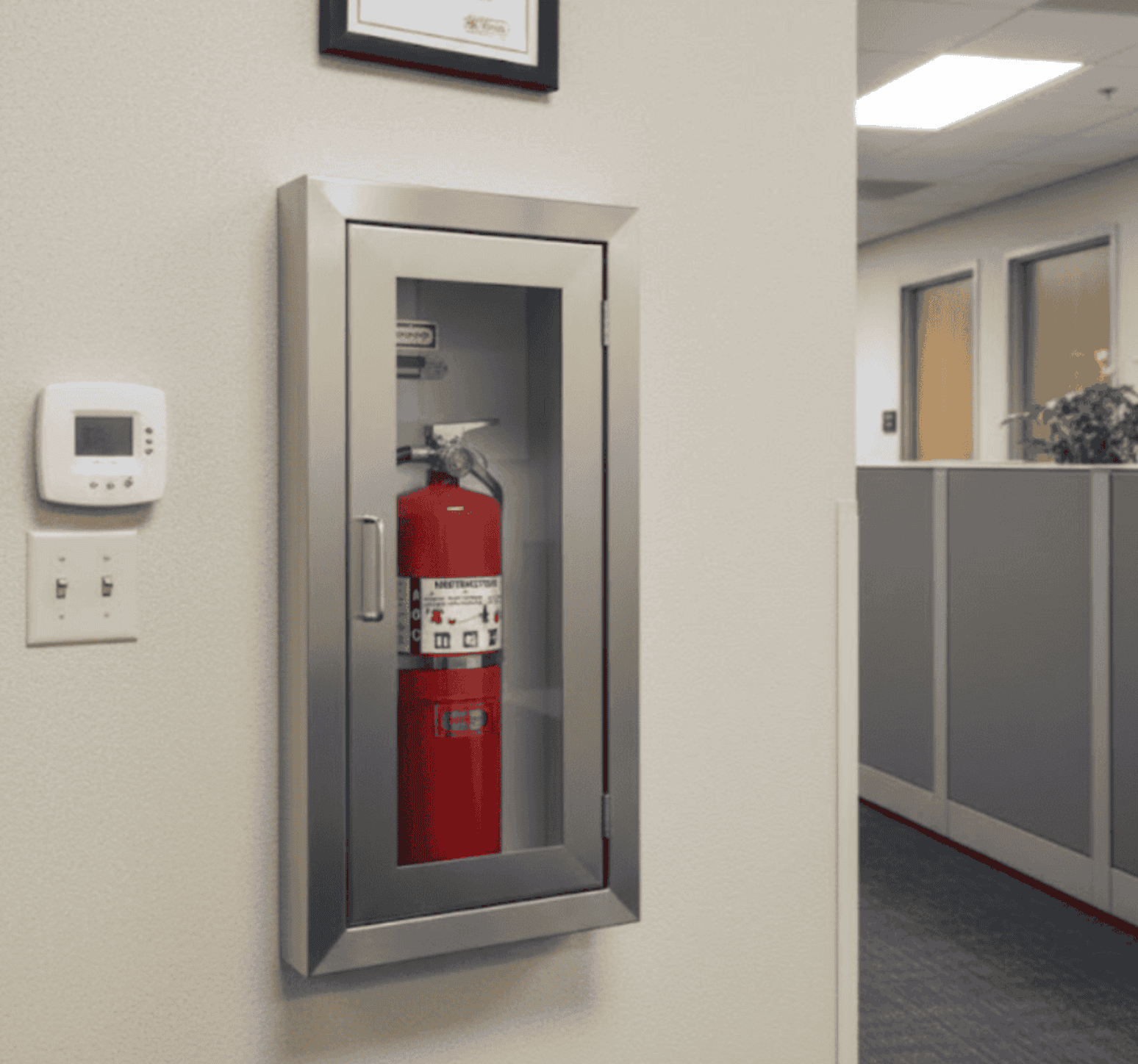
Stainless Steel: This is the gold standard for high-traffic, "heavy-duty," or sterile environments such as hospitals, laboratories, and industrial food processing plants. Grade 304 stainless steel is designed to withstand frequent saturation with heavy cleaning chemicals and medical-grade disinfectants.
Beyond its superior hygiene profile, stainless steel provides the highest level of impact resistance and will not rust, even in the harshest interior environments.
4. Why Spec Larsen’s Architectural Series?
At Spycor.com, we carry the Larsen’s Architectural Series because it is the most specified brand by US architects. Their variety of door styles—such as the Vertical Duo (glass window) or the Solid Door (for high-security areas)—allows you to match the aesthetic of any commercial building while maintaining rugged durability.
Conclusion: Get Your Project to the Finish Line
Don't let a "simple" fire cabinet delay your Certificate of Occupancy. By verifying your wall depth and fire-rating requirements now, you ensure a smooth installation later.
Ready to order for your next project?
Shop our full selection of Fire Extinguisher Cabinets here or contact us for bulk project quotes.
Frequently Asked Questions (FAQ)
1. What is the standard mounting height for a fire extinguisher cabinet?
According to NFPA 10, extinguishers weighing less than 40 lbs must be installed so the top of the extinguisher is not more than 5 feet (60 inches) above the floor. For ADA compliance, the handle is often placed lower to ensure reachability from a wheelchair.
2. Does a fire extinguisher cabinet have to be red?
No. While red is traditional for visibility, most modern commercial buildings use white, stainless steel, or aluminum finishes to blend with the interior design. Compliance is usually met through proper signage above the cabinet.
3. What is the difference between a "Bubble" door and a flat door?
A Bubble door (like the Larsen's Cameo Series) allows for 180-degree visibility of the extinguisher and can often house a larger extinguisher in a shallower wall than a flat-door cabinet could.
4. Can I install a fire extinguisher cabinet myself?
While possible, commercial installations should be done by a professional to ensure the Rough Opening is framed correctly and that the unit meets local fire marshal and ADA protrusion codes.
5. How do I know if I need a fire-rated cabinet?
Check your architectural plans. If the wall is a "rated" assembly (typical in exit corridors or between separate building occupancies), you must use a fire-rated cabinet to maintain the partition's integrity.