

Posted by Spycor LLC on Dec 19th 2025
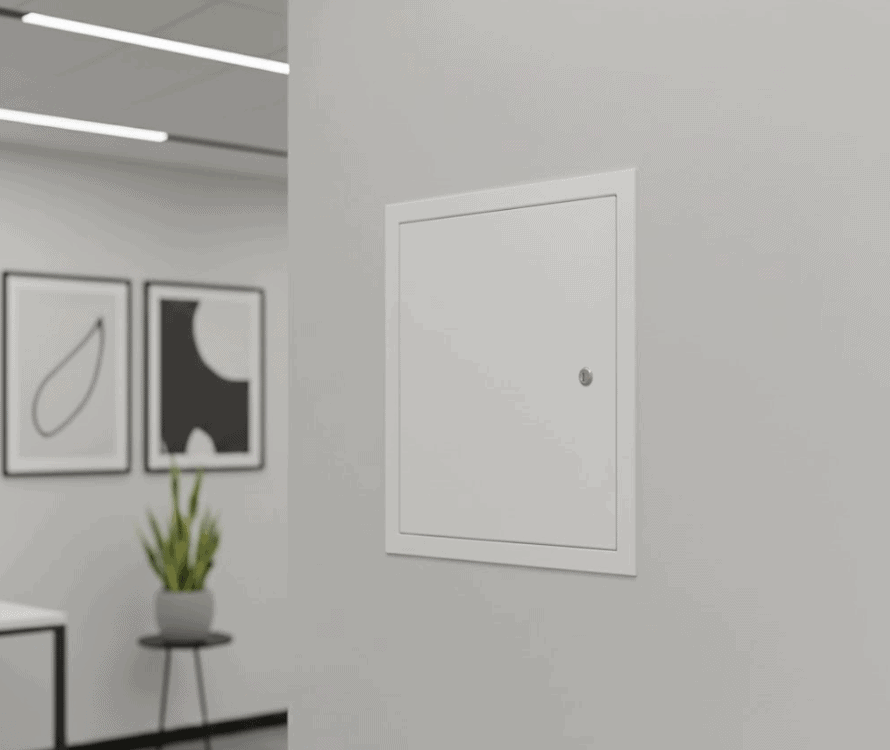
Choosing the right fire-rated access door is a critical decision for maintaining both the safety and aesthetic integrity of a building. For architects, contractors, and facility managers, the challenge often lies in finding a solution that meets stringent fire safety codes and NFPA standards while disappearing into the design of high-end drywall finishes. These specialized panels provide a vital entry point to hidden electrical, plumbing, and HVAC systems without creating an eyesore in meticulously designed spaces.
In modern commercial and residential construction, fire-rated access doors for concealed drywall finishes are the preferred choice for those who refuse to compromise on either protection or style. Beyond their sleek appearance, these doors are engineered to act as a defensive barrier, compartmentalizing heat and smoke to prevent the spread of fire through wall and ceiling breaches. By utilizing a mud-in drywall flange, these doors allow for a flush installation that can be textured and painted to match the surrounding surface perfectly. Investing in a high-quality, UL-certified fire door ensures that your project remains code-compliant while achieving the seamless, "hidden" look that high-end interiors demand.
Why Fire-Rated Access Doors Are Non-
Negotiable
Fire-rated access doors serve a dual purpose: they provide necessary entry to internal systems—such as HVAC, electrical, and plumbing—while acting as a robust barrier against the spread of fire and smoke. These doors are tested and certified to maintain the fire-resistance rating of the wall or ceiling in which they are installed.
When working with drywall, the goal is often a "stealth" installation. Traditional access panels can disrupt the visual flow of a wall with bulky frames and exposed flanges. However, specialized fire-rated doors designed for concealed finishes utilize a drywall bead flange. This allows the frame to be mudded and taped directly into the wall, leaving only the door panel visible (and often paintable) for a seamless look.
Top Rated: The Best Fire-Rated Access
Doors for Concealed Finishes
When selecting an access door, performance and certification are paramount. Below are the industry-leading models available at Spycor.com, specifically engineered for concealed drywall applications.
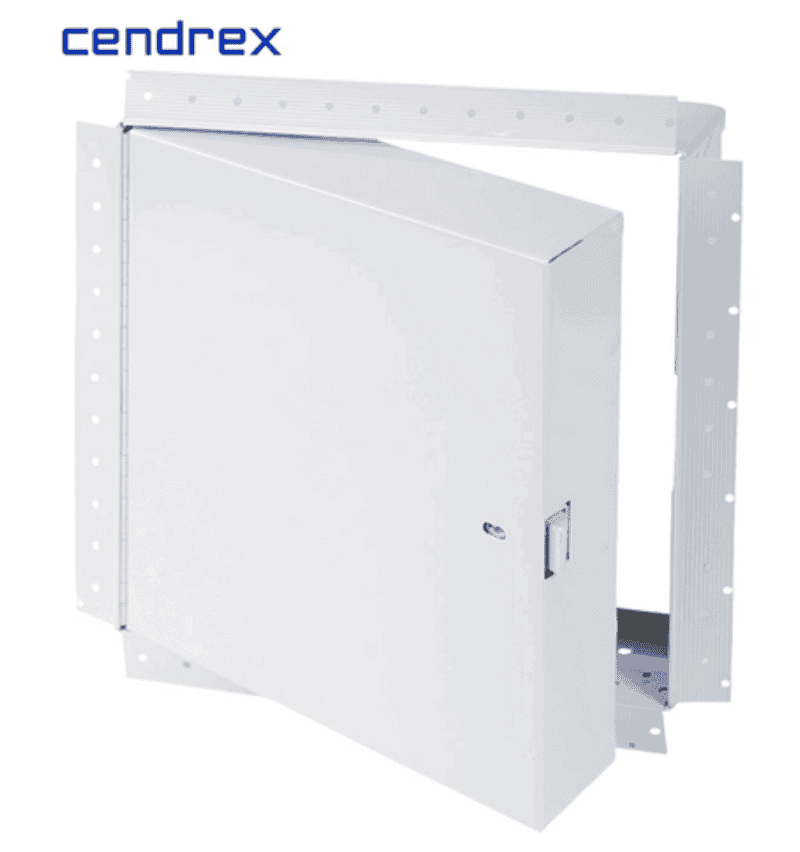
1. Cendrex PFI-GYP: The Gold Standard for Drywall
The Cendrex PFI-GYP is widely regarded as one of the best fire-rated insulated access doors for walls and ceilings. Its standout feature is the 22-gauge galvanized steel drywall bead flange.
-
Invisible Integration: Once the drywall compound is applied over the flange, the frame is completely hidden.
-
Superior Protection: It is insulated with 2" thick fire-rated mineral wool, providing a 3-hour fire rating for vertical wall assemblies and up to 3 hours for non-combustible horizontal ceiling assemblies.
-
Functionality: It features a self-latching tool-key operated slam latch and a ring-operated slam latch, ensuring it stays secure and compliant without manual intervention.
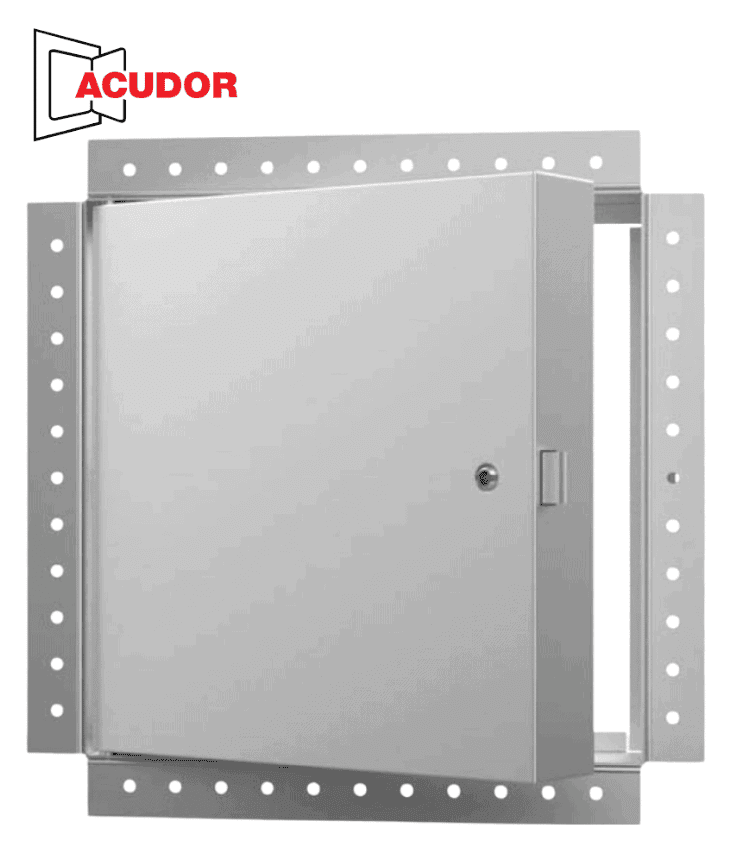
2. Acudor FW-5050-DW: Versatility and Safety
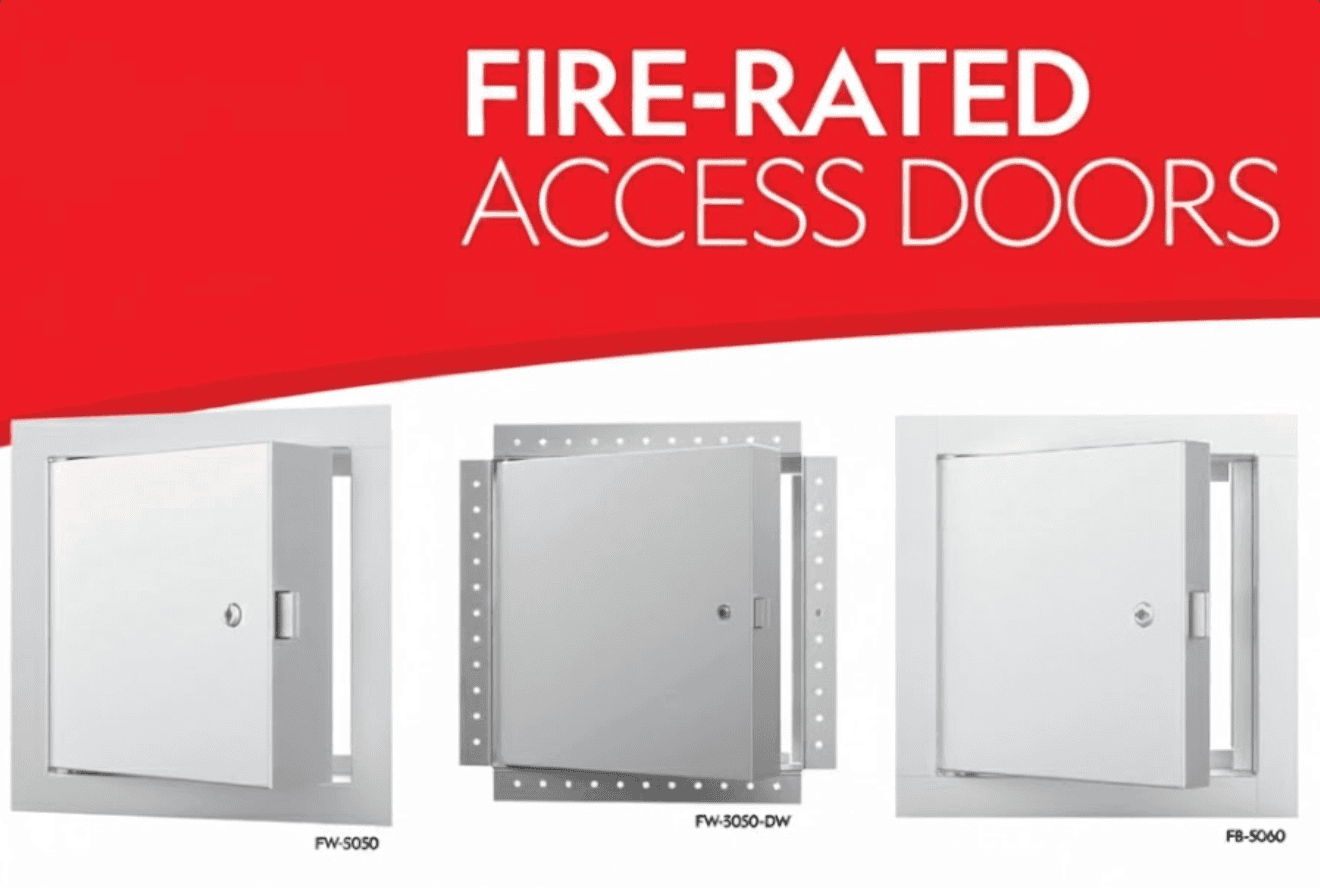
The Acudor FW-5050-DW is designed for use in both fire-rated walls and ceilings. It is particularly effective for projects where a flush, tapeable finish is required.
-
Rating: It carries a 1-1/2 hour "B" label for walls and is Warnock Hersey listed for 3 hours in ceilings.
-
Design: The door panel is recessed to accept a 5/8" thickness of drywall, allowing the door itself to match the texture and color of the surrounding surface perfectly.
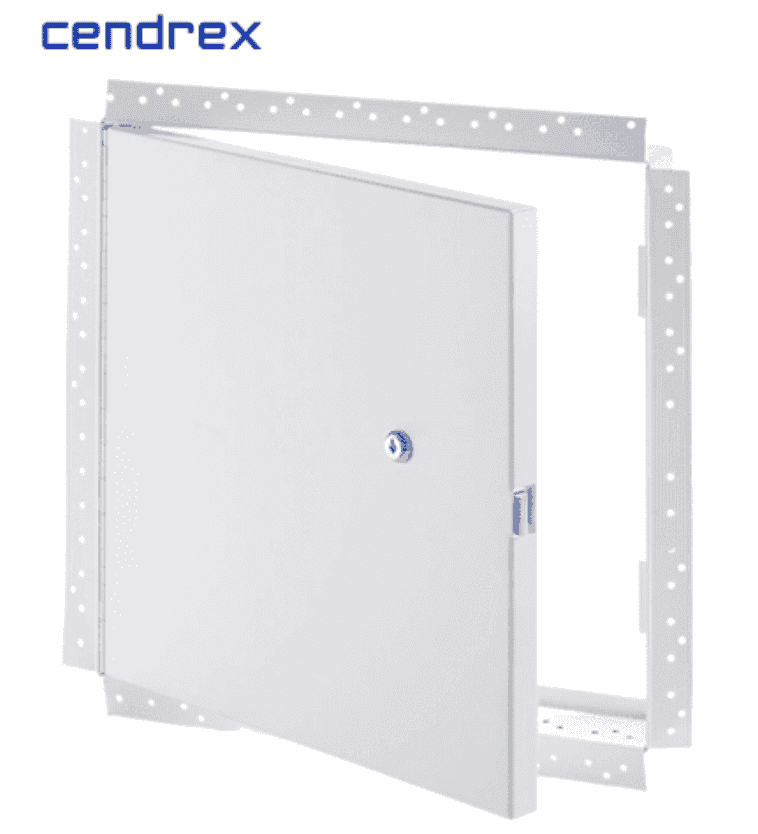
3. Cendrex PFN: The Uninsulated Solution
For applications where insulation isn't required but fire protection is, the Cendrex PFN offers a slim profile. While it is uninsulated, it still maintains the integrity of fire-rated vertical walls, making it an excellent choice for utility access in hallways or mechanical rooms.
-
Aesthetic Versatility: The PFN comes with a 1" flange and is available in a variety of sizes. For those seeking the "concealed" look we’ve discussed, it can be customized with a drywall bead to ensure the frame disappears into the wall.
-
Automatic Safety Features: To meet strict fire codes, every Cendrex PFN is equipped with a self-closing and self-latching mechanism. This ensures that even if a technician forgets to lock the door after a service call, the door will return to its seated position, maintaining the fire barrier automatically.
-
Durable Construction: Manufactured from high-quality cold-rolled steel with a polyester powder coat finish, the PFN is built to withstand the rigors of commercial use while remaining easy to paint and maintain.
Technical Specifications and Compliance
To ensure your project remains code-compliant, it is essential to understand the certifications that govern these products. The doors found at Spycor.com are tested against the most rigorous standards:
-
UL 10B & NFPA 252: Standards for fire tests of door assemblies.
-
ASTM E119 & CAN/ULC S101: Standard test methods for fire tests of building construction and materials (essential for ceiling applications).
-
Temperature Rise: High-quality doors like the PFI-GYP limit temperature rise to 250°F after 30 minutes, preventing the ignition of materials on the non-fire side of the door.
Installation Best Practices for a Seamless Finish
Achieving a truly "concealed" look requires precise installation. Follow these steps for the best results:
-
Frame Positioning: Ensure the rough opening is approximately 1/4" to 3/8" larger than the door size to allow for easy leveling.
-
Mudding the Flange: Use the drywall bead flange as your guide. Apply the joint compound over the perforated flange, feathering it out to match the surrounding wall surface.
-
Painting: After the compound is sanded and primed, the door and frame can be painted with the same finish as the wall, making it virtually undetectable to the untrained eye.
At Spycor Environmental, we provide more than just hardware; we provide peace of mind. With over 10 years of expertise in the construction and safety industry, we curate only the highest-performing products.
FAQ: Frequently Asked Questions about
Fire-Rated Access Doors
Can I use a wall-rated fire door in a ceiling?
Generally, no. Fire-rated doors for ceilings must undergo specific horizontal testing (like ASTM E119) because heat rises and creates different pressures than in a wall. Always check the manufacturer's certification for "horizontal" or "ceiling" use.
What is a "Drywall Bead Flange"?
A drywall bead flange is a perforated metal edge around the door frame. It is designed to be covered with drywall mud (joint compound) so that the transition between the wall and the door frame is seamless and invisible.
How do I determine the correct size for my fire-rated access door?
Access doors are usually ordered by the "Nominal Size," which is the size of the door opening. Your "Rough Opening" in the wall should typically be 1/4" to 3/8" larger than the nominal size. For example, an 18x18 door needs an 18-1/4" x 18-1/4" opening.
Are these doors self-closing?
Most fire codes require fire-rated doors to be self-closing and self-latching. Products like the Cendrex PFI and Acudor FW-5050 series come equipped with spring-loaded hinges or slam-latches to ensure they close and lock automatically.
Do these doors help with soundproofing?
Yes. Insulated fire-rated doors, such as the Cendrex PFI-GYP, use high-density mineral wool insulation which provides excellent acoustic damping, reducing noise transmission between rooms.
Where are fire-rated access doors required by code?
They are required whenever an opening is made in a fire-rated wall, floor, or ceiling assembly. This is common in stairwells, corridors, mechanical rooms, and between garage and living spaces in residential buildings.