
Posted by Spycor LLC on Feb 19th 2024
Maintaining clinical air quality during hospital renovations is a zero-tolerance operation. For facility managers and infection control preventionists, the transition from a construction zone to a sterile corridor is the highest risk point for cross-contamination.
Traditional polyethylene "poly" sheeting and tape solutions are no longer sufficient for modern ICRA Class IV requirements. They are prone to breaches, difficult to disinfect, and fail to provide the structural integrity needed for long-term projects. To eliminate dust leaks and ensure 100% compliance, professional-grade anteroom type enclosures have become the industry standard.
Why Hospital Anteroom Systems are Non-Negotiable for ICRA Class IV
An ICRA (Infection Control Risk Assessment) Class IV designation requires the highest level of dust and pathogen containment. This includes negative pressure maintenance, HEPA filtration of exhausted air, and a sealed transition zone.
An anteroom enclosure serves as this critical airlock. It provides a controlled space for workers to don/doff PPE and clean equipment before entering the sterile healthcare environment, preventing the migration of Aspergillus and other life-threatening airborne fungi.
The Problem with "Poly and Tape" Methods
-
Pressure Failures: Thin plastic vibrates and tears under the high-velocity air movement required for negative pressure.
-
Tackiness & Bio-Burden: Adhesive surfaces trap dust and are impossible to sanitize effectively.
-
Visual Non-Compliance: Flimsy barriers signal a lack of professional oversight to JCAHO/Joint Commission inspectors.
The Edge-Guard Solution: Engineered for Zero-Leak Performance
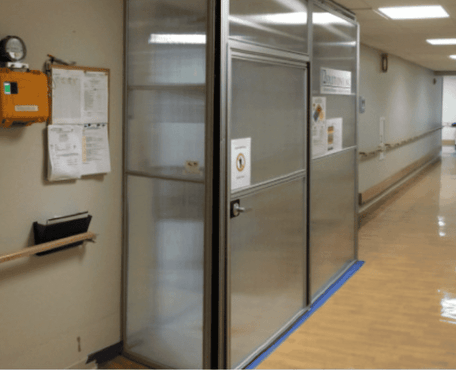
When selecting an Anteroom Type Enclosure, the focus must be on structural sealing and ease of deployment. The Edge-Guard system is designed specifically to mitigate the cognitive load of set-up while maximizing safety.
1. Telescopic Height Adjustment (7'10" to 10'0")
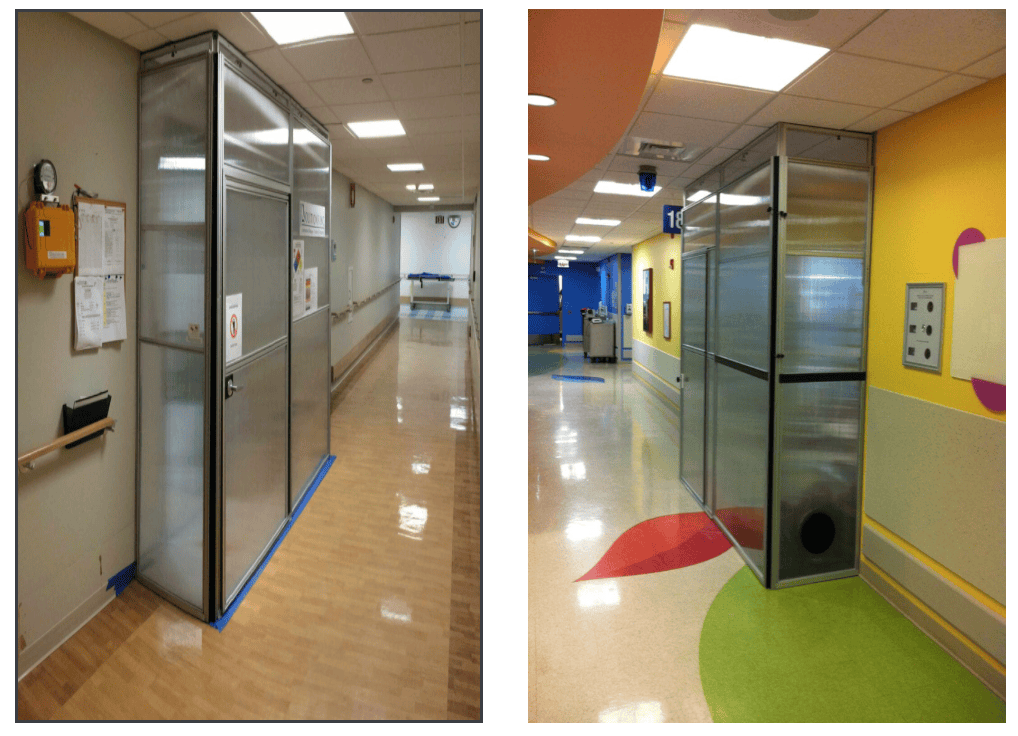
Hospital ceiling heights vary between older wings and modern surgical suites. This system utilizes adjustable panels that extend to meet the ceiling grid perfectly. This eliminates the need for ladders, cutting material, or complex framing, allowing for a rapid seal against the existing structure.
2. Flame-Retardant Polycarbonate & Aluminum
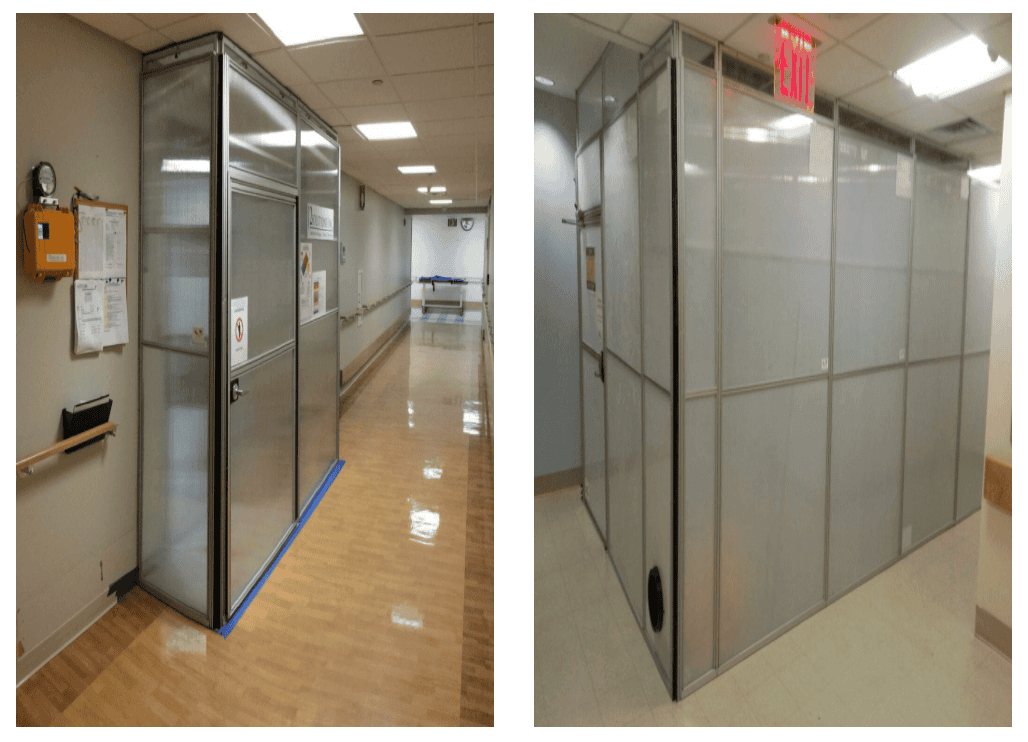
Safety in healthcare construction extends beyond dust. These enclosures are built with flame-retardant materials, meeting strict hospital fire codes. The clear polycarbonate panels allow for visibility—critical for safety—while remaining durable enough for heavy equipment transport.
3. Integrated HEPA Discharge Ports
Maintaining negative pressure requires a dedicated exhaust point. High-quality anteroom packages include a specialized panel with a built-in HEPA discharge port. This allows your negative air machine to vent filtered air directly through the enclosure wall without compromising the airtight seal of the unit.
Technical Specifications for Facility Managers
To ensure the system meets your specific project requirements, review these core specifications:
-
Footprint: 8' Wide x 2' Deep (Compact enough for busy corridors, spacious enough for PPE transitions).
-
Assembly: Tool-free camlock fasteners and specialized ceiling clips.
-
Portability: Includes a dedicated transport cart for moving panels between wings without creating a secondary dust event.
-
Infection Control: Smooth, non-porous surfaces that withstand hospital-grade disinfectants and sporicidals.
Best Practices for Deploying a Hospital Anteroom
To maximize the effectiveness of your Edge-Guard Anteroom Package, follow these deployment protocols:
-
Ceiling Grid Integration: Use the custom-engineered clips to secure the top of the panels directly to the T-bar ceiling grid. This creates a stable, vibration-free seal.
-
Pressure Monitoring: Always pair the enclosure with a digital pressure monitor. The anteroom should ideally maintain a lower pressure than the "clean" hallway but a higher pressure than the "active" work zone.
-
Sanitization Schedule: Establish a routine wipe-down of the interior polycarbonate walls at the end of every shift to prevent dust accumulation on the "clean side" of the transition.
Summary: Protecting Patients through Engineered Containment
The shift toward modular, hard-panel anterooms is driven by the need for repeatable, verifiable compliance. For contractors and healthcare facilities, the investment in a reusable system pays for itself by reducing labor hours on setup and eliminating the high cost of potential ICRA breaches.
High-Intent Comparison: Modular vs. Manual Containment

Secure Your Facility with Professional ICRA Containment
Don't risk patient safety or regulatory fines with makeshift barriers. Ensure your next project is fully compliant from day one.
CLick Here to Order the Anteroom Type Enclosure Today
Frequently Asked Questions (FAQ)
What is an ICRA Anteroom?
An ICRA Anteroom is a temporary, airtight enclosure used during healthcare construction. It acts as a buffer zone between the work area (high dust/pathogen risk) and the patient care area (sterile), allowing for air filtration and safe worker entry/exit.
Does this enclosure meet Class IV ICRA standards?
Yes. When used with a properly sized Negative Air Machine (NAM) and HEPA filtration, the 8' x 2' Edge-Guard Anteroom provides the airtight integrity required for Class IV containment.
How many people are needed to set up the system?
The system is designed for rapid deployment. One person can move the panels using the included transport cart, and two people can typically complete the full assembly and ceiling seal in under 30 minutes without tools.
Can the height be customized for high ceilings?
The standard adjustable panels cover heights from 7'10" to 10'0". For facilities with higher ceilings, additional extension panels or custom configurations are available.
How do I handle air exhaust?
The package includes a panel with a pre-cut HEPA discharge port. This allows you to connect a 10-inch or 12-inch duct from your negative air machine directly to the enclosure wall.