
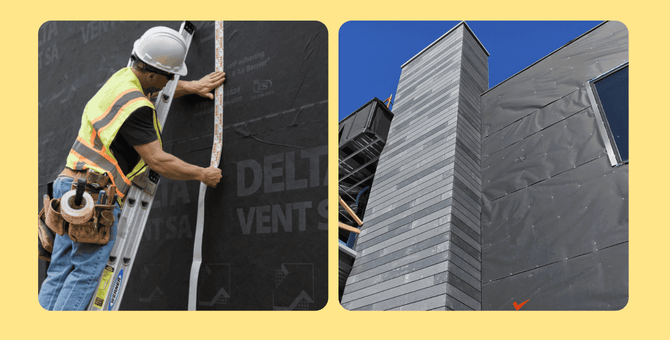
Posted by Spycor Building on Feb 29th 2024
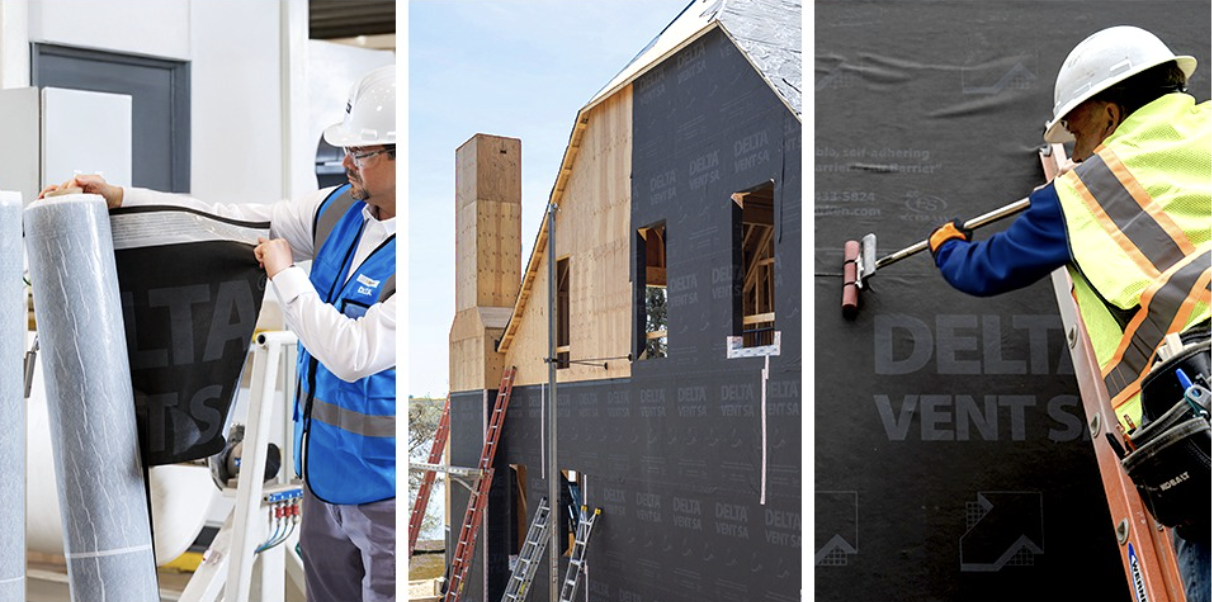
Choosing the right Water-Resistive Barrier (WRB) is one of the most critical decisions a homebuilder or contractor can make for a project’s longevity. A single mistake in selecting a membrane can lead to mold, structural rot, and expensive callbacks.
When it comes to high-performance moisture management, the Dörken DELTA® line is the industry gold standard. But with options like DELTA®-VENT S/SA and DELTA®-FASSADE S/SA, the "best" choice depends entirely on your cladding type and installation method.
This guide breaks down the technical differences, high-intent use cases, and performance specs to help you decide exactly which DELTA® product to buy for your next build.
The Core Difference: Conventional vs. Open-Joint Cladding
The first step in choosing your barrier is identifying your exterior finish.
1. DELTA®-VENT S & SA: For Standard Cladding
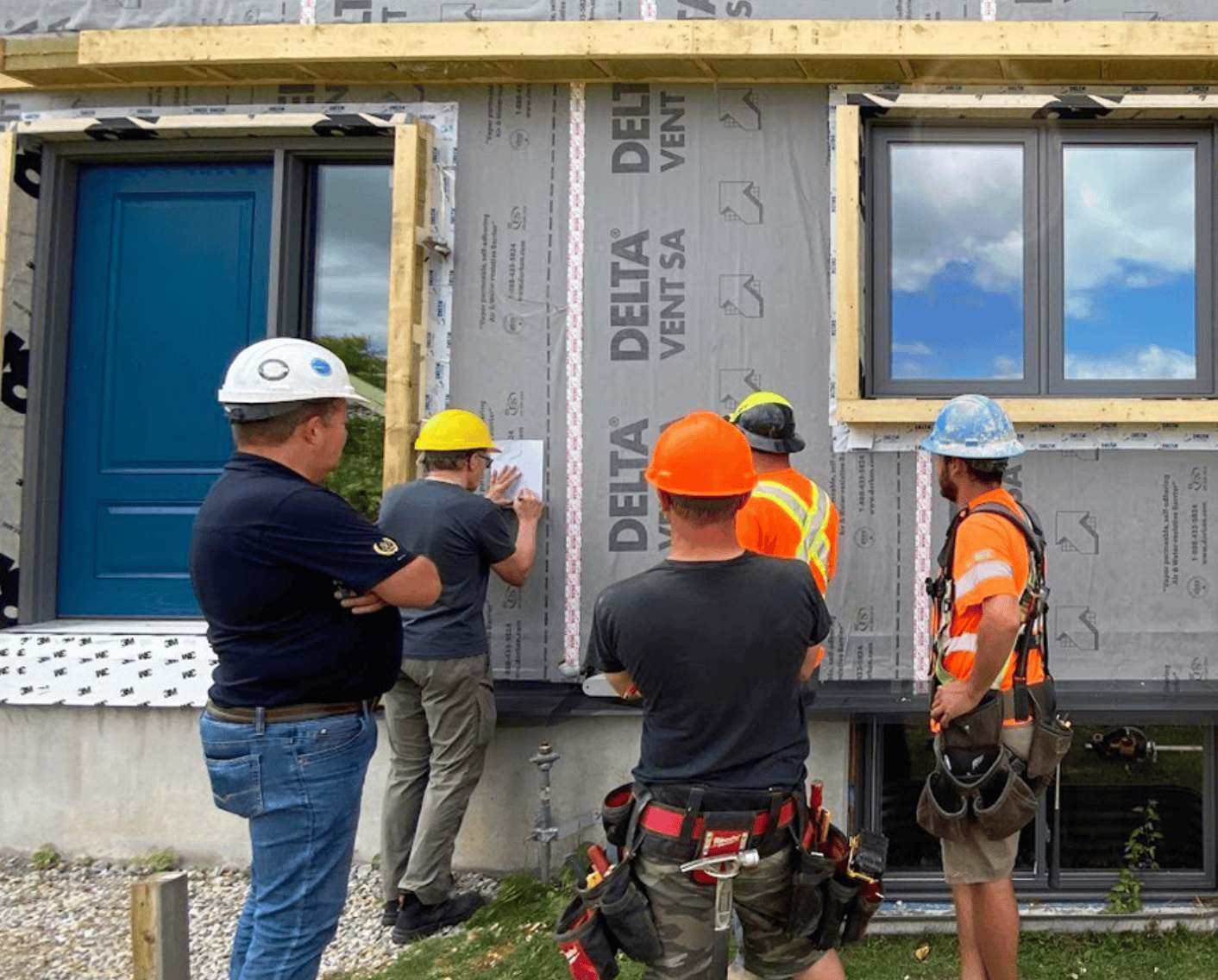
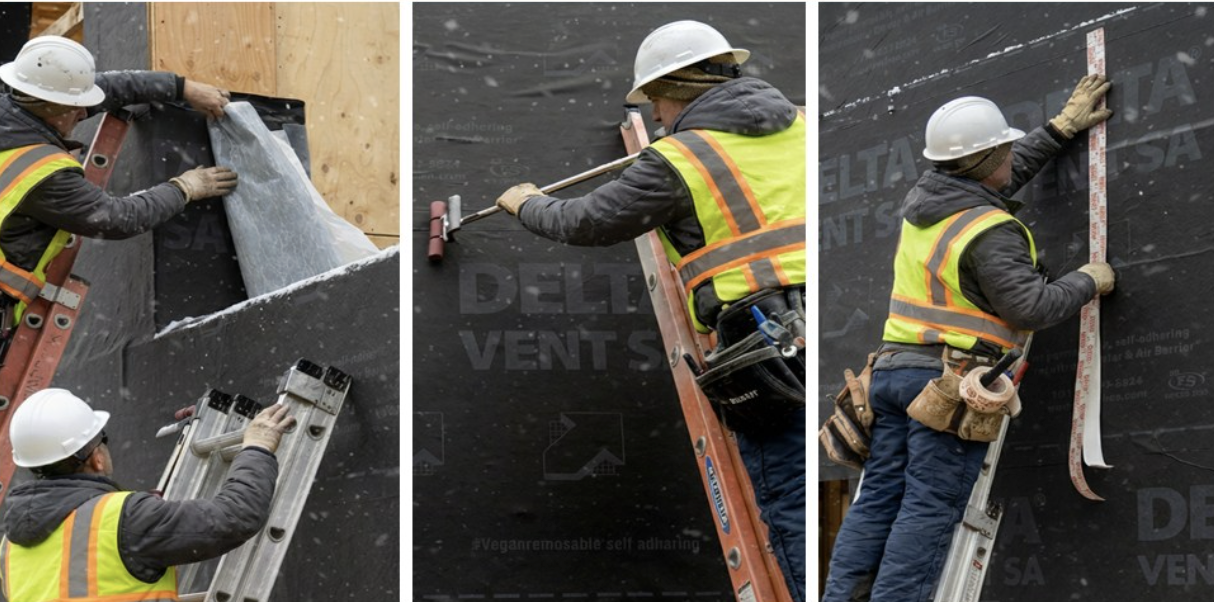
DELTA®-VENT S/SA is a premium, multi-layered water-resistive barrier (WRB) and air barrier specifically engineered for "closed" cladding systems. If your building envelope design utilizes vinyl siding, fiber cement (e.g., James Hardie®), metal panels, or masonry veneers where the membrane is shielded from long-term direct UV exposure, this is the industry-standard solution for moisture management.
-
Best For: High-performance residential and commercial enclosures requiring a robust, airtight secondary drainage plane behind traditional siding.
-
Key Advantage: With an industry-leading vapor permeability of up to 50 perms (per ASTM E96, Procedure A), it facilitates rapid outward drying of the wall cavity. This significantly reduces the risk of interstitial condensation and structural rot in diverse climates.
-
Technical Edge: The "SA" (Self-Adhered) version eliminates the need for mechanical fasteners, effectively removing thousands of potential air-leakage points and creating a continuous, high-performance air barrier that meets the rigorous requirements of ABAAA and Passive House standards.
2. DELTA®-FASSADE S & SA: For Open-Joint Cladding
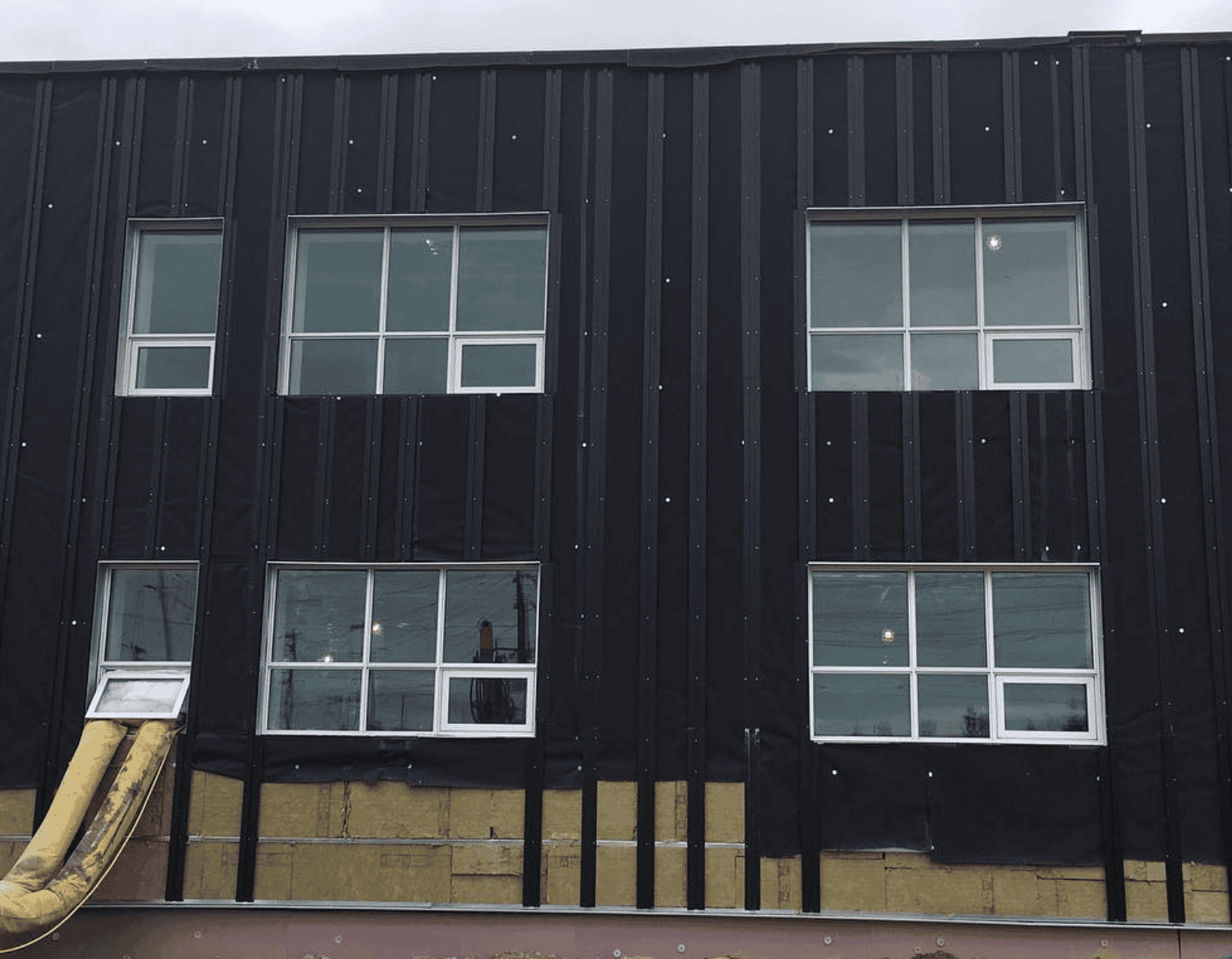
DELTA®-FASSADE S/SA is a highly specialized, water-resistive and air barrier membrane engineered specifically for the extreme demands of open-joint cladding systems. In modern architectural designs where the building envelope is partially exposed through gaps in the siding—such as wood slats, perforated metal, or composite rainscreens—this membrane provides the critical line of defense against both liquid water and chronic solar degradation.
-
Best For: Modern architectural projects featuring open-joint rainscreen systems with gaps up to 2" (50 mm) wide, covering up to 40% (FASSADE S) or 50% (FASSADE SA) of the total facade surface.
-
Key Advantage (UV-Stability): Formulated with a proprietary, high-performance coating, it is designed to withstand permanent UV exposure. Unlike standard WRBs that suffer from polymer chain scission (breakdown) when hit by sunlight, DELTA®-FASSADE maintains its physical integrity and hydrostatic pressure resistance over the life of the building.
-
Aesthetic & Technical Edge: The matte black finish provides a deep "shadow gap" effect behind open cladding, enhancing the visual depth of the facade. From a performance standpoint, the "SA" (Self-Adhered) version creates a fully monolithic air barrier that prevents wind-wash and air infiltration from stripping the thermal efficiency of the exterior insulation.
S vs. SA: Mechanically Fastened or Self-Adhered?
Both the VENT and FASSADE lines come in two application versions: S (Mechanically Fastened) and SA (Self-Adhered).
The "S" Version (Mechanically Fastened)
-
How it works: Installed using staples or cap nails.
-
Pros: Lower material cost; familiar installation for crews.
-
Cons: Every fastener creates a hole. Requires careful taping of seams with accessories like DELTA®-MULTI-BAND to maintain air-tightness.
The "SA" Version (Self-Adhered)
-
How it works: A "peel-and-stick" membrane with a high-tack adhesive backing.
-
Pros: Eliminates thousands of fastener penetrations. It creates a continuous, monolithic air and water barrier that dramatically reduces air leakage (exceeding ABAA standards).
-
Cons: Higher upfront material cost, but significantly reduced labor time and lower risk of air-sealing errors.
Technical Comparison at a Glance Table

Why Contractors Choose DELTA® SA (Self-Adhered)
While the "S" versions are budget-friendly, professional contractors are increasingly moving to DELTA®-VENT SA and DELTA®-FASSADE SA.
Why? Two words: Risk Mitigation. A self-adhered membrane acts as both your WRB and your primary air barrier. By eliminating fasteners, you remove the most common failure points in a building envelope. For high-performance builds or projects aiming for energy efficiency (like Passive House standards), the SA versions are the only logical choice to ensure a leak-free exterior.
Best Practices for Structuring Your Purchase
When buying for a job site, don't forget the system approach. To ensure the warranty and performance remain intact, you must use compatible accessories:
-
DELTA®-HF PRIMER: Essential for SA versions when applying to OSB, concrete, or in cold weather.
-
DELTA®-FAS CORNER: Pre-formed corners for windows to prevent the most common leak spots.
-
DELTA®-MULTI-BAND: High-tack tape for sealing overlaps and penetrations.
Ready to Protect Your Next Build?
Don't settle for "standard" house wrap that fails when the wind starts blowing. Invest in a system that protects your reputation and your client's investment.
Whether you need the high-perm breathability of DELTA®-VENT or the UV-defying strength of DELTA®-FASSADE, Spycor Building Products has the inventory and technical expertise to get you the right product, right now.
Shop All DELTA® Air & Water Resistive Barriers at Spycor Building Products
Order today to ensure your building envelope is airtight, watertight, and built to last.
Frequently Asked Questions (FAQ)
Can I use DELTA®-VENT behind open-joint siding?
No. Standard DELTA®-VENT is not designed for permanent UV exposure. The sun will eventually break down the polypropylene fabric, compromising your water protection. Always use DELTA®-FASSADE for open joints.
Do I need a primer for DELTA®-VENT SA?
It depends on the substrate. While it has an aggressive adhesive, a primer like DELTA®-HF PRIMER is highly recommended for OSB, masonry, or when installing in temperatures below 40°F (5°C).
Is DELTA®-FASSADE SA worth the extra cost?
If you are designing a high-end modern facade with open joints, yes. It is the only way to ensure the membrane doesn't deteriorate behind the gaps, and the black color ensures the "gaps" look intentional and deep rather than showing a gray or house-wrapped background.