
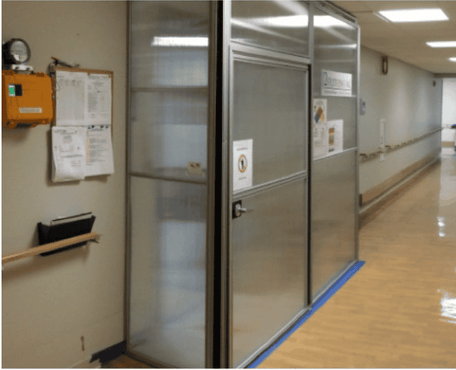
Posted by Spycor LLC on Jan 13th 2026
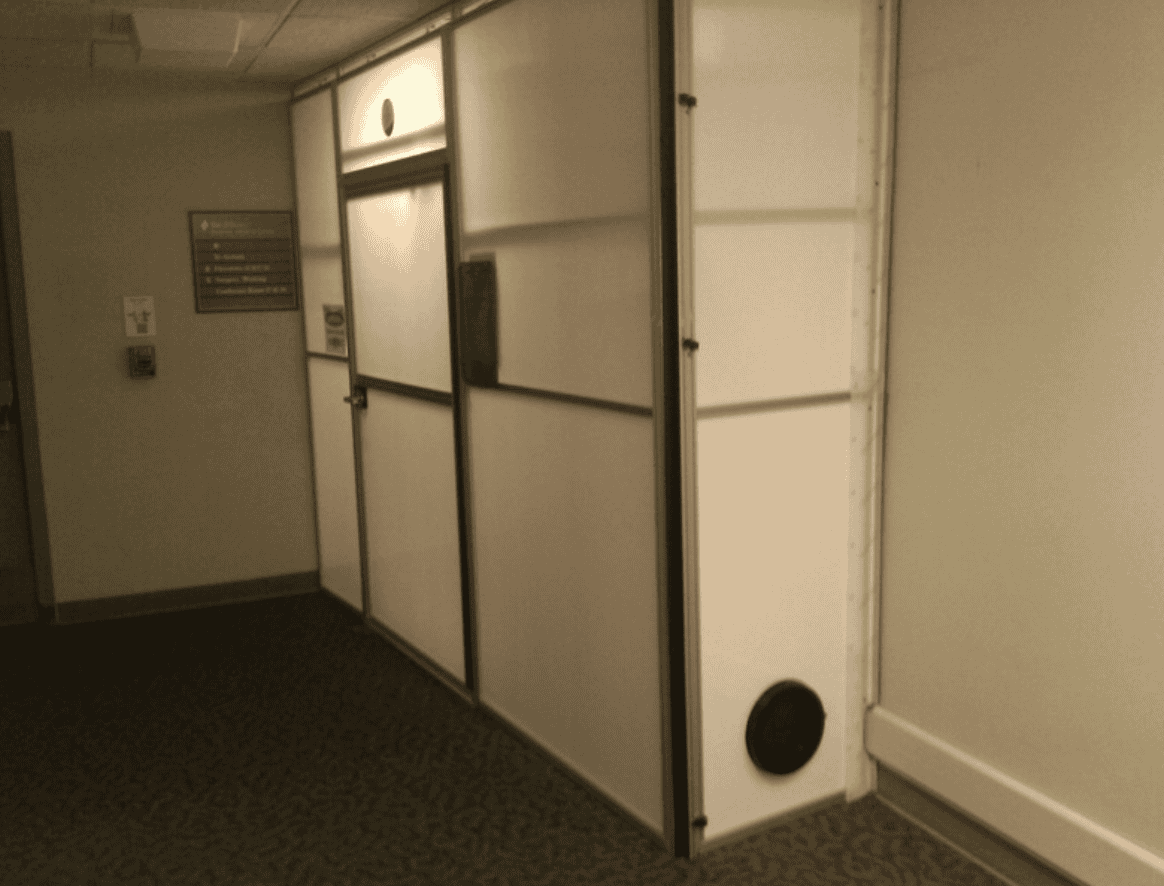
Dust from hospital renovations can breach containment, spread Aspergillus spores, and spike infection risks for immunocompromised patients. ICRA teams know this: even minor dust migration during Class III or IV work can force partial shutdowns, rack up remediation costs, and delay projects by weeks. In Houston's booming healthcare construction scene, where hospitals are constantly expanding amid population growth, these interruptions hit hard—lost OR time, canceled procedures, and potential Joint Commission citations.
Contractors and facility managers searching for "healthcare construction dust barriers," "ICRA-compliant anteroom," or "hospital dust containment" need solutions that seal fast, maintain negative pressure, and avoid the pitfalls of plastic sheeting. This guide breaks down proven strategies for effective dust control during hospital renovations, spotlighting the Anteroom Type Enclosure with Adjustable Panels as the go-to tool for ICRA compliance without halting operations.
Why Dust Migration During Healthcare
Construction Triggers ICRA Headaches
ICRA 2.0 guidelines (updated standards from ASHE and infection prevention pros) require hard barriers for higher-risk Class III and IV activities to prevent dust release into patient areas.
Dust carries Aspergillus and other fungi, directly linking construction to hospital-acquired infections (HAIs). Studies show airborne pathogens from renovations increase mold-related risks, especially in immunocompromised units.
Plastic sheeting tears easily, gaps form around ceiling grids, and negative air machines struggle to hold pressure—leading to leaks, re-work, and fines. In Houston hospitals, where humidity amplifies mold growth, these failures are common and expensive.
We get it—messy renovations mean costly delays and endless cleanups.
The Limitations of Old-School
Containment Methods
Traditional plastic and tape setups fail in real ICRA scenarios:
- Poor seal on suspended ceilings causes dust escape.
- Time-consuming tape-down and constant monitoring.
- Single-use waste piles up costs.
- Light blockage creates dark, hazardous work zones.
Even ZipWall systems require poles and adjustments that slow crews. ICRA 2.0 emphasizes durable, reusable barriers to maintain containment integrity without constant intervention.
Contractors need anteroom setups that allow safe entry/exit while keeping dust locked in.
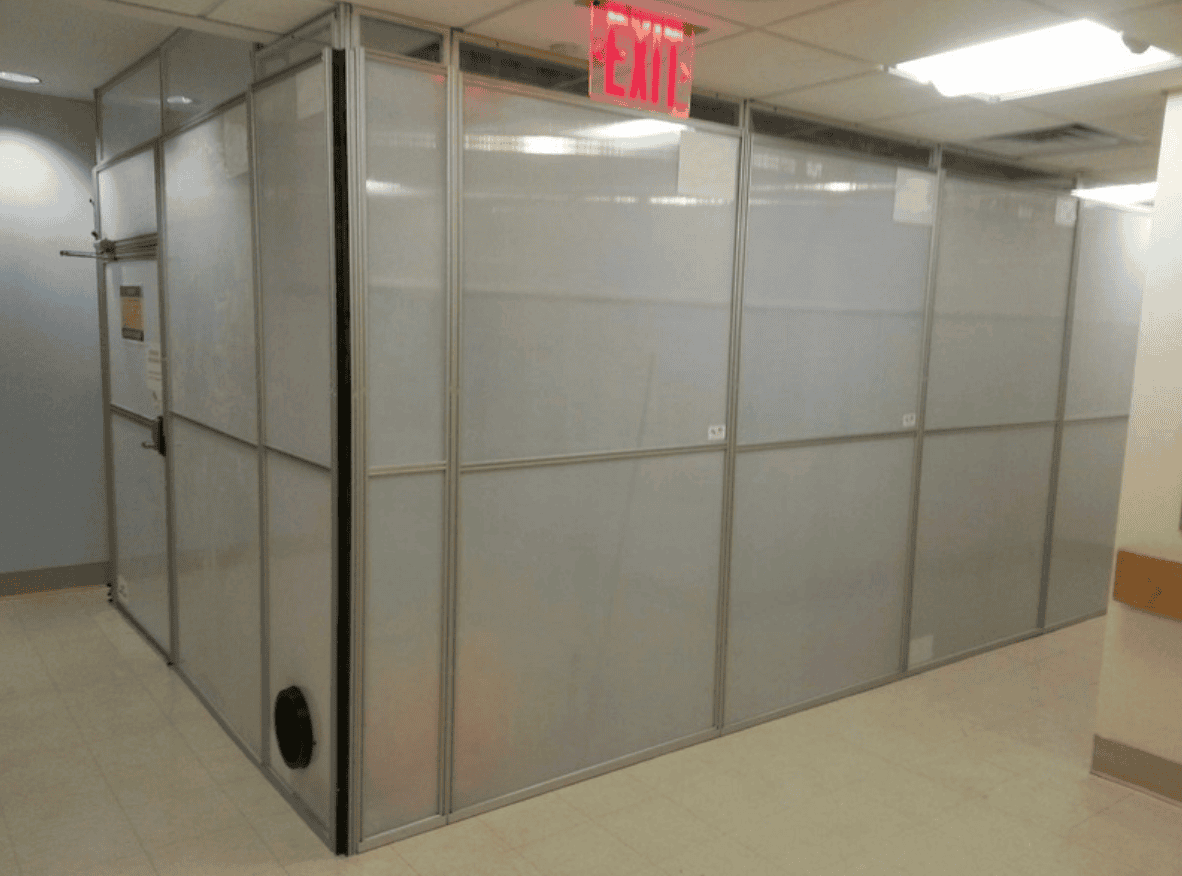
How Adjustable Anteroom Enclosure
Solves It
Anteroom Type Enclosure with Adjustable Panels is built for exactly this: tool-free setup, flame-resistant polycarbonate panels, and extruded aluminum frames that seal tight on suspended grids from 7'-10" to 10'-0".
Adjustable anteroom enclosure seals off areas in minutes, tool-free.
Key specs:
- Modular panels clip together—no tools, no drilling.
- Translucent polycarbonate lets natural light through.
- Flame-resistant for hospital safety codes.
- Reusable across multiple projects.
- Creates a true anteroom entrance for controlled access.
This setup supports negative air machines and ICRA protocols by forming a hard barrier that prevents dust migration. It’s engineered for dust-free containment in healthcare renovations, reducing setup time from hours to minutes.
Step-by-Step: Setting Up ICRA-Ready
Containment with the Spycor Enclosure
- Run ICRA Assessment — Classify the project (Class III/IV needs anteroom + negative pressure).
- Position the Enclosure — Place around the work zone; extend adjustable panels to fit ceiling height.
- Secure Panels — Custom clips lock panels to grid and each other—no tools.
- Add Negative Air — Connect HEPA machine ports for pressure control.
- Monitor — Use particle counters to verify zero dust escape.
- Access Control — Use the built-in anteroom for safe entry/exit with adhesive mats.
Adjustable anteroom enclosure seals off areas in minutes, tool-free. Disassemble and reuse—no waste.
This approach cuts labor hours and avoids shutdowns.
Real Benefits for Houston Healthcare Projects
- Faster Completion — Quick setup keeps ORs and patient areas operational.
- Lower Costs — Reusable design saves 50%+ over disposables.
- Better Compliance — Hard barrier meets ICRA 2.0 standards.
- Safer Environment — Reduced HAI risk from contained Aspergillus.
Enjoy clean, safe workspaces with zero disruptions and reusable savings.
Ready to Lock Down Your Next Renovation?
Adjustable anteroom enclosure seals off areas in minutes, tool-free. Order your reusable barrier today and start containing dust effortlessly. Enjoy clean, safe workspaces with zero disruptions and reusable savings.
Buy now at https://spycor.com/8-x-2-anteroom-type-enclosure-with-adjustable-panels-7-10-10-0/
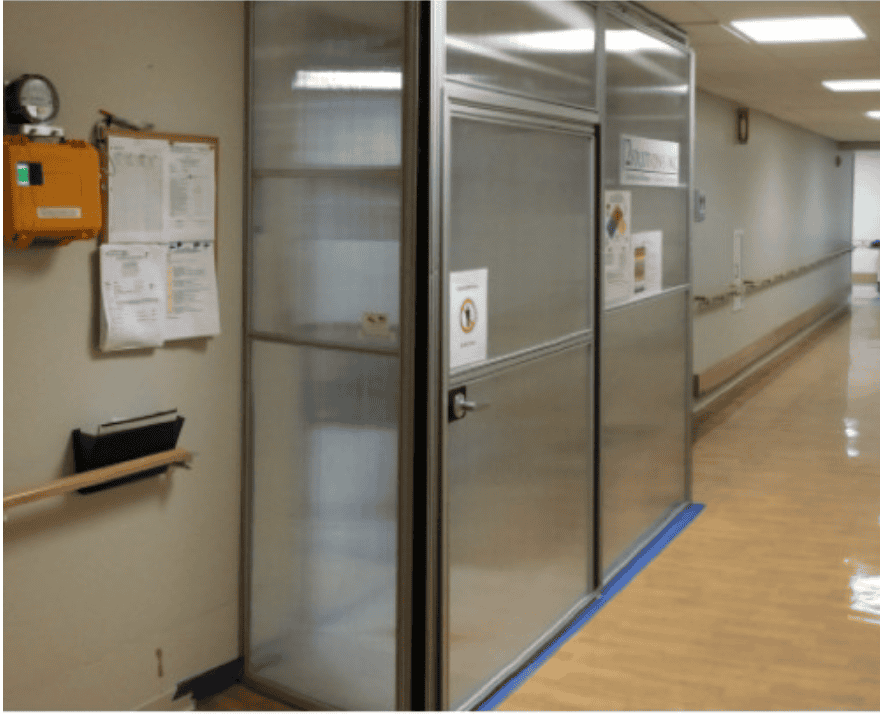
FAQ: ICRA Dust Containment in Hospital
Renovations
What makes an anteroom enclosure ICRA-compliant?
Hard barriers like Anteroom Type Enclosure with Adjustable Panels prevent dust release, support negative pressure, and allow controlled access—key for Class III/IV work under ICRA 2.0.
How does it handle suspended ceiling grids?
Adjustable panels fit 7'-10" to 10'-0" heights with custom clips that secure directly to the grid.
Is it reusable?
Yes—flame-resistant polycarbonate and aluminum construction hold up for multiple projects.
How long does setup take?
Under five minutes, tool-free.
Where can I get one for Houston hospital projects?
Direct from Spycor.com—fast shipping, technical support, and secure checkout.