
Posted by Spycor LLC on Apr 19th 2023
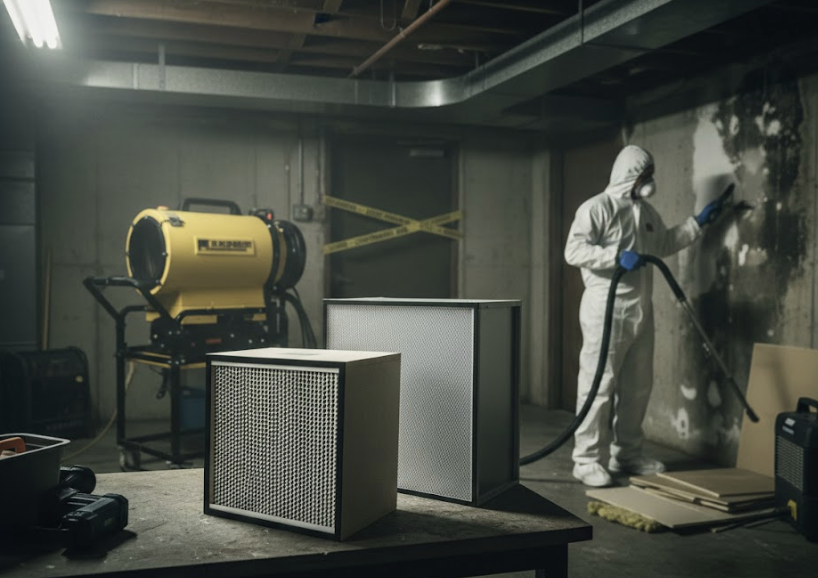
Standard air filters might be fine for a living room, but in the world of professional restoration and facility management, they are a liability. When you are dealing with mold spores, lead dust, or aerosolized pathogens, the difference between "clean" and "compliant" comes down to a single standard: True HEPA.
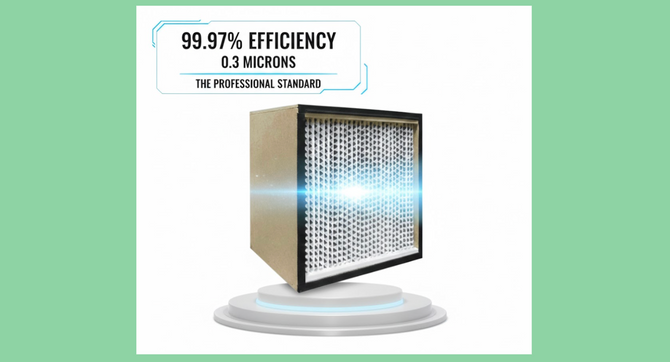
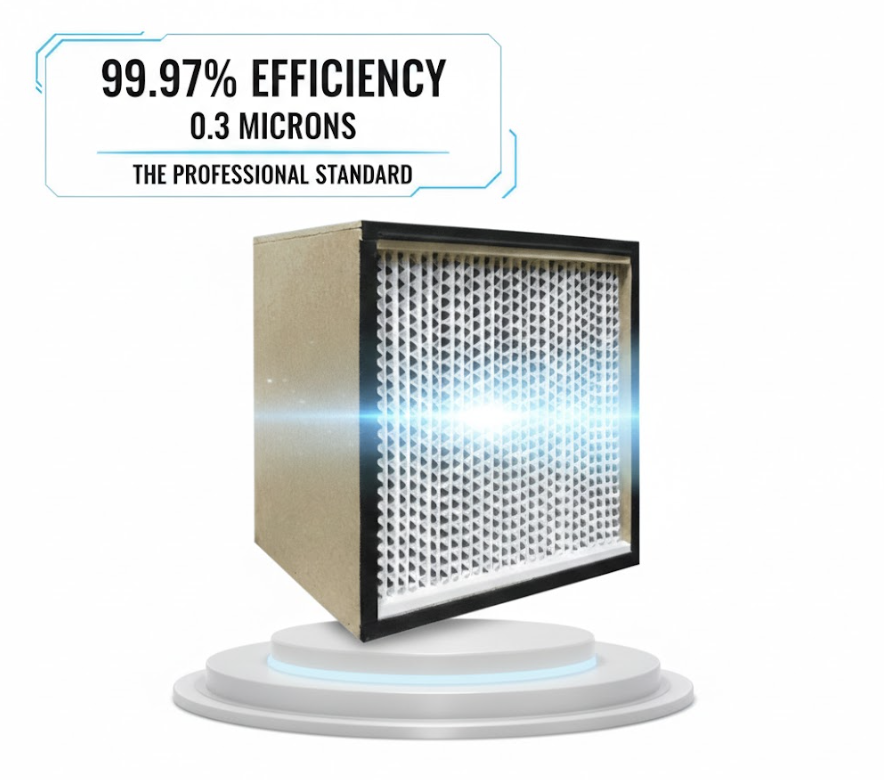
To be classified as a True HEPA (High-Efficiency Particulate Air) filter, the media must trap 99.97% of particles as small as 0.3 microns. Here is why this specific technology is the backbone of the environmental safety industry and how it protects your crew, your clients, and your bottom line.
1. Guaranteed Compliance for High-Stakes Jobs
For restoration contractors, HEPA filtration isn't a "perk"—it's a legal necessity. Whether you are following IICRC S520 standards for mold or OSHA lead-safe practices, standard MERV-rated filters won't pass a clearance test.
-
The Benefit: Using True HEPA filters in your air scrubbers ensures your job site stays within permissible exposure limits (PELs).
-
Pro Tip: Always look for filters that are individually tested and certified to meet DOE-STD-3020-2015.
2. Capture of Invisible "Bio-Aerosols"
Most people worry about what they can see, but the real danger lies in the "sub-micron" range.
-
Mold Spores: Typically 2 to 20 microns.
-
Bacteria/Viruses: Often travel on respiratory droplets smaller than 1 micron.
Standard HVAC filters (MERV 8-11) allow these tiny invaders to pass right through. A True HEPA filter acts as a microscopic labyrinth, using interception and diffusion to lock these particles deep within its fibrous mat.
3. Protecting High-Value HVAC Infrastructure
"Bio-fouling" is a silent killer for commercial HVAC systems. When fine dust bypasses standard filters, it settles on cooling coils, reducing heat transfer and spiking energy costs.
-
ROI: Implementing HEPA pre-filtration in sensitive environments can extend the lifespan of primary air handling units (AHUs) by preventing corrosive dust buildup and microbial growth on expensive internal components.
Comparison: True HEPA vs. Standard Filters

4. Remediation-Grade Odor Control
While the HEPA media traps the particle, many of the solutions we carry at Spycor integrate Activated Carbon.
For fire damage restoration or sewage backups, this is vital. The HEPA filter catches the soot and bacteria, while the carbon layer adsorbs the volatile organic compounds (VOCs) that cause lingering odors.
Equip Your Team for Success
Don't let a failed clearance test or an OSHA fine eat your profits. Spycor.com offers a full range of professional-grade HEPA filters and high-CFM air scrubbers designed for the toughest environments.
[Explore High-Performance HEPA Solutions] Capture 99.97% of Airborne Pathogens & Particulates.
Common Professional FAQs
Can I use "HEPA-type" filters in an industrial air scrubber?
No. "HEPA-type" or "HEPA-like" filters are marketing terms with no regulated efficiency standard. In a professional setting, using anything other than True HEPA can result in failed air clearance and legal liability.
How do I know when to change my HEPA filter?
Most industrial air scrubbers have a pressure gauge or "filter change" light. Generally, a primary HEPA filter lasts 500–1,000 hours, but you can extend this significantly by changing your inexpensive pre-filters every few days on dusty job sites.
Are HEPA filters effective against silica dust?
Yes. HEPA filtration is the gold standard for capturing crystalline silica dust generated during concrete cutting and demolition, meeting OSHA Table 1 requirements.