Posted by Spycor Building on Jan 30th 2026
Metal lath has been the default for decades, but for modern contractors, "the way we’ve always done it" is becoming a profit killer. Between rising material costs, labor-intensive installation, and the inevitable call-backs due to rust, metal lath is often the most expensive choice you can make for a project.
SpiderLath, a high-strength fiberglass mesh system, is changing the math. While the price per roll is a factor, the real story is in the total installed cost. If you are a coastal contractor, stone veneer installer, or vertical concrete artisan, here is why switching to this non-metallic lath is the fastest way to increase your margins.
1. Eliminate the High Cost of Labor and Logistics
Metal lath is heavy, sharp, and cumbersome. It requires specialized cutters, heavy gloves, and significant physical effort to transport up scaffolding. SpiderLath flips this script.
Lightweight Transport and Handling
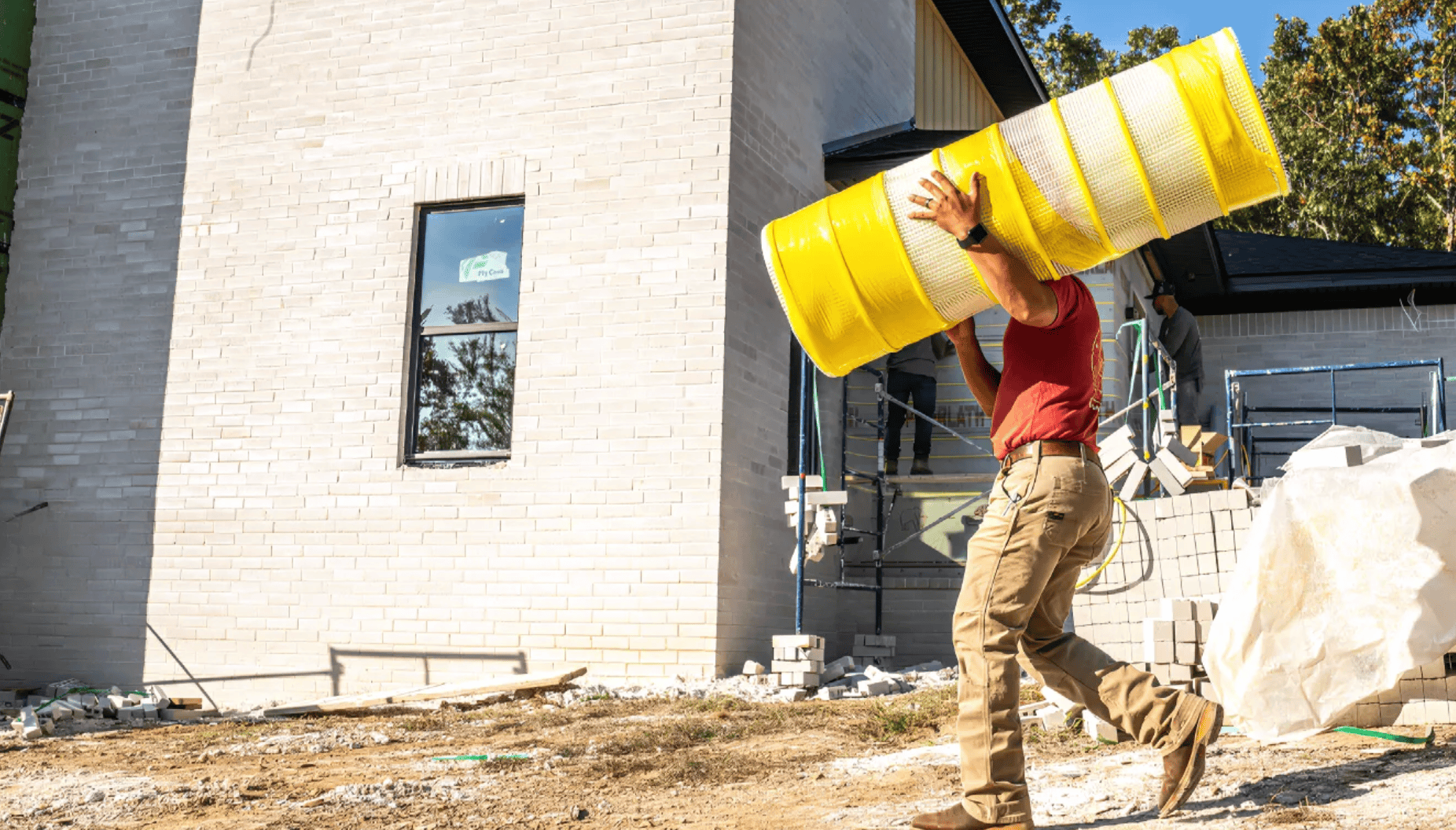
One roll of SpiderLath covers 300 square feet but weighs only 20 pounds. Compare that to the equivalent coverage in metal lath, which would require roughly 15 to 18 sheets of 2.5lb diamond mesh, weighing nearly 50 pounds and requiring a flatbed or large truck for transport.
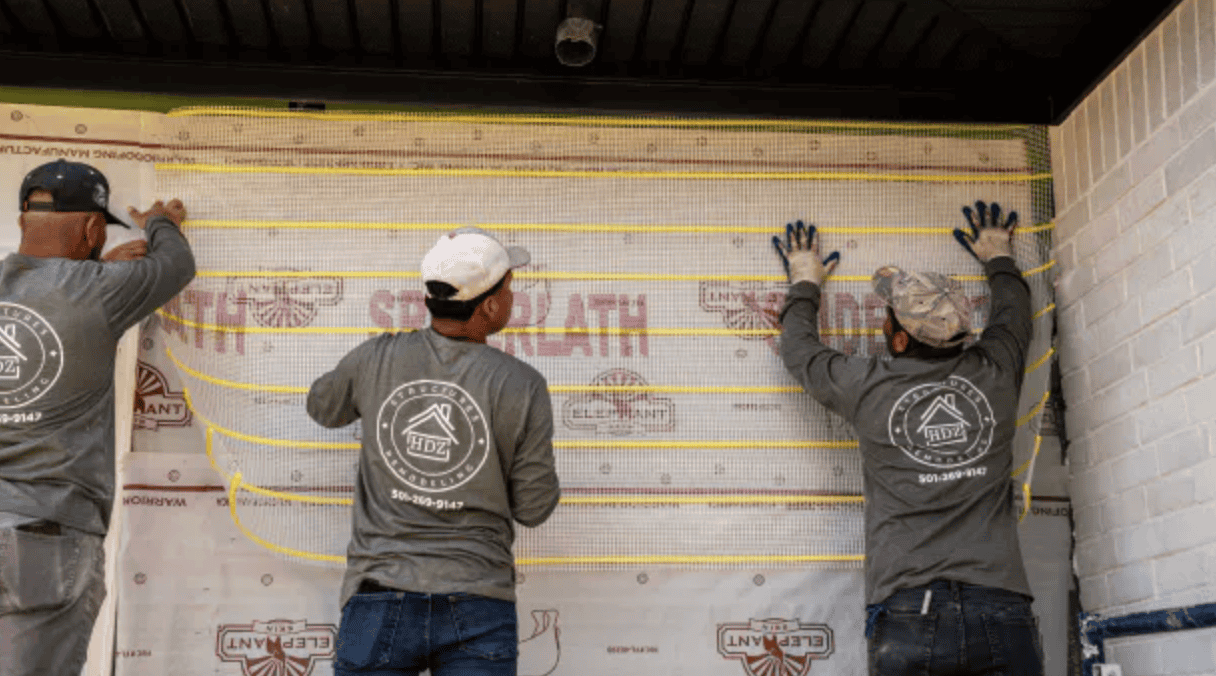
With SpiderLath, a single worker can carry enough material for an entire day’s work under one arm. This reduces fatigue and speeds up the "staging" phase of your jobsite significantly.
Faster Cutting and Fitting
You don't need tin snips or grinders to work with this lightweight alternative to metal lath. SpiderLath can be cut with a standard utility knife or heavy-duty scissors. For stone veneer installers, this means fitting lath around windows, corners, and architectural details takes seconds, not minutes.
2. Zero Rust Means Zero Call-Backs
For coastal contractors, salt air is the enemy of metal. Even galvanized lath eventually succumbs to oxidation, leading to "rust bleeding" through stucco or stone. When metal lath rusts, it expands, causing the scratch coat to crack and delaminate.
The Lifetime Value of Rust-Proof Stucco Lath
SpiderLath is an alkali-resistant rust-proof stucco lath. Because it is made of fiberglass, it is chemically inert. It will never oxidize, regardless of humidity or salt spray.
The cost of a single warranty call-back to repair a rusted wall can wipe out the profit of three previous jobs. By using a non-metallic lath, you are effectively buying "call-back insurance." Your installation stays intact for decades, protecting your reputation and your bottom line.
3. Integrated Self-Furring Design Saves Material
One of the hidden costs of lath is ensuring the mortar properly "keys" behind the mesh. Metal lath often requires careful shimmying or specific "dimpled" sheets to stay off the substrate.
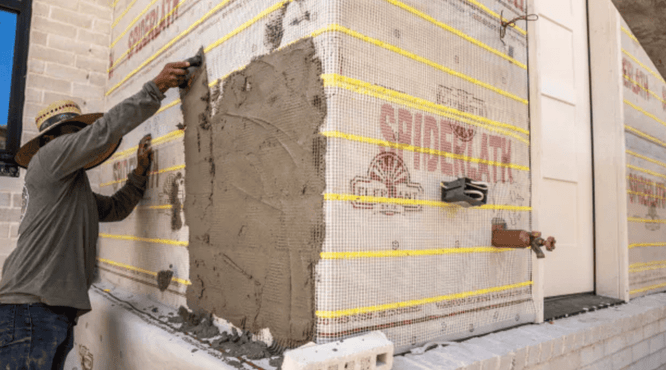
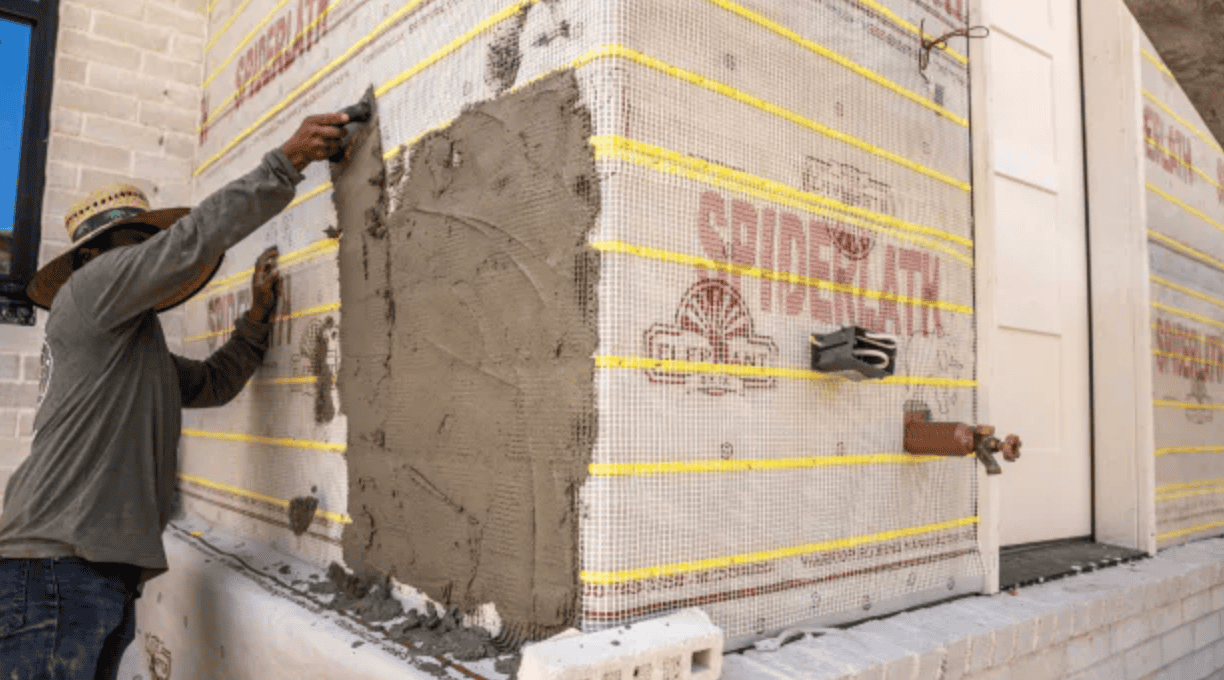
SpiderLath is a self-furring fiberglass lath. Its unique 3D twisted-weave design naturally stands off the wall. When you apply your scratch coat, the mortar wraps entirely around the fiberglass strands, creating a mechanical bond that is stronger than metal.
Because it is self-furring, you spend less time worrying about "flat spots" where the lath touches the weather barrier, ensuring a perfect 1/4" or 3/8" scratch coat every time with less wasted material.
4. Superior Performance for Stone Veneer & Vertical Concrete
Stone veneer is heavy. If your lath sags, your stones slide. SpiderLath features a high tensile strength that rivals steel but offers better "flexural" memory.
Non-Metallic Lath for Stone Veneer
When installing heavy natural or manufactured stone, SpiderLath provides a continuous, stable grid. Because it comes in 300 sq. ft. rolls, there are fewer seams and overlaps compared to 8-foot metal sheets. Every overlap in metal lath creates a double thickness that you have to "mud over," consuming more mortar.
SpiderLath’s thin profile and wide coverage mean you use less mortar to achieve a flat, workable surface.
5. Reduced Risk of Injury and Insurance Claims
It’s a reality of the trade: metal lath causes cuts. "Lath cuts" lead to downtime, first-aid expenses, and in some cases, workers' comp claims.
SpiderLath is soft to the touch. It doesn't have "burrs" or sharp edges that tear into skin or puncture weather-resistant barriers (WRB). A safer jobsite is a more profitable jobsite. When your crew doesn't have to worry about getting sliced by every corner they turn, they work faster and more confidently.
The Comparison: Fiberglass Lath vs. Metal Lath Cost
When you look at the fiberglass lath vs metal lath cost comparison, don't just look at the invoice. Look at these three pillars:
-
Shipping/Freight: SpiderLath rolls can be shipped via standard UPS/FedEx, whereas pallets of metal lath require expensive LTL freight.
-
Installation Speed: Field reports show that SpiderLath installs up to 50% faster than traditional metal sheets.
-
Mortar Consumption: The 3D weave of SpiderLath allows for better "encapsulation" with less mud, saving you thousands on large-scale commercial projects.
Ready to Maximize Your Profit Margins?
Stop paying for rust, heavy lifting, and slow installation. Switch to the modern standard for lath and see why top-tier contractors are making the move to SpiderLath.
Whether you are doing a residential stone fireplace or a massive coastal stucco project, we have the inventory to keep your project moving.
Shop SpiderLath at Spycor Building Products
Get the best pricing on high-performance moisture management and lath systems. We ship directly to your shop or jobsite.
Frequently Asked Questions (FAQ)
Is SpiderLath code-approved?
Yes. SpiderLath is fully code-compliant for use in stucco, stone veneer, and decorative concrete applications. It meets the requirements of the International Residential Code (IRC) and International Building Code (IBC) for lath and reinforcement.
How do I fasten SpiderLath to the wall?
You can use standard fasteners: staples for wood studs or self-tapping screws with washers for steel studs. Because it is lightweight, you need fewer fasteners to hold it in place during the initial "hang" compared to heavy metal sheets.
Can I use SpiderLath for overhead or ceiling work?
Absolutely. Because it is a lightweight alternative to metal lath, it is significantly easier to install overhead. It won't "fight" you or sag as much as metal, making it the preferred choice for decorative ceiling vaults and soffits.
Does it work with all types of mortar?
Yes. SpiderLath is compatible with Type S, Type N, and polymer-modified mortars used in thin-set stone applications and traditional three-coat stucco.
Will it really save me money on small jobs?
Even on small jobs, the savings in transport (using your own truck instead of paying for delivery) and the speed of cutting around outlets and corners make it more cost-effective than buying individual sheets of metal lath at a big-box store.