
Posted by Spycor LLC on Oct 14th 2024
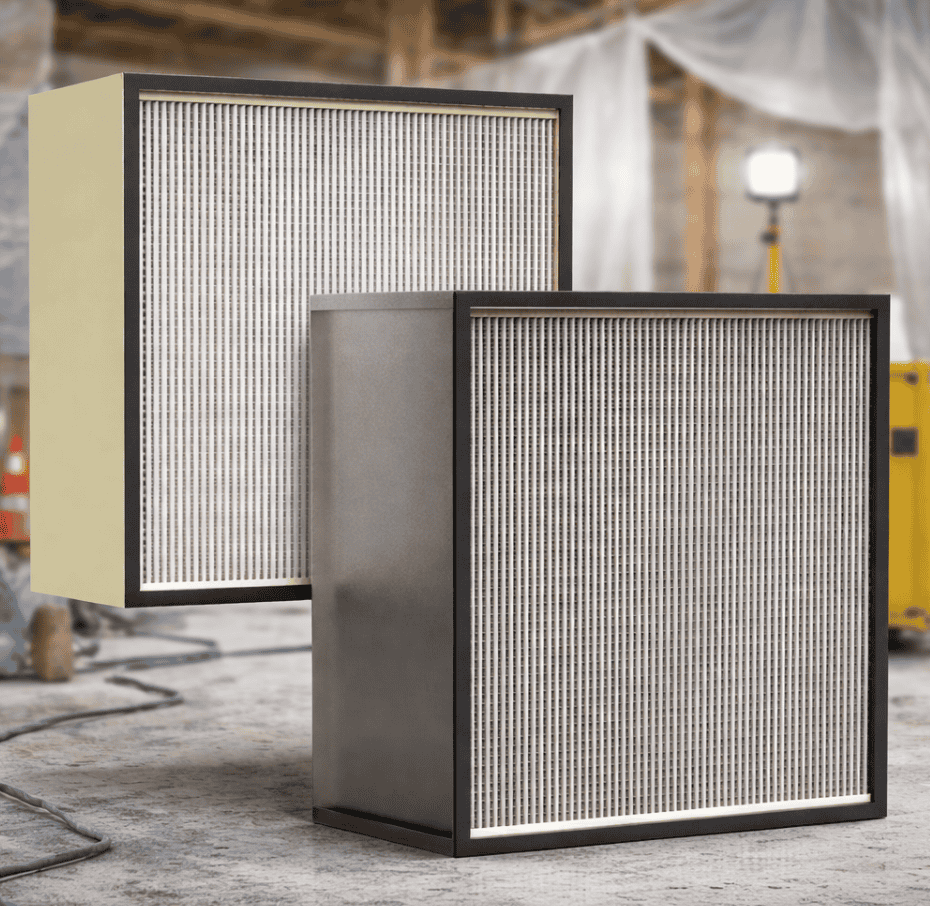
In the modern regulatory landscape, "containment" is no longer just a best practice—it is a legal and financial mandate. For commercial contractors managing large-scale demolition, mold remediation, or drywall phases, the choice of HEPA filtration determines project profitability. This guide explores the technical requirements of 99.97% efficient HEPA filters, the cost-benefits of wood vs. metal frames, and how to maintain OSHA compliance on the 2026 jobsite.
The High Stakes of Jobsite Air Quality
For decades, construction dust was viewed as a nuisance—an inevitable byproduct of a hard day's work. However, scientific advancements and stricter labor laws have transformed air quality into a critical project metric.
When you engage in "Jobsite Dust Containment," you are fighting an invisible enemy: Crystalline Silica. Found in materials like concrete, brick, mortar, and stone, silica dust is roughly 100 times smaller than ordinary beach sand. When inhaled, these microscopic shards cause irreversible lung damage.
The Financial Risk: OSHA’s National Emphasis Program on Silica means that inspectors are no longer looking for visible dust clouds; they are looking for the HEPA certification on your equipment. A single violation of 29 CFR 1926.1153 can result in fines exceeding $15,000. For a general contractor, a "failed" air quality test can stop a multi-million dollar project in its tracks, leading to liquidated damages and reputational ruin.
Decoding the HEPA Standard: What "99.97%" Actually Means
Not all filters are created equal. You will often see "HEPA-type" or "HEPA-like" filters in big-box retail stores. For professional containment, these are useless.
True HEPA (High-Efficiency Particulate Air) is a specific performance standard. To carry this label, a filter must be tested and certified to capture 99.97% of particles as small as 0.3 microns.
The Science of 0.3 Microns:
Why 0.3? It is known as the Most Penetrating Particle Size (MPPS). Particles larger than 0.3 microns are easily caught by the filter fibers through "impaction." Particles smaller than 0.3 microns move erratically (Brownian Motion) and get caught through "diffusion." The 0.3-micron particle is the most difficult to trap, which is why it is the benchmark for safety. If your filter can catch 99.97% of those, it is effectively protecting your crew from nearly all hazardous jobsite particulates.
Selecting the Right Workhorse: 24x24x11.5 Filter Specs
In the world of professional negative air machines—such as the Novair 2000, OmniAire, or Abatement Technologies units—the 24x24x11.5-inch filter is the industry universal standard. However, the frame of that filter is where contractors can optimize their spending.
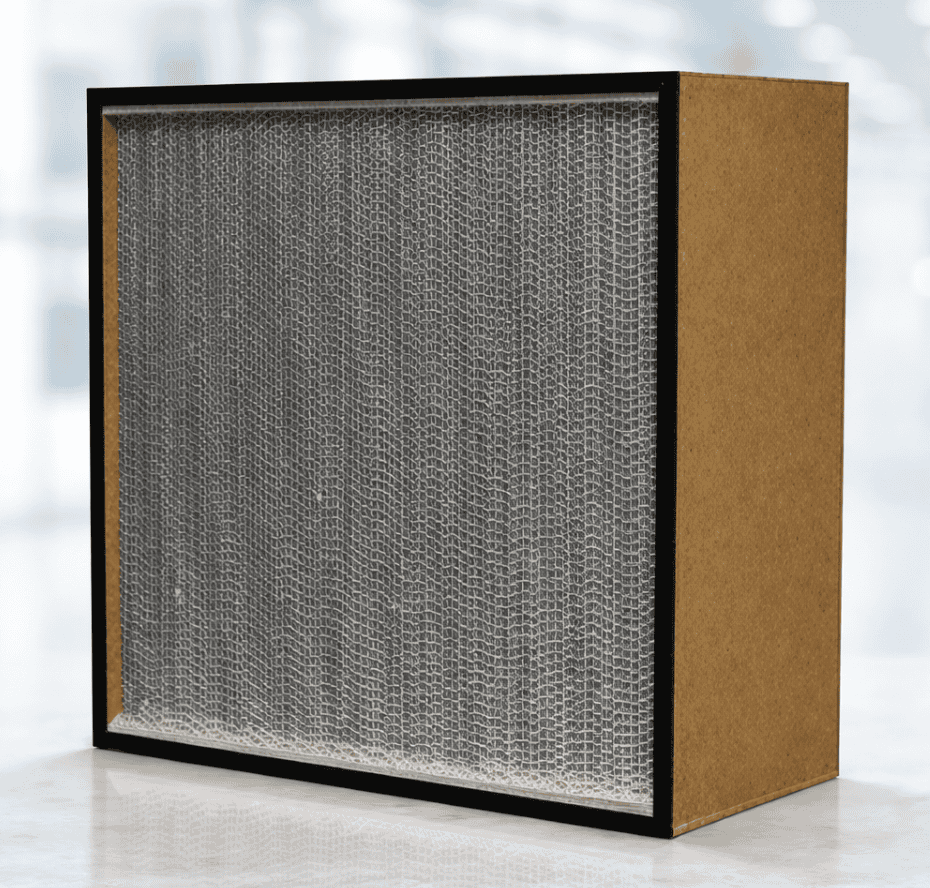
The Case for Particle Board (Wood) Frames
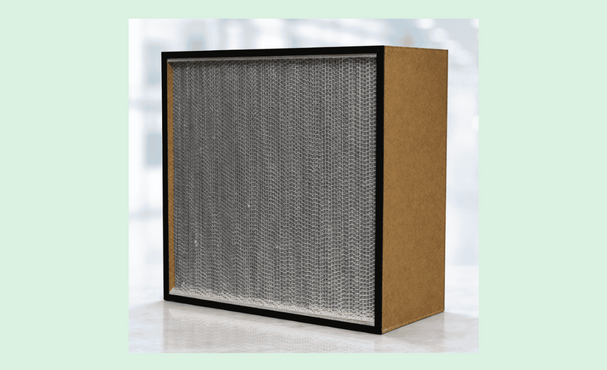
For the majority of Jobsite Dust Containment needs, we recommend the Standard Capacity Wood Frame HEPA.
-
Cost-Efficiency: Wood frames are significantly less expensive than galvanized metal. On high-dust jobs where filters are changed monthly, this saves thousands in overhead.
-
Sealing Integrity: Particle board provides a rigid surface that works exceptionally well with neoprene gaskets. When the negative air machine pulls a vacuum, the wood frame resists warping, ensuring no "dirty air" bypasses the filter.
-
Ease of Disposal: Because the frame is organic, it is often easier to process in construction waste streams than bulky metal alternatives.
The Case for Metal Frames
Metal frames are reserved for specialized environments. If your jobsite involves high humidity, steam, or permanent HVAC integration, the metal frame prevents the risk of microbial growth or frame swelling that can occur with wood in wet environments.
Operational Efficiency: Maximizing Filter Lifespan
A common mistake among junior crews is running a HEPA filter until the machine's "Change Filter" light turns red. By that point, you have already strained the motor and reduced your CFM (Cubic Feet per Minute) to inefficient levels.
The 3-Stage Filtration Rule:
To protect your
-
Stage 1 (Pre-filter): A 1-inch pleated MERV 8 filter. This catches the "big stuff" (sawdust, lint).
-
Stage 2 (Secondary Filter): A polyester ring panel or bag filter. This catches mid-sized dust.
-
Stage 3 (The HEPA): The final defense. If Stages 1 and 2 are managed, your HEPA should last 500–800 hours.

OSHA Compliance and the Written Exposure Plan
Using a HEPA filter is only half the battle. To be fully "Winning" in the eyes of a safety auditor, you must document your air quality strategy.
Your Written Exposure Control Plan should specify:
-
The use of HEPA-filtered negative air machines in all "High Dust" zones.
-
A log of filter changes (matching your purchases from
Spycor -
The CFM requirements to ensure at least 6 to 12 air changes per hour (ACH) depending on the room size.
Conclusion: Partner with Spycor for Jobsite Success
Success in the construction industry is built on the reliability of your supply chain. When a project manager at a firm like MCL Construction orders 12 units of NC Filtration 24x24x11.5 HEPA filters, they aren't just buying hardware—they are buying insurance against fines, downtime, and health risks.
At Spycor Environmental, we understand the rigors of the jobsite. We stock the filters that keep your air scrubbers running and your projects compliant.
Take Action: Restock Your Inventory
Don't wait for an inspection to realize your filters are spent. Secure your jobsite today with our bulk-priced, industry-certified HEPA solutions.
For bulk pallet pricing and contractor accounts, call our experts at 1 (877) 293-0784.
Frequently Asked Questions (FAQ)
Can I use a HEPA filter for lead abatement?
Yes. In fact, it is mandatory. Lead dust is heavy but extremely fine. Only a certified True HEPA filter (99.97%) meets the EPA’s RRP (Renovation, Repair, and Painting) rule for lead-safe work practices.
How do I know if my HEPA filter is "leaking"?
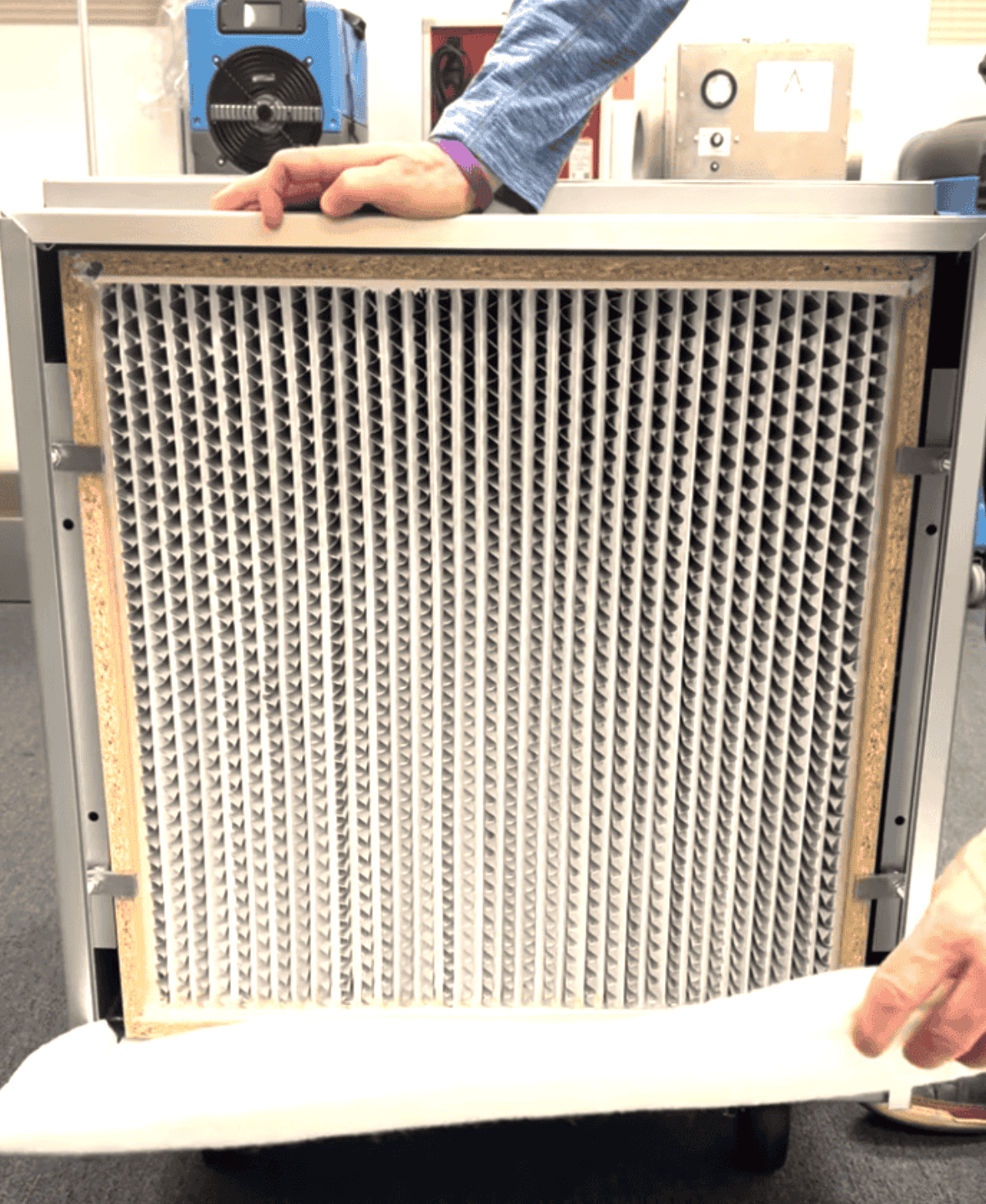
Inspect the gasket. If you see dust tracks on the "clean side" of the filter housing, your gasket has failed or the frame is warped. This is why high-quality
What is the difference between "Standard" and "High" Capacity?
Standard capacity filters usually have 18–20 pleats per foot. High-capacity filters have more surface area (more pleats), allowing for higher airflow and lower resistance. For standard demolition, "Standard Capacity" is the most cost-effective choice.
Is a MERV 16 filter the same as a HEPA?
No. A MERV 16 is the highest-rated standard filter, but it is not a HEPA. HEPA filtration is a higher tier of performance specifically required for hazardous dust containment.