
Posted by Spycor LLC on Jul 23rd 2025
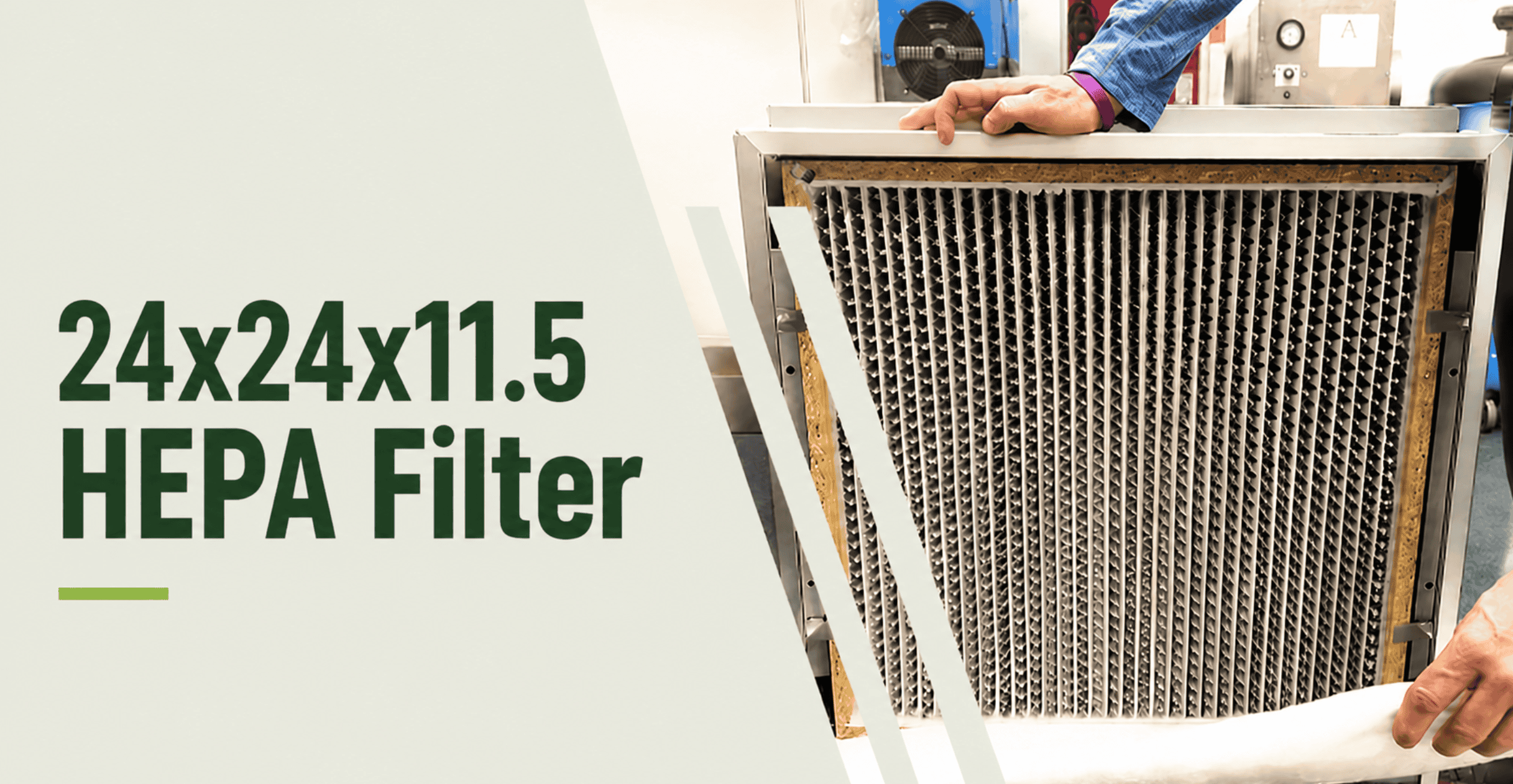
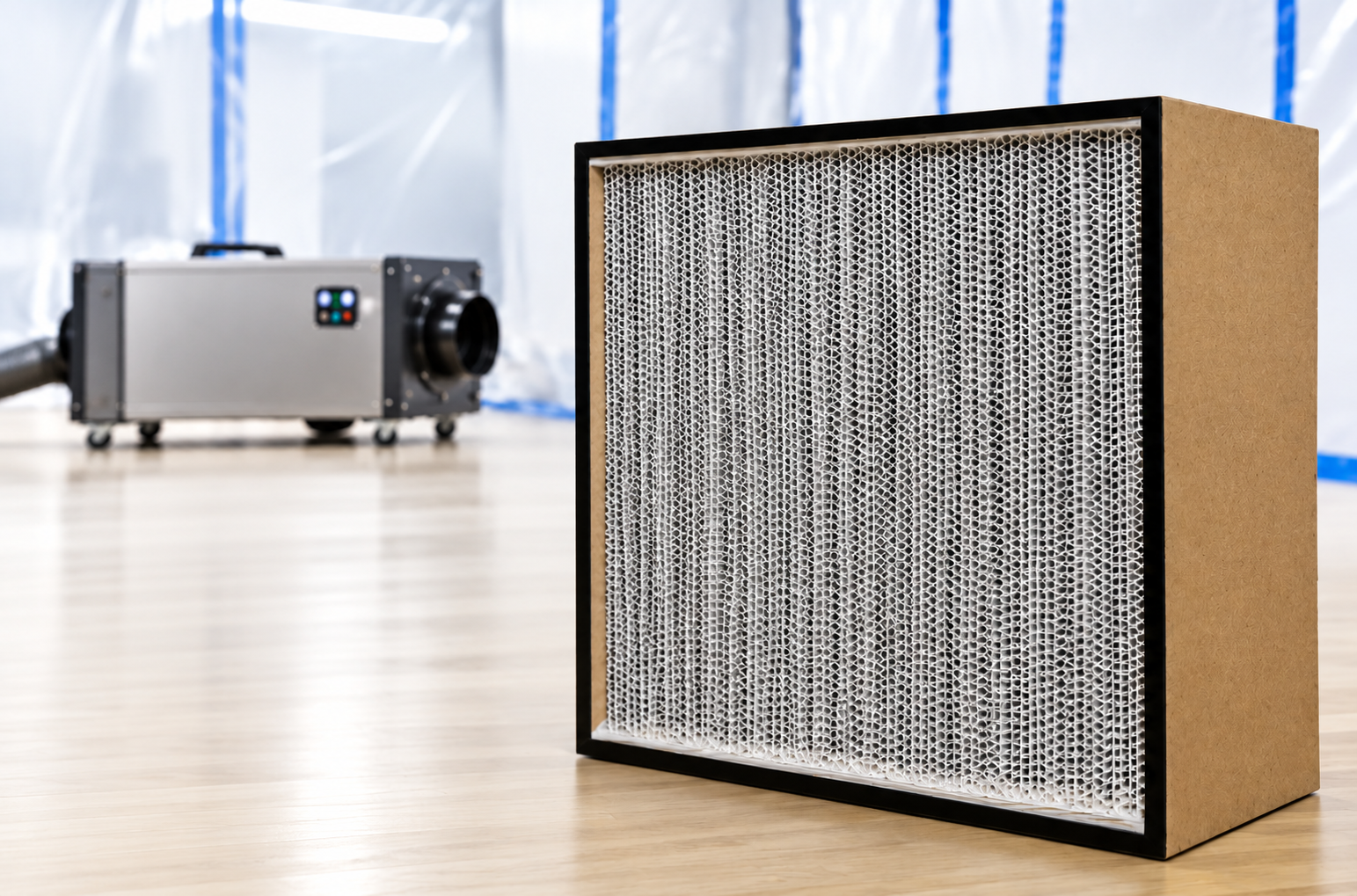
A commercial HEPA filter is a rigid panel filter rated to capture at least 99.97% of particles at 0.3 microns. To choose the right one, match four specs to your application:
- Efficiency: 99.97%, 99.99% or 99.999%
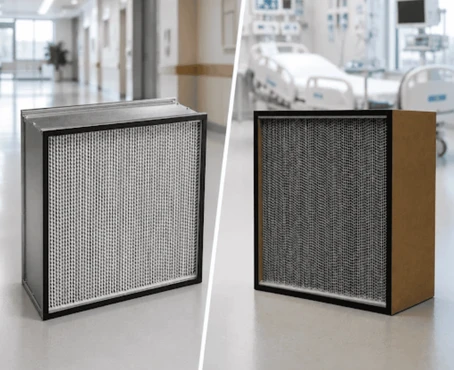
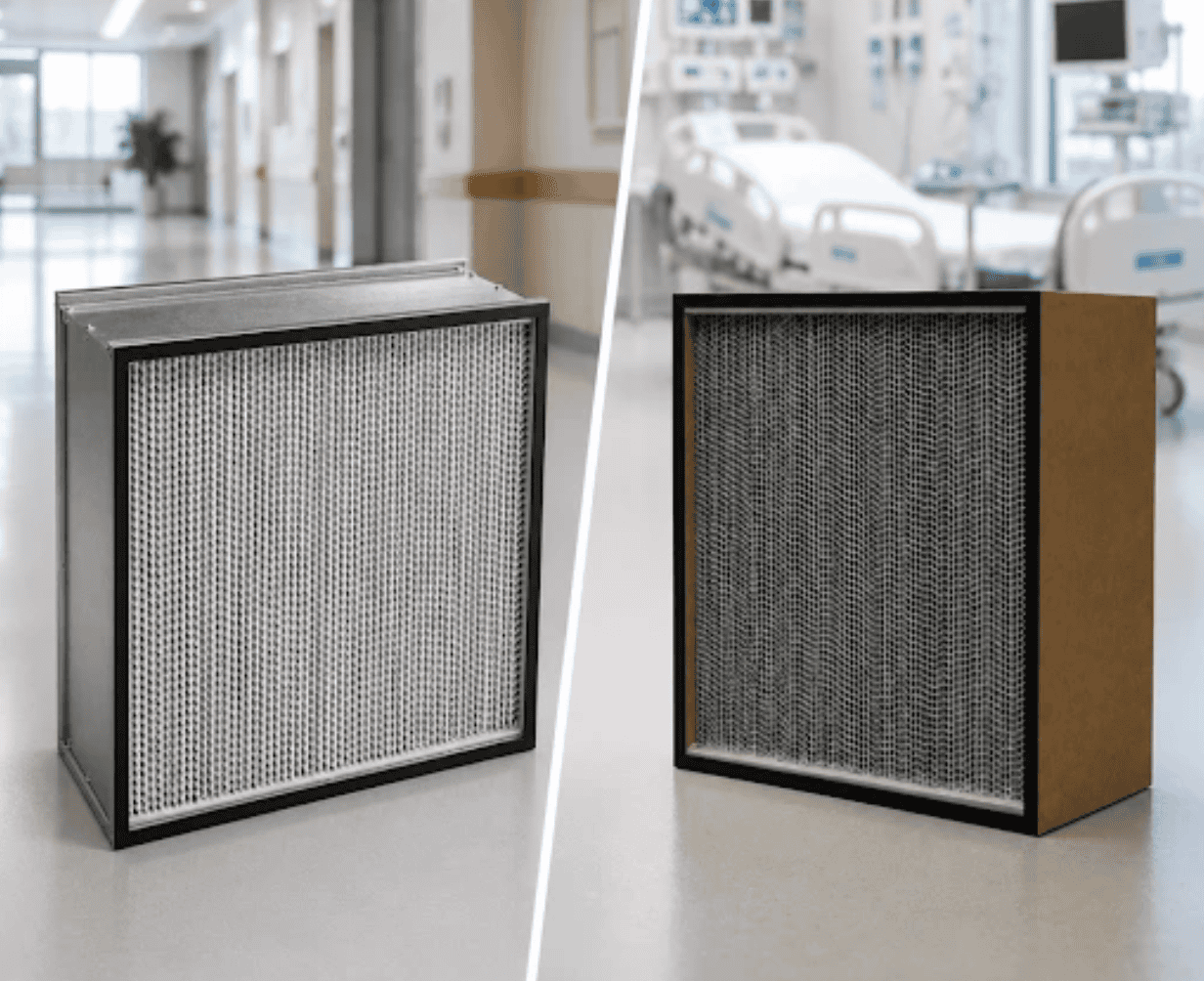
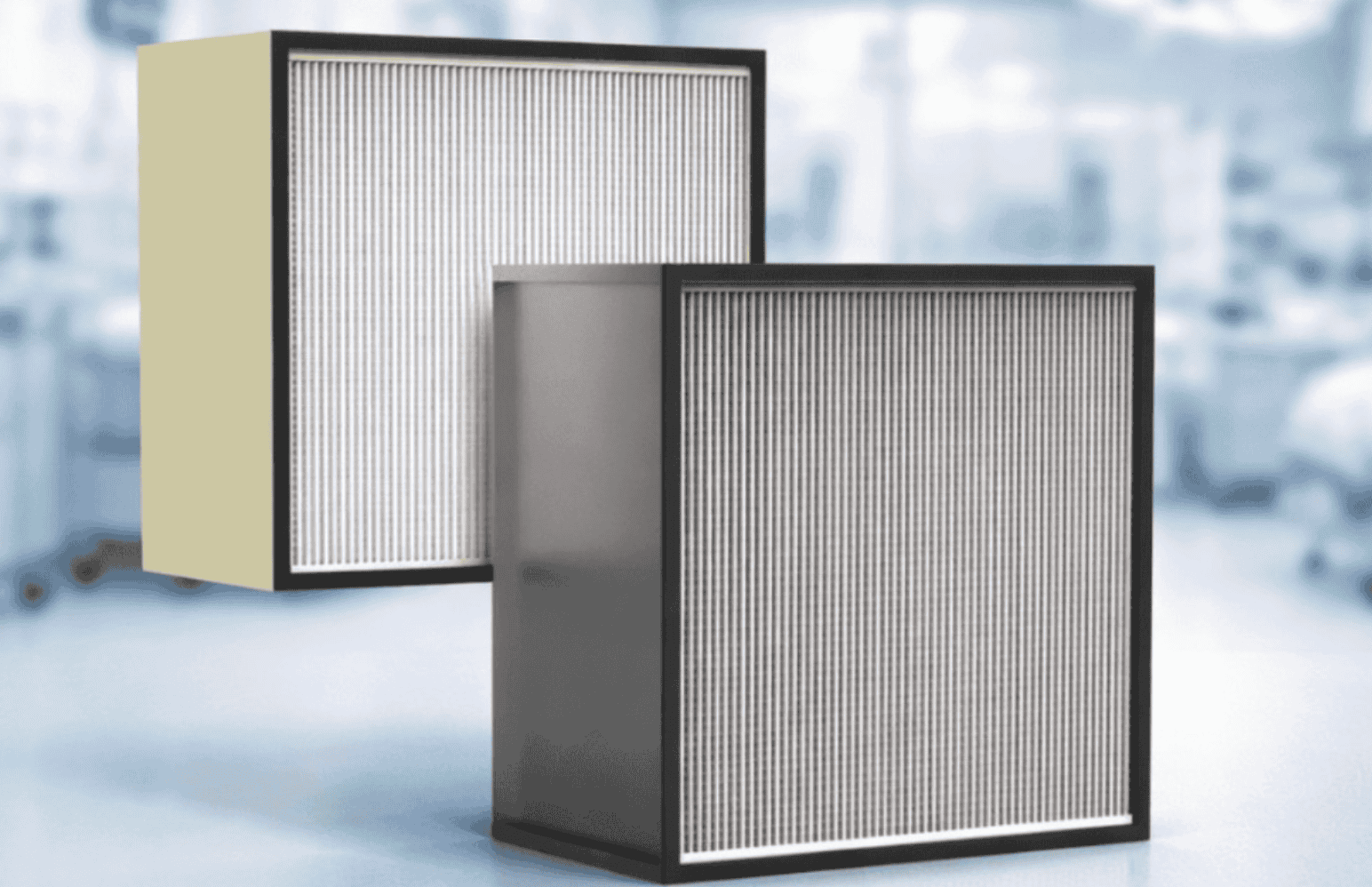
- Frame: particle board or metal
- Depth and capacity: 5-7/8" or 11-1/2", standard or high-capacity
- Exact size
Then confirm the filter's rated airflow covers your equipment's CFM.
Your spec controls the selection. The applications in this guide reflect common use across Spycor's commercial and industrial customers. Your project specification, equipment manufacturer, facility infection-prevention or ICRA plan, and the authority having jurisdiction determine the filter you need.
Shop Commercial & Industrial HEPA Filters →
Key Takeaways
- 99.97% is the workhorse grade for negative air machines, abatement, containment and general commercial HVAC.
- 99.99% is common in healthcare HVAC, laboratories, laminar flow hoods and pharmaceutical cleanrooms.
- 99.999% is commonly specified for critical cleanrooms.
- Particle board frames cost less and suit NAMs and air scrubbers. Metal frames hold up in humid, high-use and cleanroom settings.
- High-capacity (11-1/2" deep) filters typically move about twice the airflow of standard-depth filters with the same face size.
- Measure actual dimensions, not nominal. A "24x24" filter may measure 23-3/8" x 23-3/8".
What Makes a HEPA Filter "Commercial" or "Industrial"?
HEPA stands for High-Efficiency Particulate Air. Under the U.S. Department of Energy standard (DOE-STD-3020), a HEPA filter must capture at least 99.97% of particles at 0.3 microns. That size is used for testing because particles in the 0.1–0.3 micron range are the hardest to capture; larger and smaller particles are trapped at higher efficiencies.
Commercial and industrial HEPA filters share four traits:
- Rigid panel construction. Pleated glass-fiber media is sealed into a particle board or metal frame with a gasket or gel seal, so air can't bypass the media.
- Standard sizes that fit negative air machines, air scrubbers, HVAC filter housings, ceiling modules and flow hoods.
- A rated airflow (CFM) and initial resistance (inches of water gauge, "w.g.") that must match the equipment.
- A defined efficiency grade that can be written into a project spec, ICRA plan or cleanroom SOP.
How the media captures particles: larger particles hit fibers directly (impaction), mid-size particles contact fibers as they pass (interception), and the smallest particles move erratically and collide with fibers (diffusion).
What HEPA does not do: HEPA captures particles, not gases. For odors, VOCs and fumes, pair it with carbon/odor guard filters.
Step 1: Match the Efficiency to Your Application
The efficiency grades below are listed with their common applications. Use them as a starting point, then confirm against your spec.
| Efficiency (at 0.3 µm) | Common applications | Shop |
|---|---|---|
| 99.97% | Negative air machines and air scrubbers; mold, asbestos and lead abatement; containment on construction and renovation projects; general commercial HVAC; industrial final-stage filtration | Wood frame · Metal frame · Metal, high-capacity · Low-capacity wood |
| 99.99% | Hospital and surgery center HVAC; research and animal-research labs; laminar flow hoods; pharmaceutical cleanrooms | Wood frame · Metal frame · Metal, high-capacity |
| 99.999% | Critical cleanrooms and precision manufacturing where the spec requires it | Metal frame |
About "ULPA": ULPA filters are rated at a different test particle size than HEPA filters, so a 99.999% filter rated at 0.3 µm is not automatically a ULPA filter. If your spec calls for ULPA, confirm the rating and test method with us before ordering.
European specs: If a spec uses EN 1822 grades (for example, H13 or H14), ask us to cross-reference. EN 1822 tests at the most penetrating particle size, so its grades are not one-to-one equivalents of U.S. 0.3-micron ratings.
Don't over-spec. Higher efficiency costs more and may add resistance. Buy the grade your application, spec or equipment manufacturer requires.
Compare HEPA Filters by Efficiency →
Step 2: Choose the Frame (Particle Board vs Metal)
| Particle board ("wood") frame | Metal frame | |
|---|---|---|
| Cost | Lower | Higher |
| Weight | Lighter; easy to handle on jobsites | Heavier, more rigid |
| Moisture | Can swell if wetted; keep dry | Stable in humid or high-use environments |
| Best for | Negative air machines, air scrubbers, rental fleets, short-term containment | Healthcare HVAC, cleanrooms, labs, industrial housings, long service life |
Seal and mounting options:
- Single gasket: seals one face.
- Double gasket: seals both faces, for either-direction mounting. Example: Glasfloss 18x18x5-7/8 99.99% double gasket.
- Double flange: suits housings that clamp on a header. Example: Glasfloss 24x18x12 99.97% double flange.
- Gel seal / reverse gel seal: for cleanroom and hospital housings or ceiling modules with a knife-edge frame. Example: Koch BioMAX CS minipleat filters.
Deep dive: Wood vs. Metal Frame HEPA Filters
Shop Wood & Metal Frame HEPA Filters →
Step 3: Pick the Depth & Capacity
| Depth | Capacity | Typical use |
|---|---|---|
| 5-7/8" | Standard | Laminar flow hoods, compact housings, terminal and low-profile units |
| 6" | Standard / high-capacity | Air scrubbers and housings built for 16x16x6 or 20x20x6 filters |
| 11-1/2" | Standard | Negative air machines and HVAC housings at moderate airflow |
| 11-1/2" | High-capacity | Higher-CFM negative air machines and air handlers; longer change intervals |
| 12" | OEM | Omnitec replacement filters |
| Minipleat (shallow depth) | Housing-specific | Gel-seal ceiling modules and terminal housings |
Typical ratings on a 24x24 face:
- 5-7/8" standard: about 500 CFM
- 11-1/2" standard: about 1,000 CFM
- 11-1/2" high-capacity: about 2,000 CFM
These are typical industry ratings, not guarantees. Always confirm the rated CFM and initial resistance on the product's spec sheet. A filter rated below your machine's airflow runs at higher resistance and loads faster.
Need to size airflow first? Use the Air Flow Calculator.
Shop High-Capacity HEPA Filters →
Step 4: Confirm the Exact Size
Filters are sold by nominal size, but housings fit actual size. A nominal 24" x 24" filter may measure 23-3/8" x 23-3/8".
Before ordering:
- Measure height x width x depth of the old filter.
- Note the airflow direction arrow.
- Note the frame type and the gasket or gel-seal side.
Common Sizes Spycor.com Stocks
| Depth | Face sizes |
|---|---|
| 5-7/8" | 8x8, 12x12, 16x16, 18x18, 24x24, 24x30 |
| 6" | 16x16, 20x20 |
| 11-1/2" / 12" | 12x12, 12x24, 14x20, 24x12, 24x18, 24x24, 24x30, 23-3/8 x 11-3/8, 23-3/8 x 23-3/8 |
Minipleat gel-seal filters such as Koch BioMAX CS use shallow cell depths and housing-specific sizes. Send us your housing model or the old filter's label.
HEPA Filter Selection Chart by Application
| Application | Who specifies it | Efficiency | Frame | Where to start |
|---|---|---|---|---|
| Negative air machines & air scrubbers (mold, asbestos, lead, fire/water restoration) | Remediation and abatement contractors, rental fleets | 99.97% | Particle board; metal for heavy use | NC Filtration 24x24x11.5 standard · high-capacity |
| ICRA / healthcare construction | General contractors, hospital facilities, infection prevention | HEPA-filtered negative air, as defined in the facility's ICRA plan (commonly for Class III–IV work) | Particle board or metal | ICRA packages with negative air + your machine's replacement HEPA |
| Hospital, surgery center & clinic HVAC | Facilities engineers, infection prevention | 99.97–99.99% | Metal | 99.99% metal frame · Glasfloss 24x24x11-1/2 high-capacity |
| Gel-seal ceiling modules & terminal housings (cleanrooms, pharma, hospitals, biotech labs) | Cleanroom, validation and facilities engineers | 99.97 / 99.99 / 99.999% | Anodized aluminum minipleat; gel, reverse gel or gasket seal | Koch BioMAX CS |
| Cleanrooms & pharmaceutical | QA, cleanroom and validation managers | 99.99–99.999% | Metal | Glasfloss 23-3/8x23-3/8x11.5 99.999% |
| Research labs & animal research facilities | Lab managers, EHS | 99.97–99.99% | Metal | Glasfloss 12x12x11-1/2 99.99% high-capacity |
| Laminar flow hoods & cultivation labs (agar work, spawn production, tissue culture) | Lab operators, commercial growers, lab furniture builders | 99.99% | Wood or metal | Glasfloss 24x24x5-7/8 99.99% metal · wood |
| Precision manufacturing & machine shops (final stage after pre-filters) | Plant engineers, EHS | 99.97% | Metal | 99.97% metal, high-capacity |
| Lead-dust operations (ammunition manufacturing, firing ranges, lead-safe work) | EHS managers, abatement contractors | 99.97% | Metal or particle board | 24x24x11.5 + lead vacuums |
| HVAC rental fleets & HVACR resale | Rental operators, distributors | 99.97% | Both | Common sizes: 24x24x11.5, 12x24x11.5, 24x24x5-7/8 |
Always follow your project specification, the authority having jurisdiction, and your equipment manufacturer's requirements.
OEM Replacement Filters for Air Scrubbers
| Machine | Replacement filter |
|---|---|
| Omnitec OA2200UL | Omnitec 24x24x12 HEPA, 99.97% |
| Omnitec OA2000V | Omnitec 24x18x12 HEPA, 99.97% |
| Omnitec standard-frame units | Omnitec 12x12x12 HEPA, 99.97% |
Running another brand? See Which Air Scrubbers & Negative Air Machines Use a 24x24x11.5 HEPA Filter?, or call 1-877-293-0784 with your machine model.
Shop Replacement HEPA Filters for Negative Air Machines →
Protect Your HEPA: Pre-Filters and Staging
A HEPA filter is the final stage, not the only stage. Pre-filters catch coarse dust so the HEPA loads slowly and lasts longer.
- Negative air machines: use a pre-filter and, where needed, an intermediate pleated filter ahead of the HEPA.
- HVAC systems: stage MERV 8 through MERV 15 filters ahead of the HEPA bank.
Replacing low-cost pre-filters often is cheaper than replacing a HEPA filter early.
When to Replace a Commercial HEPA Filter
Replace the HEPA when any of these happen:
- Pressure drop reaches the manufacturer's final resistance, commonly about twice the initial resistance.
- Airflow drops below what your containment or air-change rate requires. Verify with room pressure monitors or particle counters.
- Physical damage: torn media, a compressed gasket, a bent frame, or a particle board frame that got wet.
- Project procedures call for it, for example at the end of asbestos or lead abatement work.
Full guide: When to Know It's Time to Change Your HEPA Filters · Step-by-step: Negative Air Machine HEPA Filter Replacement Guide
Brands We Stock
- Glasfloss: 99.97%, 99.99% and 99.999% filters in wood and metal frames, including double-gasket and double-flange options.
- NC Filtration: particle board and metal-frame 99.97% filters in standard and high-capacity versions, common in NAMs and air scrubbers.
- Omnitec: OEM replacement filters for Omnitec air scrubbers.
- Koch Filter (BioMAX):
- BioMAX CS minipleat filters in 99.97%, 99.99% and 99.999% grades, with anodized aluminum frames and gel-seal, reverse gel-seal or gasket options for cleanroom and healthcare housings.
- BioMAX particle board HEPA filters for high-capacity applications.
- BioMAX CS minipleat filters in 99.97%, 99.99% and 99.999% grades, with anodized aluminum frames and gel-seal, reverse gel-seal or gasket options for cleanroom and healthcare housings.
HEPA Filter Buying Checklist (for POs and Spec Submittals)
- Efficiency and test particle size (99.97 / 99.99 / 99.999% at 0.3 µm)
- Nominal and actual dimensions (H x W x D)
- Depth and capacity (standard, high-capacity or minipleat)
- Frame material (particle board, metal or aluminum)
- Seal type (single gasket, double gasket, flange, gel or reverse gel seal)
- Rated CFM and initial resistance vs. your equipment's airflow
- Airflow direction
- Listings required by your spec (for example, UL 900)
- Quantity, including spares per machine or housing
Get the Right Filter the First Time
Spycor Environmental has supplied containment and air filtration equipment for healthcare construction, environmental abatement and industrial facilities for more than 20 years. Tell us your machine model, housing size or spec, and we'll match the filter.
Shop All Commercial & Industrial HEPA Filters → · Call 1-877-293-0784 · Volume and fleet orders welcome.
Frequently Asked Questions
What efficiency HEPA filter do I need for a negative air machine?
Most negative air machines and air scrubbers use a 99.97% HEPA filter rated at 0.3 microns. Confirm the grade in your project specification or ICRA plan, then match the size and rated CFM to your machine.
What is the difference between 99.97% and 99.99% HEPA filters?
A 99.97% filter lets through up to 3 of every 10,000 particles at 0.3 microns; a 99.99% filter lets through up to 1. 99.99% filters are common where the spec requires higher efficiency, such as healthcare HVAC, laboratories, laminar flow hoods and pharmaceutical cleanrooms.
Is a 99.999% HEPA filter the same as a ULPA filter?
Not necessarily. ULPA filters are rated at a different test particle size than HEPA filters, so a 99.999% filter rated at 0.3 microns is not automatically a ULPA filter. If your spec calls for ULPA, confirm the rating and test method before ordering.
Should I buy a particle board or metal frame HEPA filter?
Particle board frames are lighter and lower cost, and suit negative air machines, air scrubbers and rental fleets. Metal frames resist moisture and handle long-term use in healthcare HVAC, cleanrooms, labs and industrial housings.
What does "high-capacity" mean on a HEPA filter?
High-capacity filters use deeper pleat packs, typically 11-1/2" deep, to handle more airflow than standard filters with the same face size. On a 24x24 face, a high-capacity filter is typically rated around 2,000 CFM versus about 1,000 CFM for a standard filter. Confirm ratings on the product spec sheet.
What size HEPA filter does a laminar flow hood use?
Laminar flow hoods commonly use 5-7/8"-deep panel HEPA filters, often 24x24 or 24x12 nominal, at 99.99% efficiency. Measure your hood's filter opening, including actual dimensions and gasket side, before ordering.
Do HEPA filters remove odors, fumes or VOCs?
No. HEPA filters capture particles, not gases. For odors and VOCs, add an activated carbon filter stage.
How often should commercial HEPA filters be replaced?
Replace a HEPA filter when its pressure drop reaches the manufacturer's final resistance (commonly about twice the initial resistance), when airflow falls below requirements, when it is damaged or wet, or when project procedures require it. Pre-filters extend HEPA life.