Posted by Spycor LLC on May 27th 2026
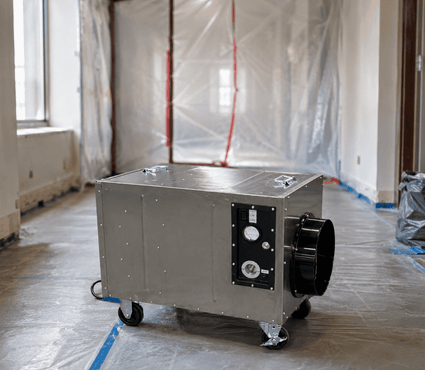
When mold, asbestos, lead dust, or silica is in the air on a remediation jobsite, the right negative air machine isn't optional — it's the difference between a compliant, safe containment and a failed clearance test. For remediation contractors, choosing the right unit means balancing CFM capacity, HEPA filtration efficiency, portability, and durability across varying job sizes.
This guide covers the five best negative air machines for remediation contractors available at Spycor Environmental, with a deep dive into specs, ideal use cases, and what separates each unit from the rest.
What Is a Negative Air Machine — and Why Does It Matter for Remediation?
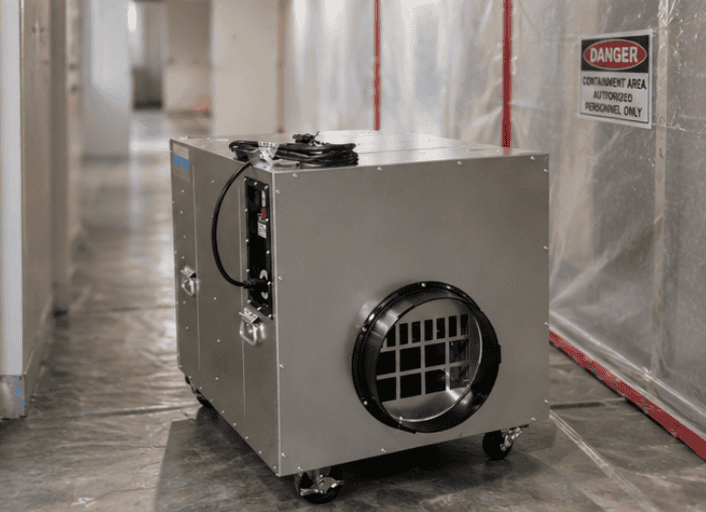
A negative air machine (also called an air scrubber or HEPA air filtration unit) creates negative pressure inside a containment zone by continuously drawing air through a multi-stage filter system and exhausting clean, HEPA-filtered air outside the containment area. This airflow pattern prevents cross-contamination into adjacent spaces — a non-negotiable requirement during mold remediation, asbestos abatement, lead paint removal, and demolition projects.
The key performance metrics remediation contractors need to evaluate are:
- CFM (Cubic Feet per Minute): How much air the machine can process per minute.
- Air Changes per Hour (ACH): Industry guidelines typically require 4–12 ACH inside containment depending on the hazard. More ACH = faster, safer clearance.
- HEPA filtration rating: 99.97% at 0.3 microns is the standard for most abatement work.
- Portability and durability: Contractors move equipment constantly. Weight, casters, handles, and stackability all matter.
- Filtration stages: Multi-stage systems (pre-filter → ring panel → HEPA) extend HEPA filter life and lower long-term operating costs.
Quick Comparison: Top 5 Negative Air Machines for Remediation Contractors
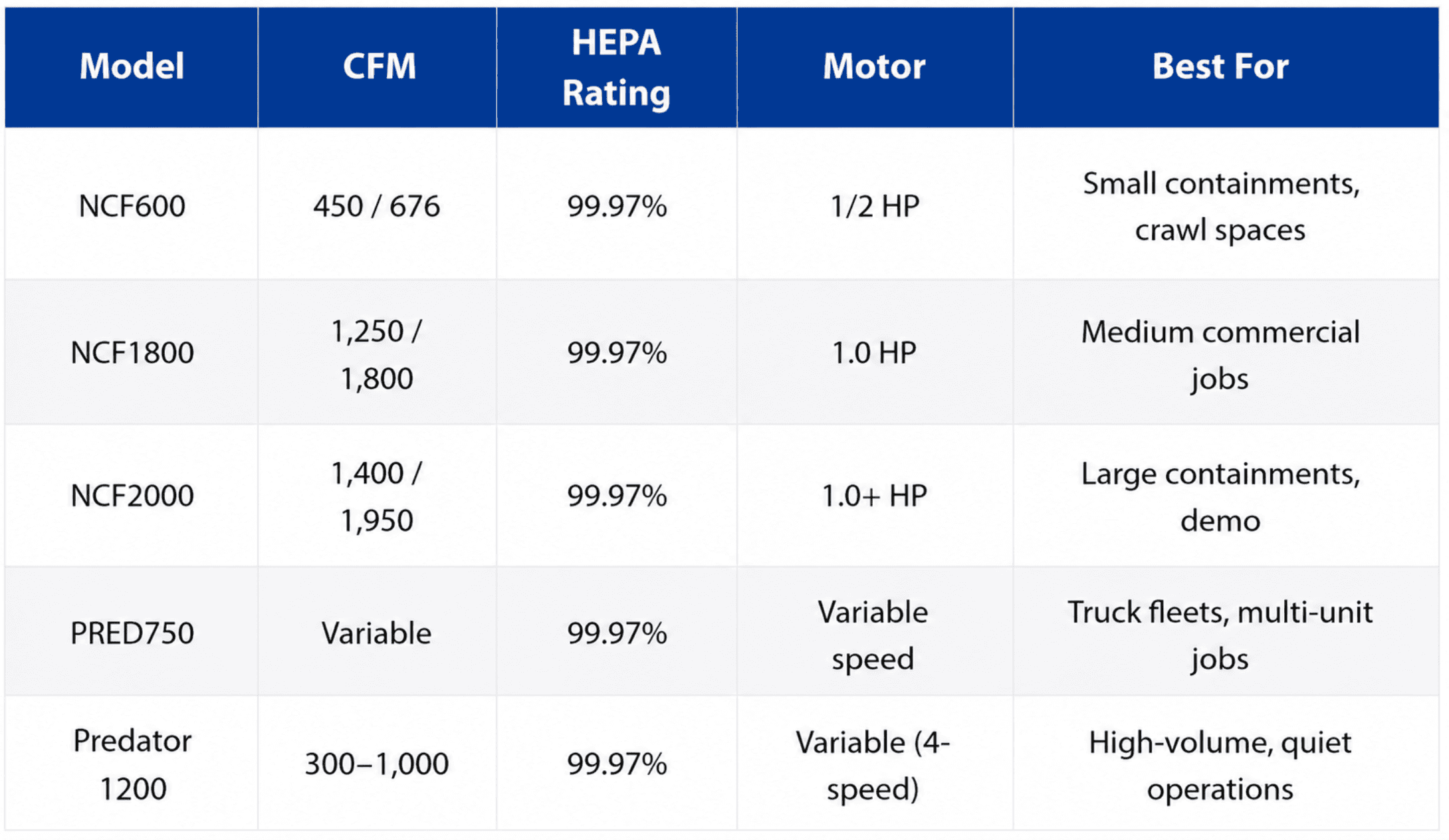
1. NCF600 Professional Negative Air Machine (450/676 CFM) — Best Entry-Level Workhorse
→ View the NCF600 at Spycor Environmental
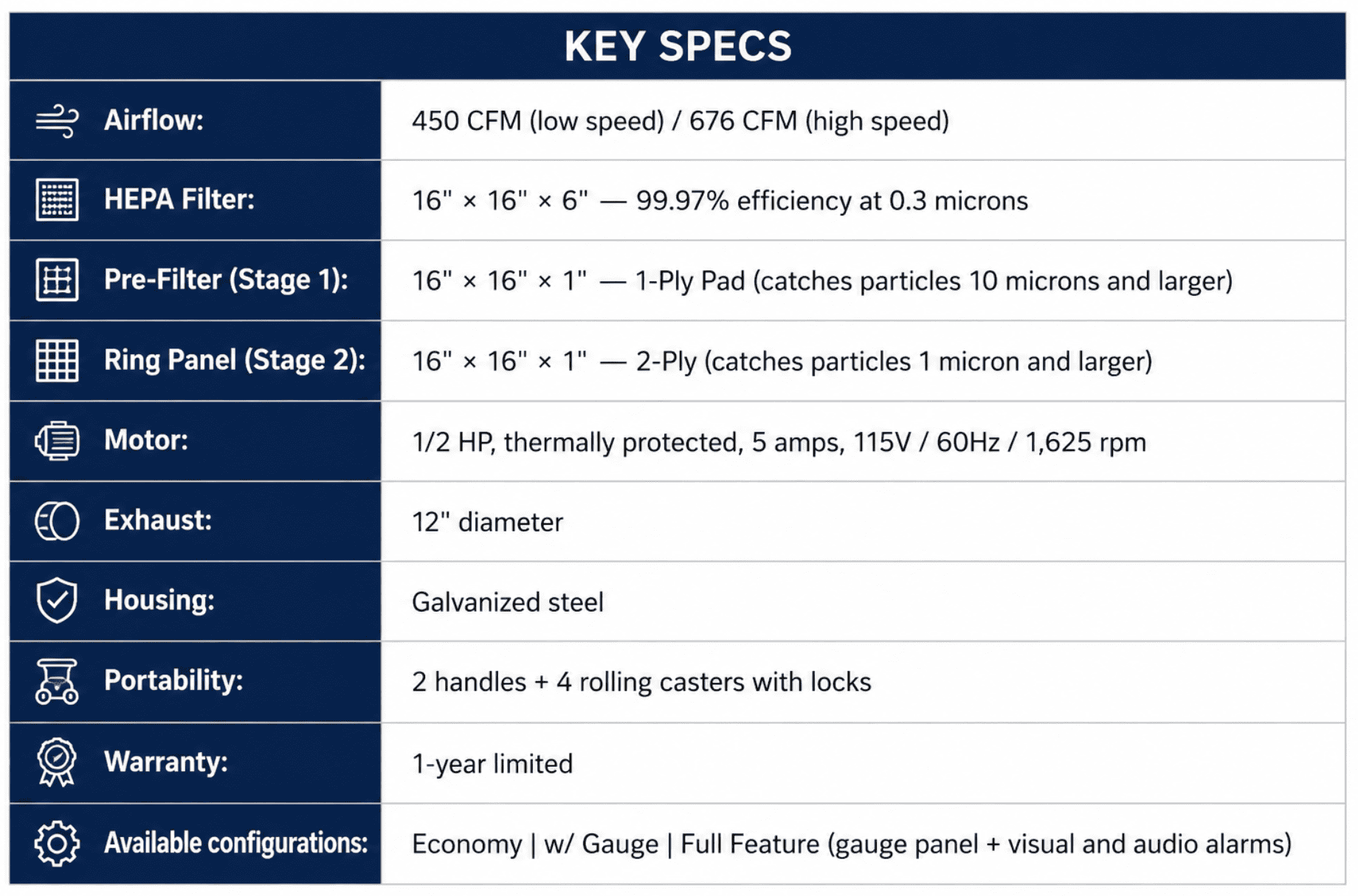
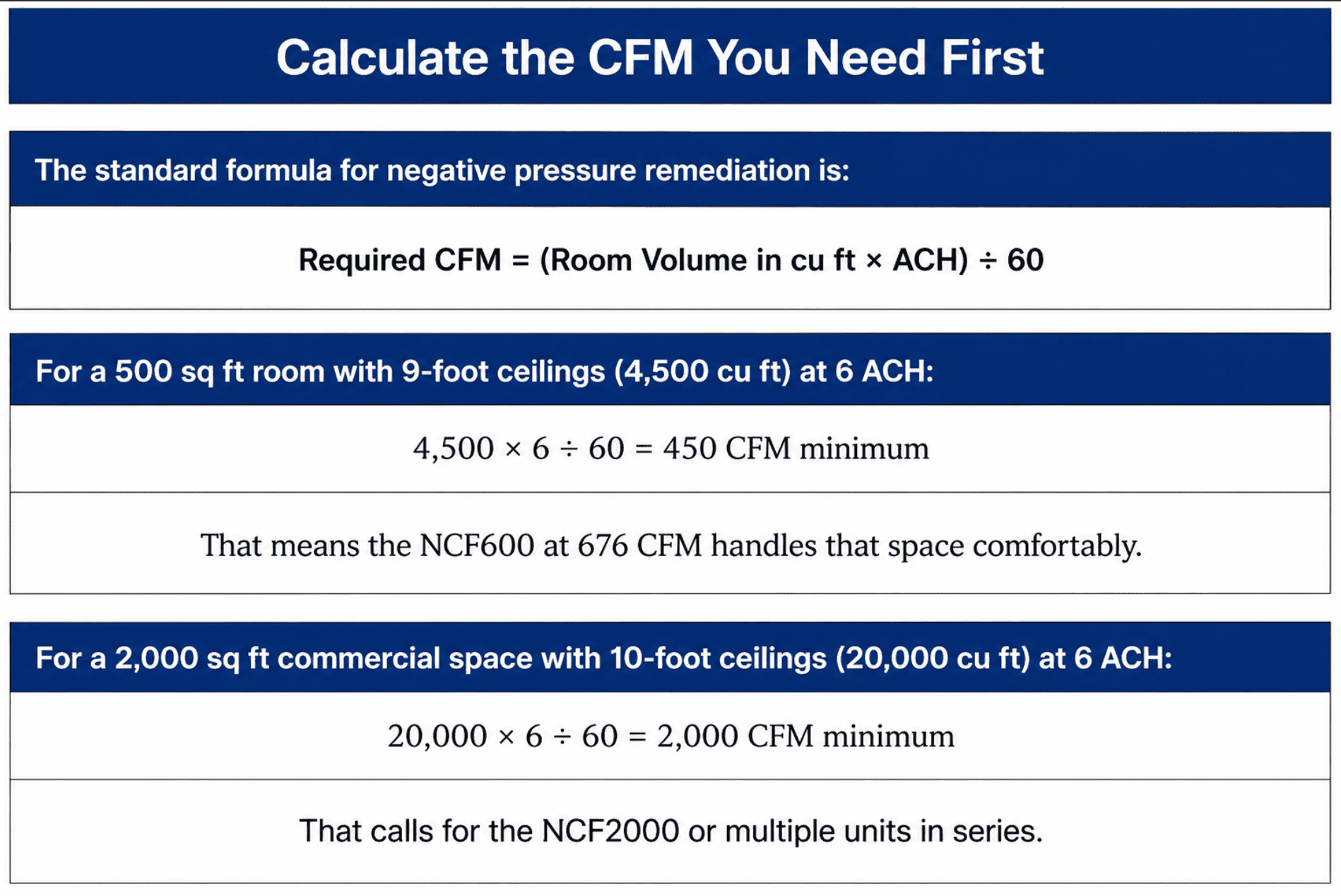
The NCF600 is built for contractors who need reliable, proven HEPA filtration in a compact form factor. It's the go-to unit for single-room mold remediation, bathroom and kitchen abatements, crawl spaces, and tight residential containments where portability is more critical than raw airflow.
Why Remediation Contractors Choose the NCF600
The dual-speed motor lets contractors dial back airflow on smaller containments to reduce noise and extend filter life, then ramp up to 676 CFM when they need to hit required ACH targets quickly.
The thermally protected motor is particularly important for long job cycles — it prevents motor burnout during extended continuous operation. The galvanized steel housing is contractor-grade, not consumer-grade, meaning it can handle the rough handling of daily job-to-job transport.
Best for: Residential mold remediation, single-room asbestos or lead abatement, crawl space and attic work, smaller water damage restoration containments.
Room coverage example: At 676 CFM high speed, the NCF600 achieves approximately 6 ACH in a 1,200 sq ft space with 8-foot ceilings (9,600 cu ft) — well within industry compliance targets for mold remediation.
2. NCF1800 Negative Air Machine (1,250/1,800 CFM) — Best Mid-Range Power
→ View the NCF1800 at Spycor Environmental
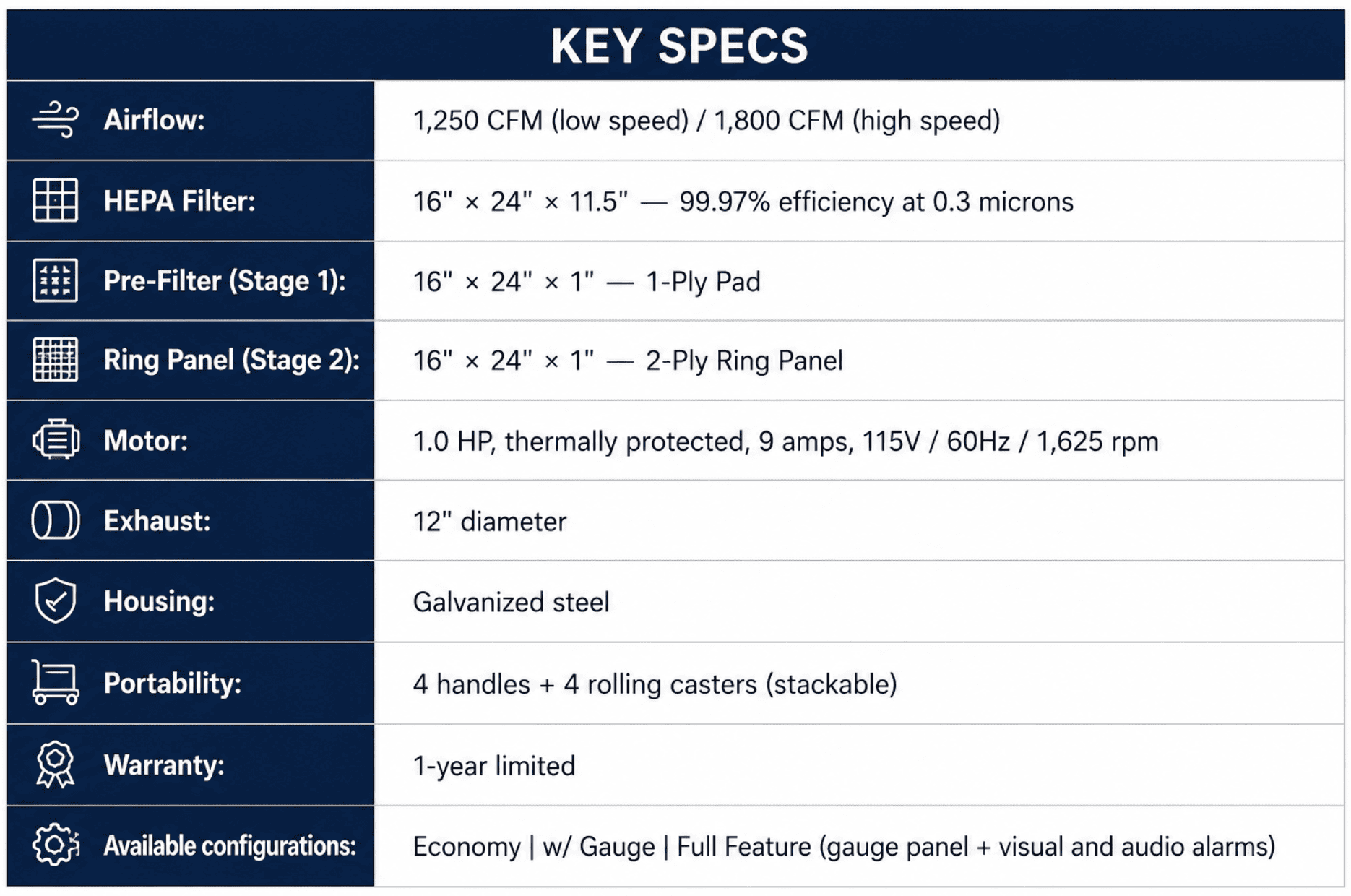
The NCF1800 is the natural step up for contractors handling multi-room residential projects, medium commercial jobs, or situations where larger containment volumes demand faster air turnover. At 1,800 CFM peak and with only a modest price increase over the NCF600, it offers exceptional value for mid-tier abatement work.
Why Remediation Contractors Choose the NCF1800
The jump from 1/2 HP to 1.0 HP (and from 5 amps to 9 amps) is significant — the NCF1800 moves nearly three times the air volume of the NCF600, making it the right choice when contractors are dealing with open-plan spaces, larger mold-affected areas, or commercial abatement scopes that require more aggressive negative pressure maintenance.
The four-handle design and stackable form factor are a notable upgrade from the NCF600, reflecting that this unit is designed to be moved frequently across multiple floors or loaded by two workers. The larger 16" × 24" filter footprint delivers a higher holding capacity between filter changes, reducing consumable downtime on longer jobs.
Best for: Multi-room residential mold remediation, medium commercial abatement, ICRA (Infection Control Risk Assessment) containments in healthcare construction, water damage restoration in commercial settings.
Room coverage example: At 1,800 CFM, the NCF1800 achieves 6 ACH in a space up to approximately 18,000 cu ft — equivalent to a 2,000 sq ft commercial suite with 9-foot ceilings.
3. NCF2000 Negative Air Machine (1,400/1,950 CFM) — Best for Large Containments
→ View the NCF2000 at Spycor Environmental
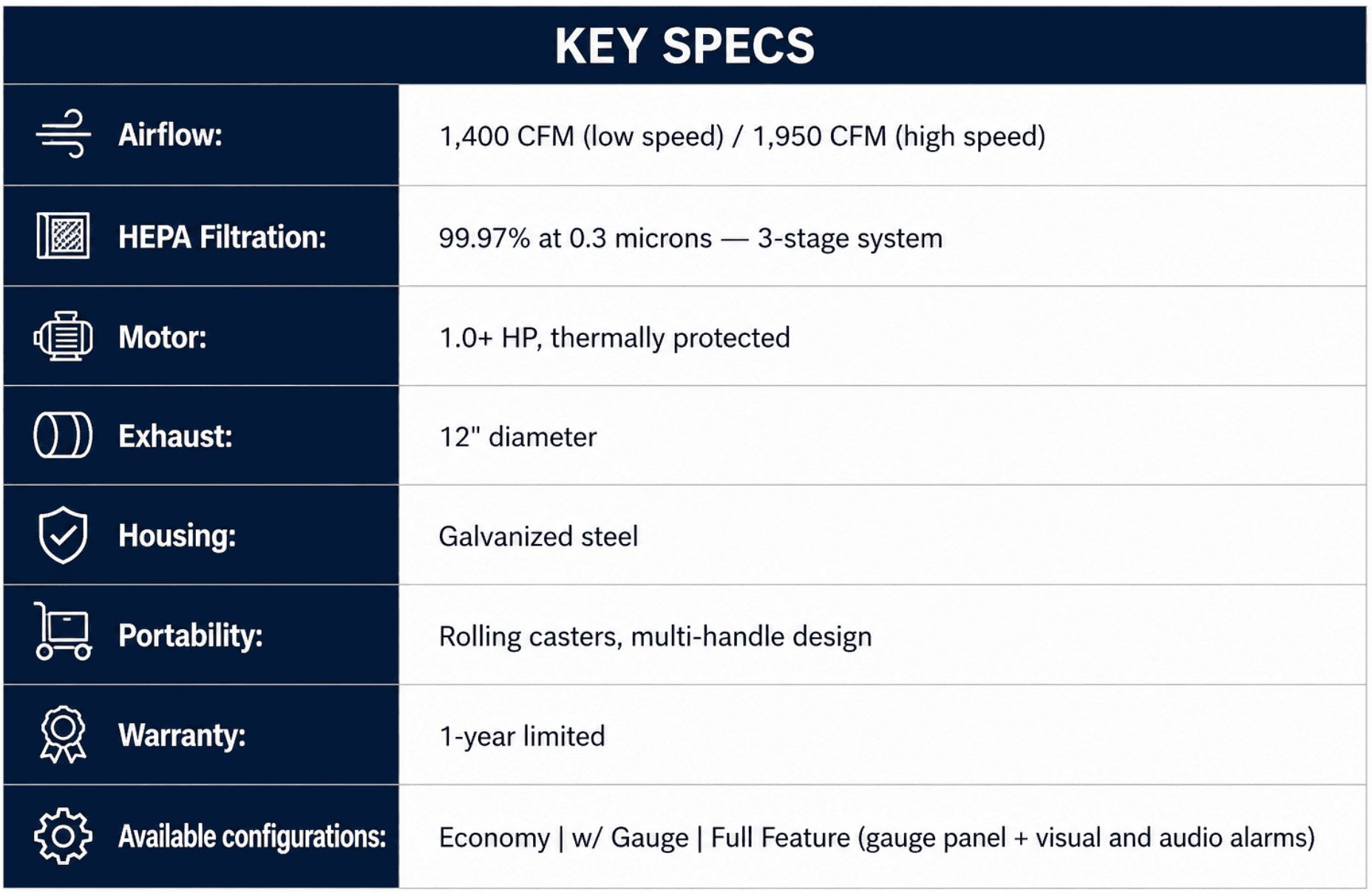
The NCF2000 is the flagship of the NC Filtration lineup and is purpose-built for contractors working large commercial abatement projects, major demolition scopes, and multi-level containments where you need maximum CFM output at a price that won't require fleet financing.
Why Remediation Contractors Choose the NCF2000
When the job scope demands it — large mold-affected basements, commercial kitchens undergoing lead paint removal, or major demolition projects with aggressive dust control requirements — the NCF2000 delivers near-2,000 CFM output for under $930. That's remarkable value in the professional remediation market.
The NCF2000 is also the right choice when contractors need to run a single machine to maintain negative pressure across a large open-plan containment, rather than daisy-chaining multiple smaller units. Fewer machines on a job mean fewer filter change interruptions and simpler equipment management.
The "Full Feature" configuration option — which adds a pressure gauge panel, visual alarm, and audio alarm — is particularly valuable for asbestos and lead abatement jobs where continuous pressure monitoring is a regulatory requirement. Contractors can document compliance without purchasing a separate pressure monitor.
Best for: Large commercial abatement projects, major demolition scopes, large basement mold remediation, open-plan commercial asbestos and lead jobs.
Room coverage example: At 1,950 CFM, the NCF2000 achieves 6 ACH in a space up to approximately 19,500 cu ft — suitable for large commercial floors or industrial spaces.
4. PRED750 Predator Portable Air Scrubber — Best for Fleet Contractors
→ View the PRED750 at Spycor Environmental
Abatement Technologies built the PRED750 Predator specifically for restoration and remediation contractors who need maximum portability, intelligent control features, and the ability to run multiple units across simultaneous jobs. It's the best negative air machine for companies managing high job volume with field crews.
Why Remediation Contractors Choose the PRED750
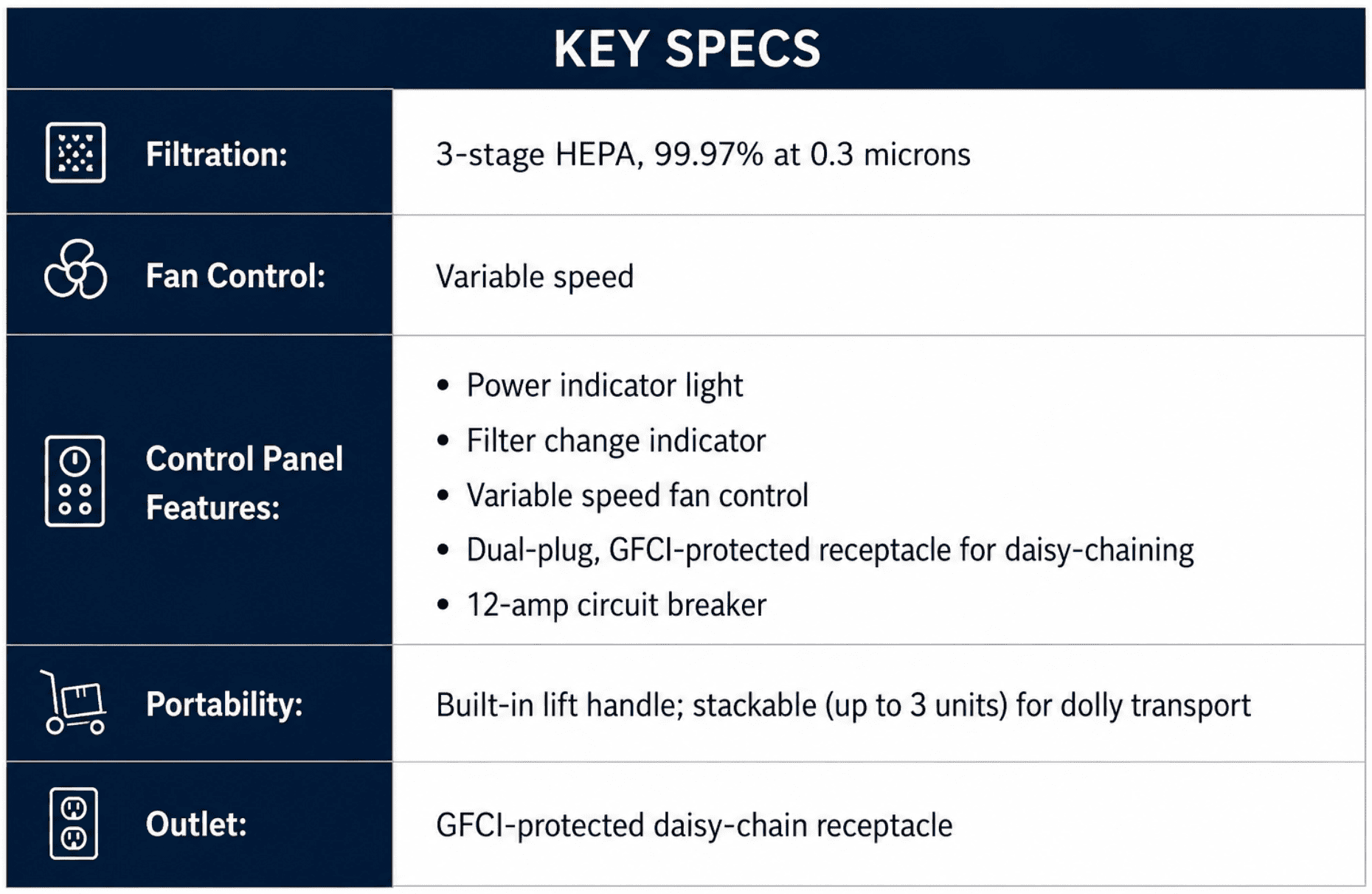
The PRED750 stands apart from the NC Filtration lineup in one critical way: the GFCI-protected daisy-chain outlet. This feature allows contractors to power multiple PRED750 units from a single circuit, dramatically simplifying the electrical setup on jobs where outlets are limited — a common reality in gutted spaces, basements, and crawl spaces during remediation work.
The built-in filter change indicator removes the guesswork from maintenance. Rather than manually checking pressure gauges, field technicians receive a direct signal when the filter needs changing — reducing the risk of a clogged HEPA reducing containment effectiveness mid-job.
The stackable design is engineered for truck-fleet operations: up to three units stack securely together and can be wheeled to or from the jobsite on a standard dolly. For contractors running 4–8 jobs per week, the time saved loading and unloading equipment adds up quickly.
The PRED750 is also the lighter-touch option when a single worker needs to hand-carry a unit to an upper floor or into a tight attic space — the built-in lift handle makes one-person transport practical.
Best for: Multi-job restoration companies, jobs with limited electrical access, contractors who value daisy-chaining capability, field crews where single-person machine handling is common.
5. Predator 1200 by Abatement Technologies (300–1,000 CFM) — Best Premium Portable
→ View the Predator 1200 at Spycor Environmental
The Predator 1200 is what Abatement Technologies built when they asked: what does the ideal negative air machine look like for a contractor who won't compromise on power, weight, noise, or longevity? The result is a machine that delivers more power per pound than any comparable portable unit on the market, wrapped in a virtually indestructible cabinet with a lifetime warranty.
Why Remediation Contractors Choose the Predator 1200
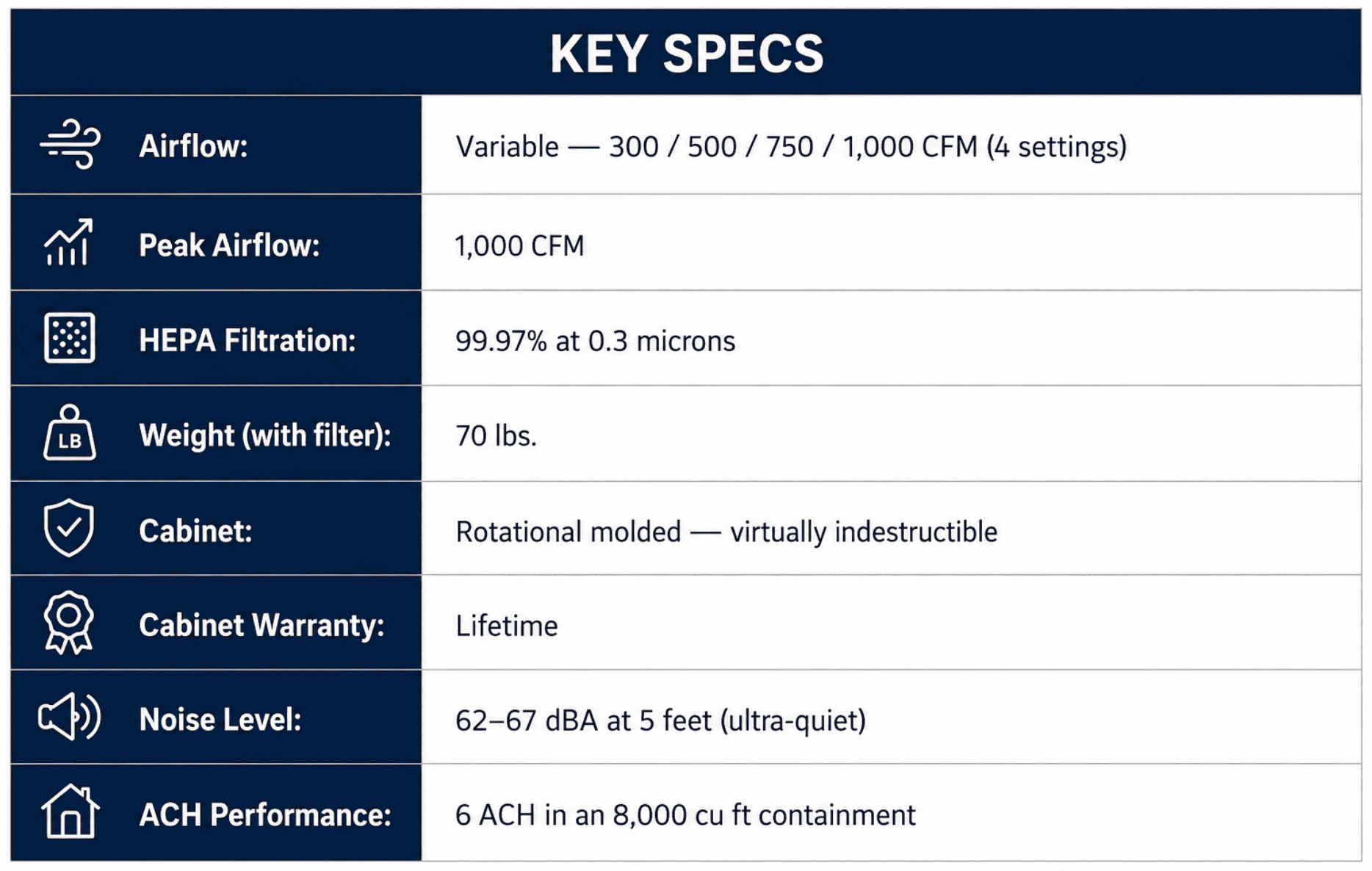
The Predator 1200 is the only unit on this list that combines four-speed variable airflow, a lifetime cabinet warranty, and ultra-quiet operation in a single machine. For contractors who bill at premium rates and need equipment that reflects that positioning, the Predator 1200 is the professional choice.
The 62–67 dBA noise level is a genuine differentiator. Most high-output negative air machines are loud enough to require hearing protection and to cause complaints in occupied or semi-occupied buildings (hospitals, schools, occupied office buildings). The Predator 1200 operates at roughly the sound level of a normal conversation, making it ideal for infection control and remediation work in sensitive environments.
The four-speed variable airflow — from 300 CFM up to 1,000 CFM — gives contractors precise control over negative pressure. At 300 CFM, the unit runs quietly and efficiently on small containments; at 1,000 CFM, it delivers the equivalent negative pressure of much larger, heavier machines. This versatility means contractors can standardize on a single machine model across all job sizes.
At 70 lbs. with filter installed, it's genuinely portable — heavier than the PRED750 but still manageable for a single worker. The rotational molded cabinet is built to survive years of hard use: drops, stacking, outdoor exposure, and repeated transport won't crack or dent it.
6 ACH in an 8,000 cu ft containment at peak airflow makes this more than capable for standard residential and commercial abatement. For contractors who commonly work in medical facilities, labs, or occupied buildings where noise and professionalism are paramount, the Predator 1200 pays for itself quickly.
Best for: Premium restoration contractors, occupied building remediation (hospitals, schools, offices), contractors seeking a single versatile machine for all job sizes, companies prioritizing long-term equipment durability.
How to Choose the Right Negative Air Machine for Your Remediation Jobs
Match the Machine to the Job Type
Consider Long-Term Filter Costs
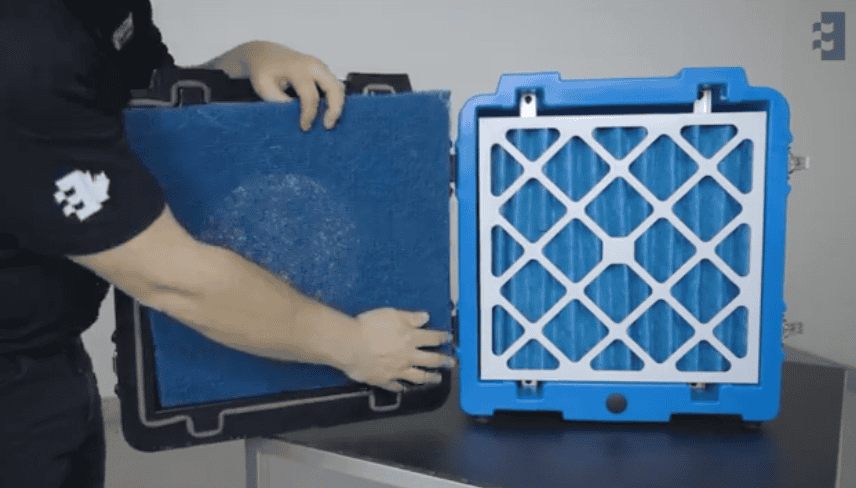
The NCF-series machines use a clear three-stage consumable system (pre-filter pad → ring panel → HEPA), with replacement consumables available directly at Spycor. The pre-filter and ring panel protect the HEPA from heavy dust loading, significantly extending HEPA filter life and reducing per-job consumable costs. Running all three stages as designed will cut your long-term operating costs compared to machines that rely on the HEPA as the first line of defense.
Don't Overlook the Monitoring Options
For asbestos and lead abatement specifically, documentation of continuous negative pressure is often a regulatory requirement. The NCF-series Full Feature configurations include built-in pressure gauges and visual/audio alarms. For jobs where you're using a PRED750 or Predator 1200, pairing your machine with a dedicated room pressure monitor from Spycor ensures you have the compliance documentation you need for every project.
Frequently Asked Questions
What CFM do I need for a negative air machine during mold remediation?
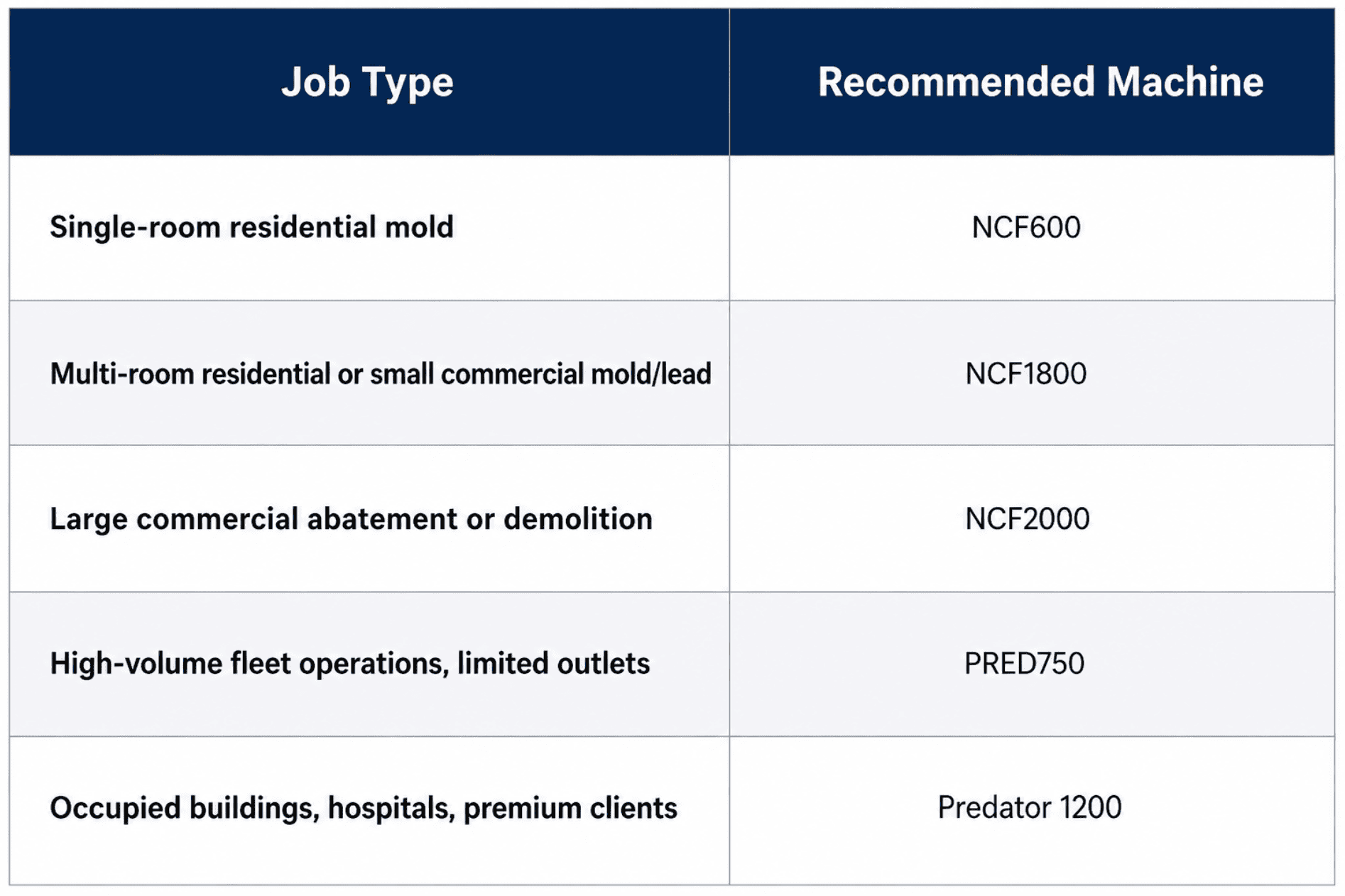
Industry guidelines typically call for 4–6 air changes per hour (ACH) during mold remediation. Divide your containment's cubic footage by 10 as a quick rule of thumb to estimate minimum CFM needed. For example, a 1,500 sq ft area with 8-foot ceilings (12,000 cu ft) needs approximately 1,200 CFM for 6 ACH.
What's the difference between a negative air machine and an air scrubber?
In practice the terms are often used interchangeably in the remediation industry. Technically, a negative air machine is used specifically to create negative pressure in a containment (air is exhausted outside the containment zone), while an air scrubber recirculates filtered air within the same space. Most machines on this list can function in either mode depending on how they're ducted.
Do negative air machines need HEPA filters for mold remediation?
Yes. Mold spores range from 1 to 100 microns in size, and regulatory guidelines for professional mold remediation require HEPA filtration (99.97% at 0.3 microns) to capture airborne spores and prevent cross-contamination. All five machines on this list use HEPA filtration that meets or exceeds this requirement.
Can I use a negative air machine for asbestos abatement?
Yes — in fact negative air machines are required equipment for most regulated asbestos abatement work. EPA and OSHA guidelines require HEPA filtration and negative pressure containment for Class I and Class II asbestos work. The NCF2000, NCF1800, NCF600, PRED750, and Predator 1200 all use 99.97% HEPA filtration rated for asbestos fiber capture.
How often should I change the HEPA filter on a negative air machine?
HEPA filter life depends heavily on the dust load in the containment. Using the pre-filter and secondary filter stages as designed significantly extends HEPA life. A good practice is to monitor the pressure gauge — when differential pressure exceeds the manufacturer's threshold (typically 2.6 inches W.C. at high speed on the NCF-series), it's time for a filter change. On heavy demo jobs, that may be every few days; on lighter mold jobs, filters can last weeks.