
Posted by Spycor Building on May 28th 2026
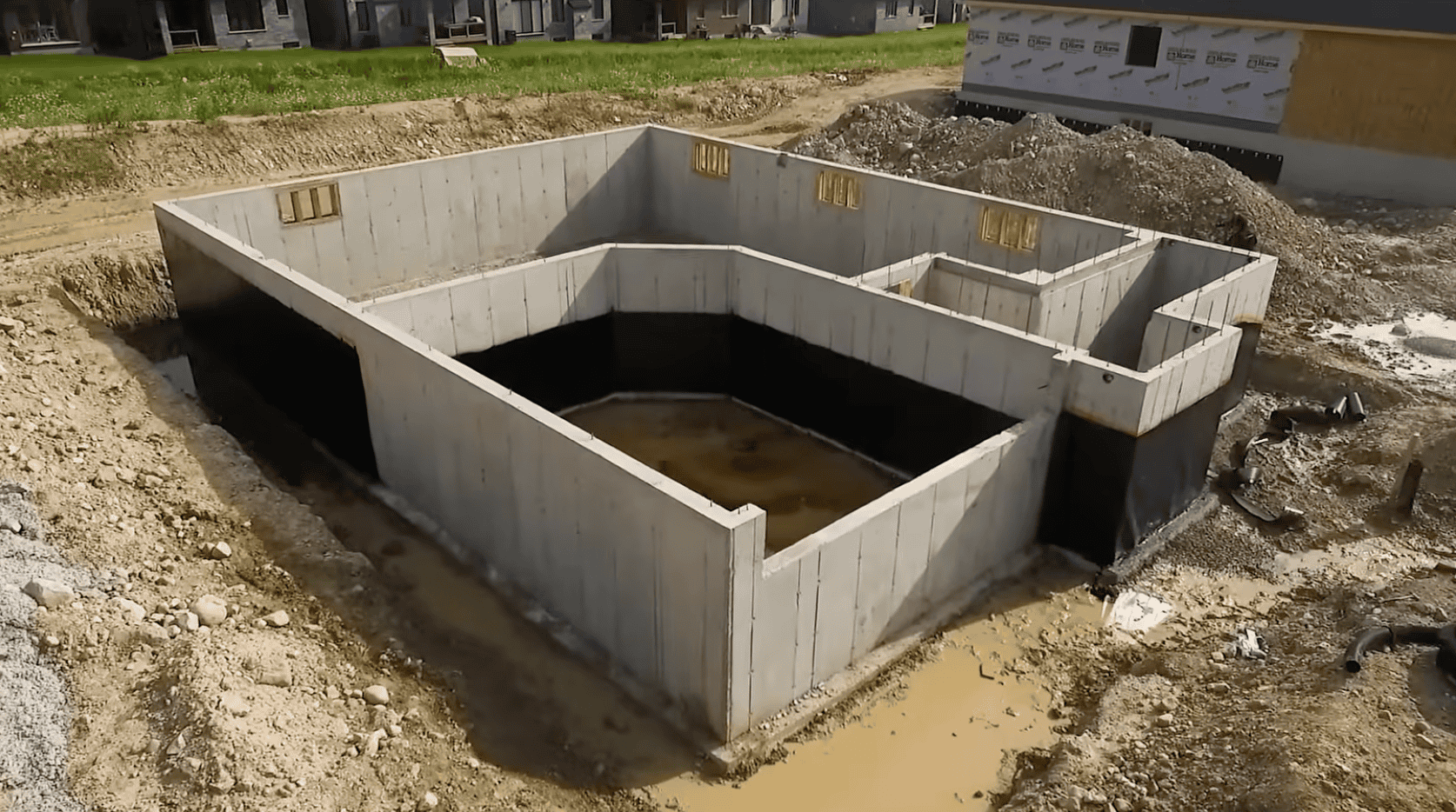
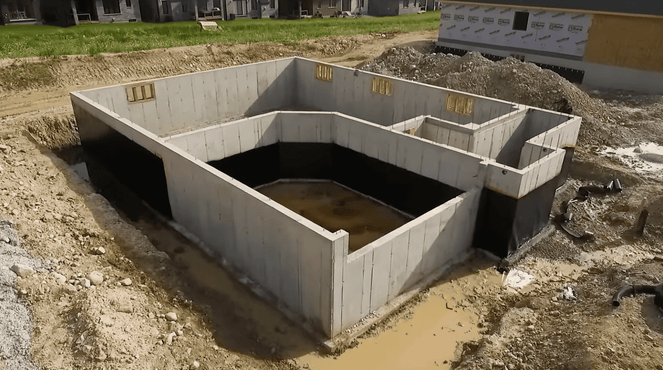
If you have wet foundation walls, you need more than a coat of paint or a bag of hydraulic cement. You need a proven waterproofing system — one that stops water at the source, manages drainage, and protects your foundation for decades. This guide breaks down the three best waterproofing systems for wet foundation walls available in the U.S. today, what makes each one different, and exactly which situation each one is built for.
Why Foundation Walls Get Wet (And Why It Matters)
Wet foundation walls are one of the most common — and most damaging — problems American homeowners face. Whether you're dealing with a poured concrete basement, a concrete block wall, or a below-grade structure on a hillside property, water finds its way in through three main mechanisms:
Hydrostatic pressure occurs when groundwater saturates the soil surrounding your foundation and pushes against the wall with increasing force. This is especially common in clay-heavy soils found throughout the Midwest, Southeast, and Pacific Northwest, and in areas with high water tables.
Surface water infiltration happens when rainwater, snowmelt, or irrigation water migrates downward through the soil and contacts the foundation wall before it has a chance to drain away.
Capillary action allows moisture to wick directly through porous concrete or concrete block, even when no visible crack exists. Over time, this moisture leads to mold growth, efflorescence, structural deterioration, and dramatically reduced indoor air quality.
The bottom line: water damage to a foundation is not a cosmetic issue. Left untreated, it compromises structural integrity, reduces property value, and creates serious health hazards. The right waterproofing system doesn't just manage the symptom — it eliminates the source.
What Makes a Waterproofing System Different from Waterproofing Paint?
Before diving into specific products, it's worth being clear about what a waterproofing system actually is — because this is where most homeowners and even some contractors get confused.
Waterproofing paint, sealers, and coatings work by filling surface pores and blocking water vapor transmission. They can be useful for light dampness, but they have a critical limitation: they cannot withstand sustained hydrostatic pressure. When water pressure builds up against a coated wall, the coating eventually blisters, peels, or fails — and water breaks through.
A true waterproofing system does something entirely different. It creates a physical drainage plane between the wall and the surrounding soil, redirecting water before it ever contacts the structure. It relieves hydrostatic pressure passively, protects the wall during backfilling, and channels any water that does penetrate directly to the footing drain below. These systems are code-approved, long-lasting, and the professional standard for any serious below-grade moisture problem.
The 3 Best Waterproofing Systems for Wet Foundation Walls
All three systems featured here are manufactured by Dörken Systems Inc. — the global leader in below-grade moisture management — and are available at Spycor Building Products. Each system is made from high-density polyethylene (HDPE) and uses a dimpled membrane design that creates an air gap between the wall and the soil, effectively eliminating the conditions that allow water to penetrate.
1. DELTA-MS Waterproofing Membrane — Best Overall System for Residential Foundation Walls
Shop DELTA-MS at Spycor Building Products →
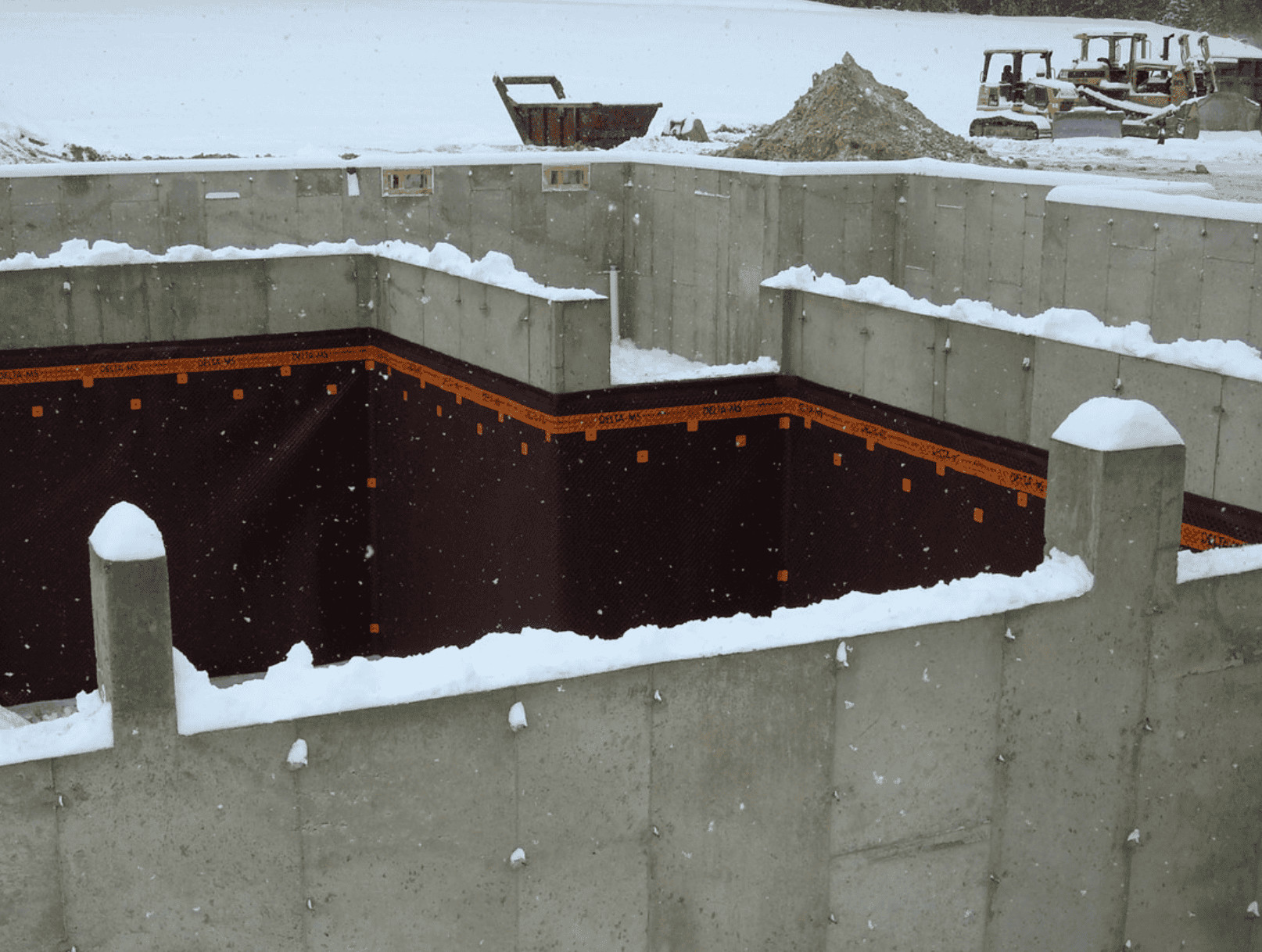
The DELTA-MS is the most widely used below-grade waterproofing membrane in North America, and for good reason. It is a stand-alone, code-approved foundation waterproofing system that works without requiring any spray-applied or sheet-applied waterproofing to be installed first. That makes it significantly faster and more cost-effective than traditional tar-based or asphalt dampproofing methods — at roughly half the cost.
How it works: DELTA-MS is vacuum-formed from a special co-extruded HDPE resin into a distinctive dimpled pattern. When installed against a foundation wall, those dimples create a continuous air gap between the membrane and the wall surface. This air gap acts as a capillary break — it stops water from ever making direct contact with the wall. Any moisture that does penetrate the backfill flows freely down the air gap channel and drains to the perimeter footing drain below, without ever building up hydrostatic pressure against the structure.
Building code compliance: DELTA-MS is approved under the International Residential Code (IRC) and International Building Code (IBC) across the United States as both a dampproofing material and a wall waterproofing material. It meets the requirements of all major U.S. model codes and select state-specific codes.
Best for:
- New residential construction (poured concrete or concrete block)
- Foundation remodels and retrofits
- Basements and crawlspaces
- Homeowners and contractors looking for a proven, affordable stand-alone system
Pro tip: Purchase the DELTA-MS Installation Kit alongside your membrane rolls — it includes DELTA FAST'ners, DELTA Flash tape, and caulk, everything required for a complete, code-compliant installation.
2. DELTA-DRAIN Drainage Board — Best for High Hydrostatic Pressure and Hillside Construction
Shop DELTA-DRAIN at Spycor Building Products →
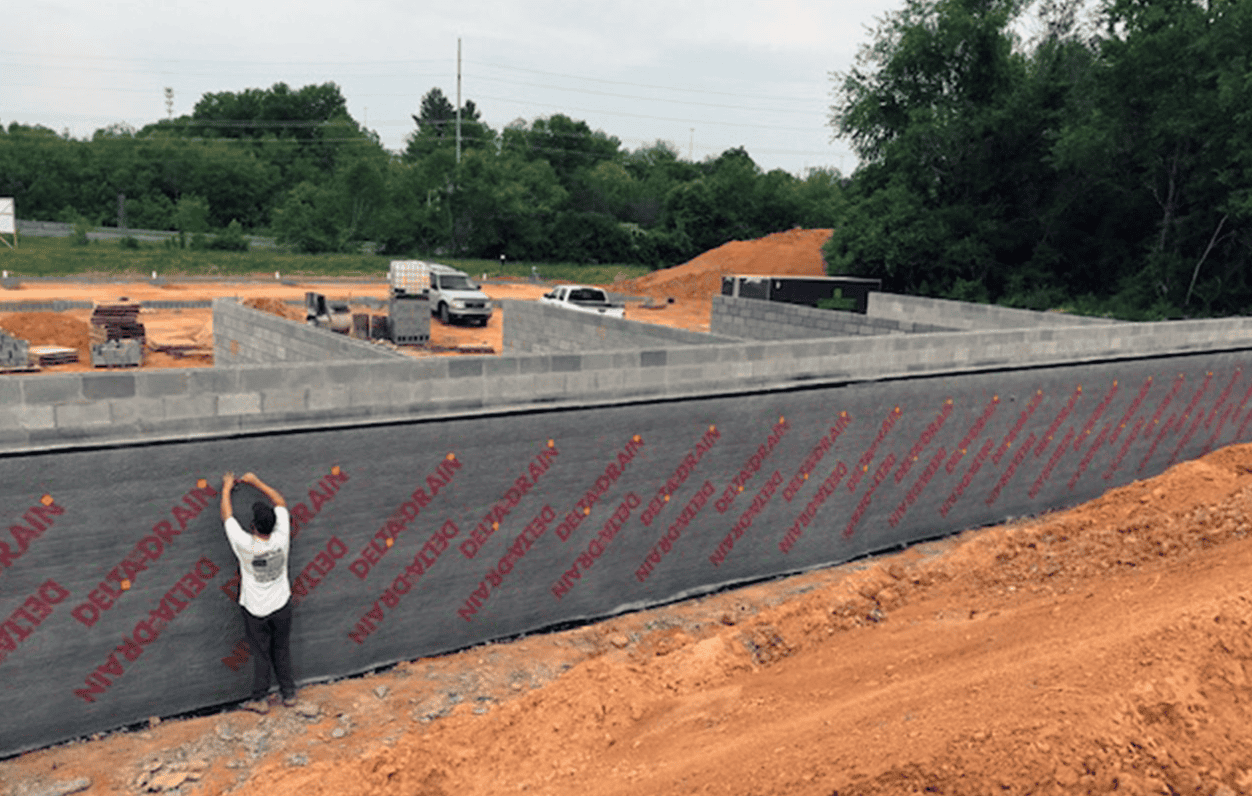
When hydrostatic pressure is severe — hillside properties, high water table zones, deep foundations, ICF construction, or light commercial buildings — the DELTA-DRAIN drainage board is the right call. It takes everything that makes DELTA-MS effective and adds a critical second layer: a heat-bonded polypropylene geotextile filter fabric laminated directly to the dimple crowns.
How it works: DELTA-DRAIN is a multi-layer geocomposite drainage board. The first layer is a heavy-duty HDPE dimple core engineered with a newly developed dimple pattern for superior compressive strength and maximum drainage capacity. The second layer is a TYPAR® geotextile — a rot-proof, thermally bonded filter fabric that screens out fine soil particles before they can migrate into and clog the drainage space. The result is continuous, high-flow drainage that reliably directs groundwater to the perimeter drain system, even under sustained water pressure.
The geotextile difference: This is what separates DELTA-DRAIN from DELTA-MS and from cheaper drainage composites. Without a geotextile layer, fine soil particles (especially in sandy or silty soils) can work their way into the air gap over time and reduce drainage capacity. The TYPAR® geotextile in DELTA-DRAIN eliminates that risk entirely, making it particularly suited for environments with high fine-particle soil content.
Proven in demanding applications: DELTA-DRAIN is rated for hillside residential and light commercial construction to a depth of 30 feet (10 meters). Its large roll sizes (up to 8.0 ft wide x 65.6 ft long) mean fewer seams, faster installation, and lower labor costs on large projects.
Best for:
- Hillside residential construction
- ICF (Insulated Concrete Form) foundations
- High water table environments
- Deep foundations exceeding 10 feet below grade
- Light commercial buildings and parking structures
- Full-wall drainage applications paired with liquid or sheet-applied waterproofing
- Retaining walls requiring drainage relief
3. DELTA-TERRAXX Vertical Drainage System — Best for Commercial and Multi-Story Below-Grade Applications
Shop DELTA-TERRAXX at Spycor Building Products →
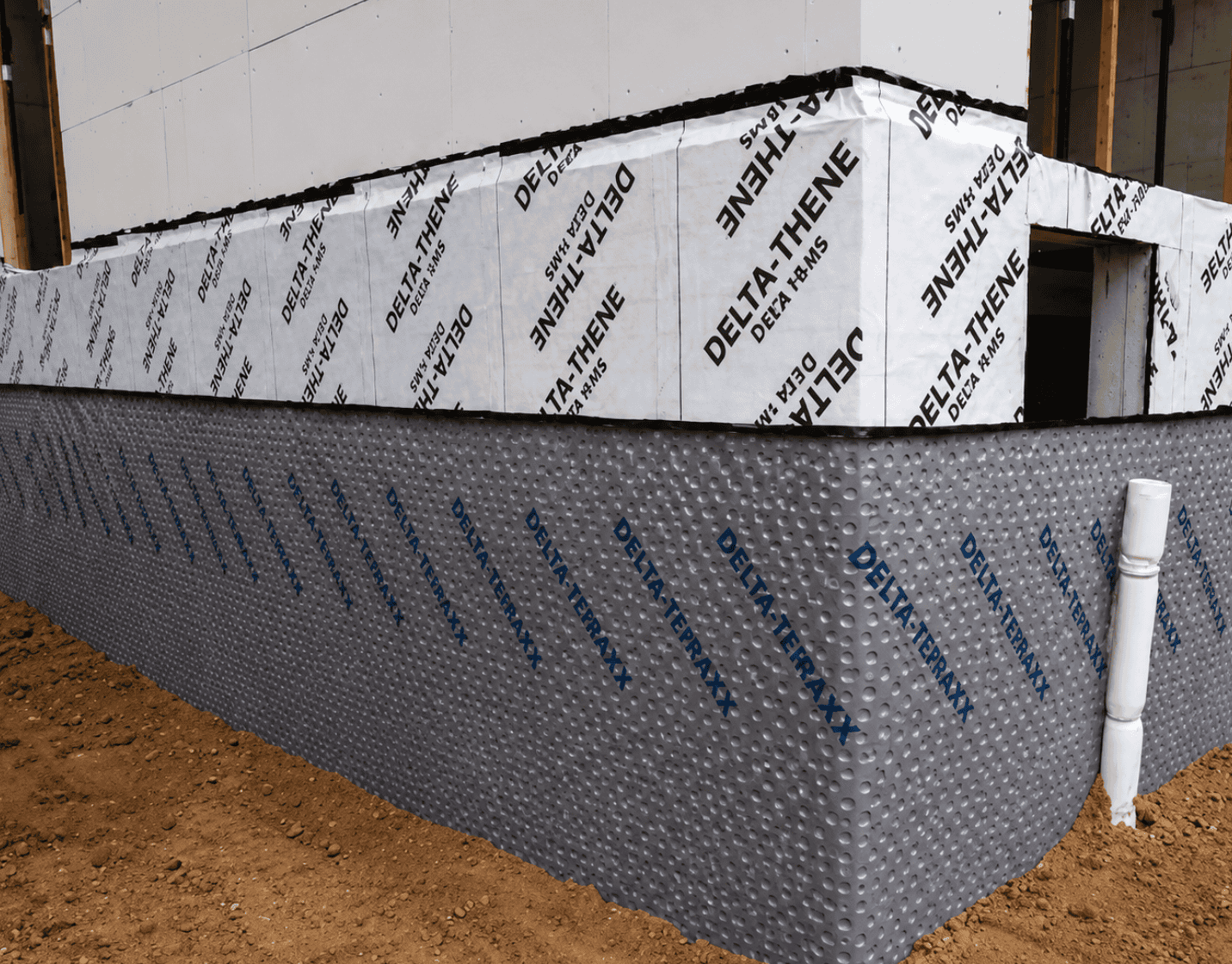
For commercial foundations, multi-story below-grade structures, and any application where conventional drainage composites have fallen short, the DELTA-TERRAXX is the professional-grade solution. Engineered specifically for vertical drainage applications, it solves a problem that has plagued the industry for years: geotextile clogging and the compression of drainage space under heavy soil loads.
The problem it solves: Standard drainage boards — even decent ones — have been commoditized over the years. Manufacturers have cut costs by using cheaper geotextiles that have less resistance to soil pressure after backfilling. Over time, soil pressure compresses the drainage space around the dimples, reducing flow rates. Fine particles clog the geotextile. The result is a drainage system that works at installation but degrades significantly over time.
DELTA-TERRAXX was engineered specifically to solve this problem.
How it works: DELTA-TERRAXX uses a unique clog-resistant geotextile manufactured through a special thermal bonding process that permanently bonds it to the dimple structure. This means that even after backfilling — even under the compressive load of soil, snow, landscaping, and significant vehicle wheel point loads — the drainage space around and between the dimples is maintained. Flow rates remain stable. Drainage performance does not degrade.
Best for:
- Commercial and mixed-use foundations
- Multi-story below-grade structures (up to 7 stories)
- Applications where long-term drainage performance cannot be compromised
- Projects where previous drainage composites have failed or clogged
- Contractors requiring a system with documented 100-year durability
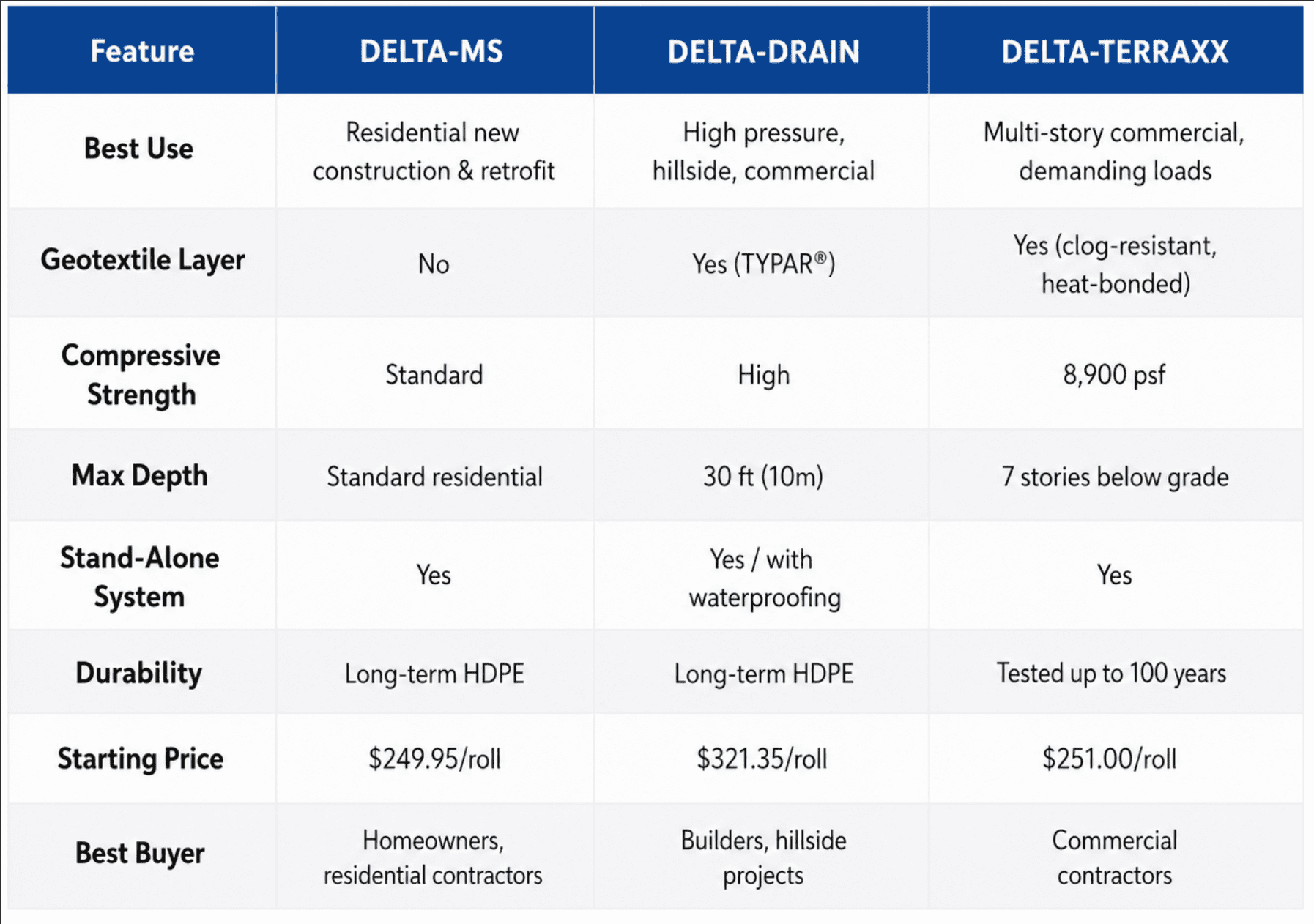
Side-by-Side Comparison: Which System Is Right for You?
How to Choose the Right System for Your Situation
If you're a homeowner with a wet basement or crawlspace: Start with DELTA-MS. It's the most affordable, the easiest to install, and it's code-approved as a stand-alone system. For the vast majority of residential foundation moisture problems across the U.S., it is the right answer.
If you're building or remodeling on a hillside, in a high water table area, or on an ICF foundation: Step up to DELTA-DRAIN. The added geotextile layer ensures your drainage system stays clear and functional for the life of the structure, especially in fine-particle or sandy soil conditions where clogging is a risk.
If you're a contractor working on a commercial project, a multi-story below-grade structure, or a job where long-term performance is non-negotiable: Specify DELTA-TERRAXX. Its 8,900 psf compressive strength and 100-year tested durability make it the only choice when structural loads, soil pressure, and long-term reliability are all on the table simultaneously.
Installation Overview: What to Expect
All three systems follow a similar installation sequence for exterior foundation walls:
- Clean the wall surface. For concrete block foundations, parge the wall first. Poured concrete walls can typically receive the membrane directly.
- Install the membrane dimple-side toward the wall. The air gap faces the foundation; the flat face faces the soil.
- Secure the membrane at the top using the appropriate fasteners (DELTA FAST'ners, DELTA-PLUG, or DELTA-GRIP depending on the system).
- Seal the top edge with DELTA Flash tape and caulk to prevent soil and debris from entering the air gap.
- Extend to the footing edge. Run the membrane continuously to the edge of the footing to prevent water seepage at the wall-footing joint.
- Backfill carefully. Avoid sharp rocks or debris in the fill material that could damage the membrane.
For detailed installation instructions, architectural details, and technical specifications, download the documentation directly from each product page at Spycor Building Products.
Frequently Asked Questions
What is the best waterproofing system for wet foundation walls?
For most residential applications in the United States, the DELTA-MS dimpled membrane waterproofing system is the best choice. It is code-approved as a stand-alone waterproofing system under both the IRC and IBC, requires no surface preparation or additional spray coating, and is available at roughly half the cost of conventional asphalt-based systems. For high-pressure or commercial applications, DELTA-DRAIN or DELTA-TERRAXX are the appropriate upgrades.
Do I need to apply waterproofing paint before installing a dimple membrane?
No. All three DELTA systems are approved as stand-alone waterproofing solutions and do not require a spray or sheet-applied waterproofing underneath them. In special conditions specified by a designer, a dual-system approach may be used, but it is not required for code compliance.
What is the difference between dampproofing and waterproofing?
Dampproofing resists moisture vapor transmission but cannot withstand sustained hydrostatic pressure. Waterproofing — which includes all three systems covered in this guide — is designed to resist actual water infiltration under pressure. Building codes in the U.S. require waterproofing (not just dampproofing) in below-grade spaces that will be used as living or storage areas.
Can these systems be installed on concrete block walls?
Yes. All three systems can be used on concrete block foundations. It is strongly recommended — and in many jurisdictions required by code — to parge concrete block walls prior to membrane installation to create a uniform surface.
How much does foundation waterproofing cost?
Material costs for professional-grade dimple membrane waterproofing systems range from approximately $0.50 to $1.00 per square foot depending on the product selected. DELTA-MS starts at $249.95 for a 328 sq ft roll. DELTA-DRAIN is $321.35–$429.84 per roll. DELTA-TERRAXX is $251.00 per roll. These figures represent materials only; installation costs vary by region and project complexity.
Are these systems approved by U.S. building codes?
Yes. DELTA-MS and DELTA-DRAIN are approved under the International Residential Code (IRC) and International Building Code (IBC). DELTA-MS holds an ICC-ES Evaluation Report (ESR-2303). All products are manufactured to meet or exceed U.S. model code requirements for below-grade waterproofing.
How long do these waterproofing systems last?
HDPE dimple membranes are highly resistant to oxidation, chemical degradation, and environmental stress cracking. DELTA-TERRAXX has tested long-term durability of up to 100 years. All three systems are designed to outlast the structures they protect when properly installed.