
Posted by Spycor LLC on Sep 15th 2026
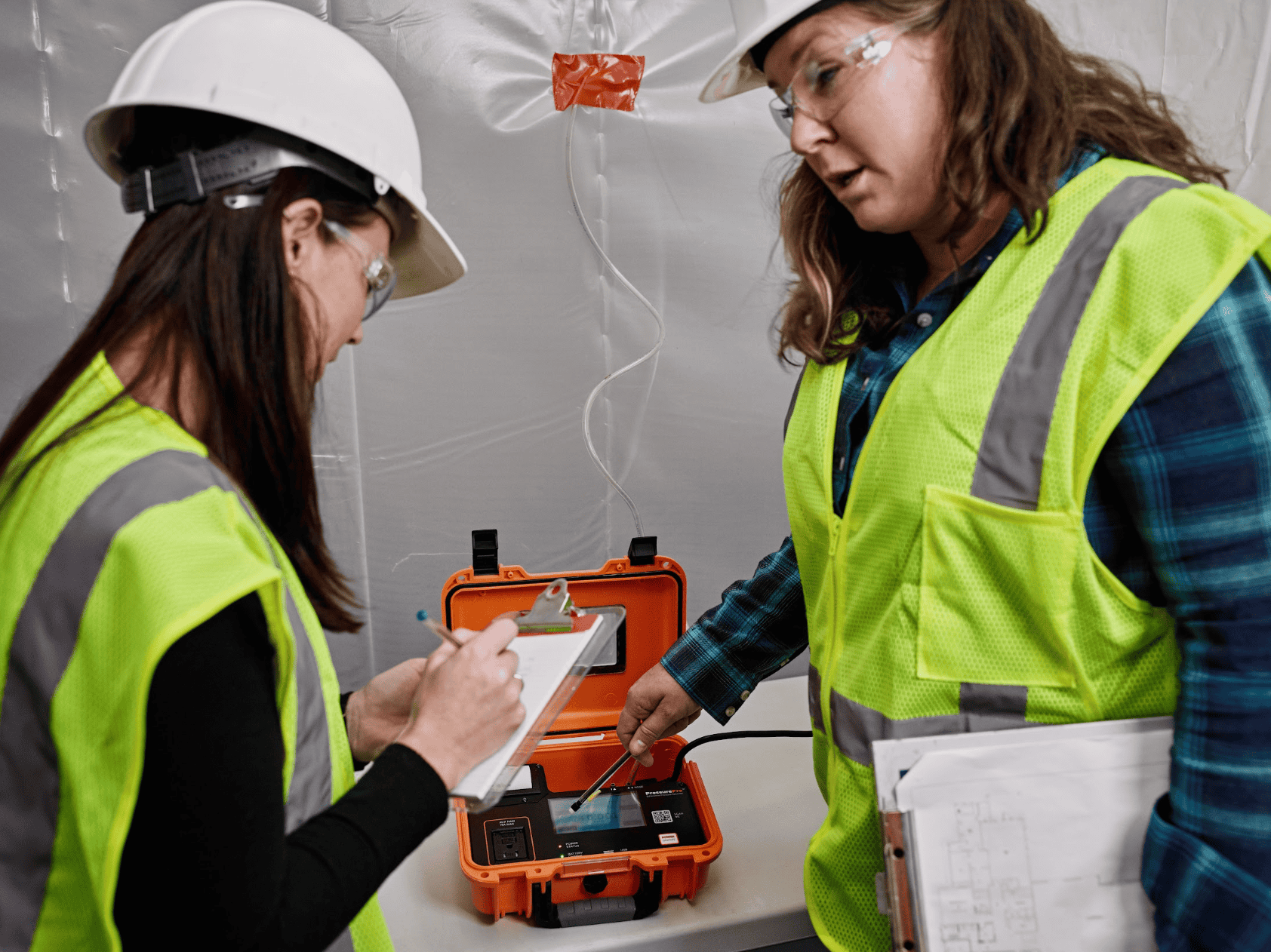
Negative pressure in a containment area is monitored with a manometer, or differential pressure recorder, that measures the pressure difference between the containment and the surrounding area. Required pressure levels and air change rates depend on the application and governing standard — for example, OSHA's asbestos rules and CDC/ASHRAE healthcare guidance set different minimums. Digital differential pressure recorders can continuously monitor pressure, log changes, trigger alarms, and produce documentation throughout a project.
Negative pressure containment is the backbone of safe asbestos abatement, mold remediation, and other hazardous work. Get it wrong — a poorly sealed enclosure, an uncalibrated gauge, an alarm that doesn't trigger — and you risk a failed clearance test, a compliance citation, or worse, exposing workers and building occupants to contamination. This guide covers what equipment is involved, what the major standards actually require by application, how to set up and monitor a containment correctly, and how to choose a recorder that keeps a defensible record of every reading.
What Is Negative Pressure Monitoring?
Negative pressure monitoring is the practice of continuously measuring the air pressure difference (differential pressure) between a contaminated work area — a containment, enclosure, or isolation room — and the clean area surrounding it. When the containment is held at a lower (negative) pressure than its surroundings, air flows into the containment through any gaps, rather than contaminated air leaking out. This is the core engineering control behind asbestos abatement enclosures, mold remediation containment, lead-safe work areas, healthcare isolation rooms, and dust containment for demolition or duct cleaning.
What Equipment Is Used to Monitor Negative Pressure?
Three pieces of equipment work together, and it's worth being clear on what each one actually does:
- Negative air machine (or air scrubber): Creates the negative pressure by exhausting filtered air from the containment, pulling in replacement air from the surrounding clean area.
- Differential pressure recorder (manometer): Measures the pressure differential the negative air machine is creating, comparing containment pressure to the reference area outside it.
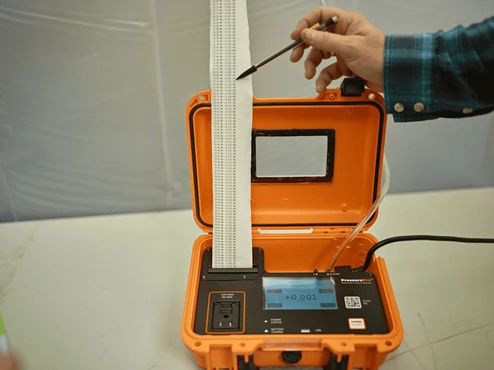
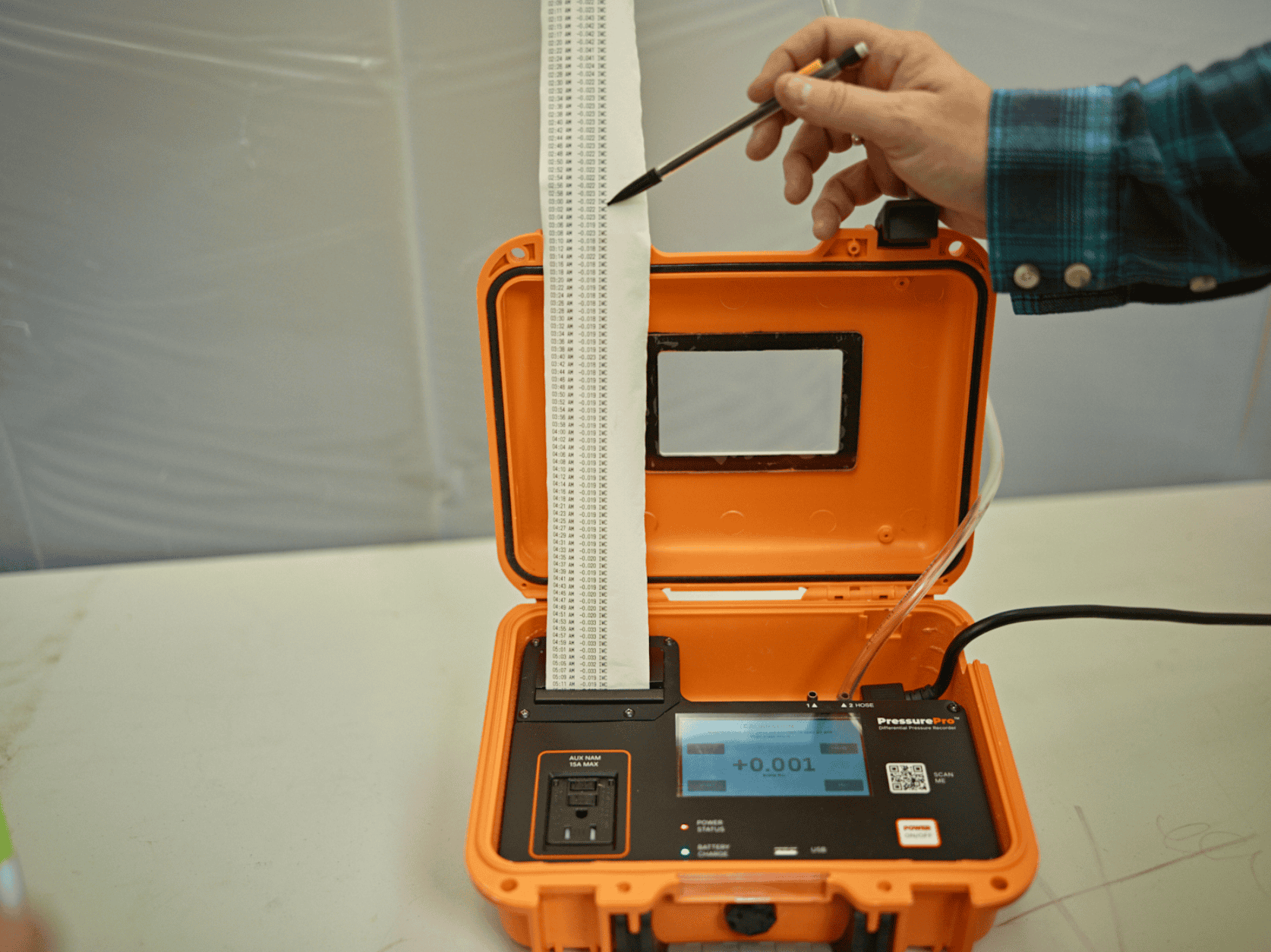
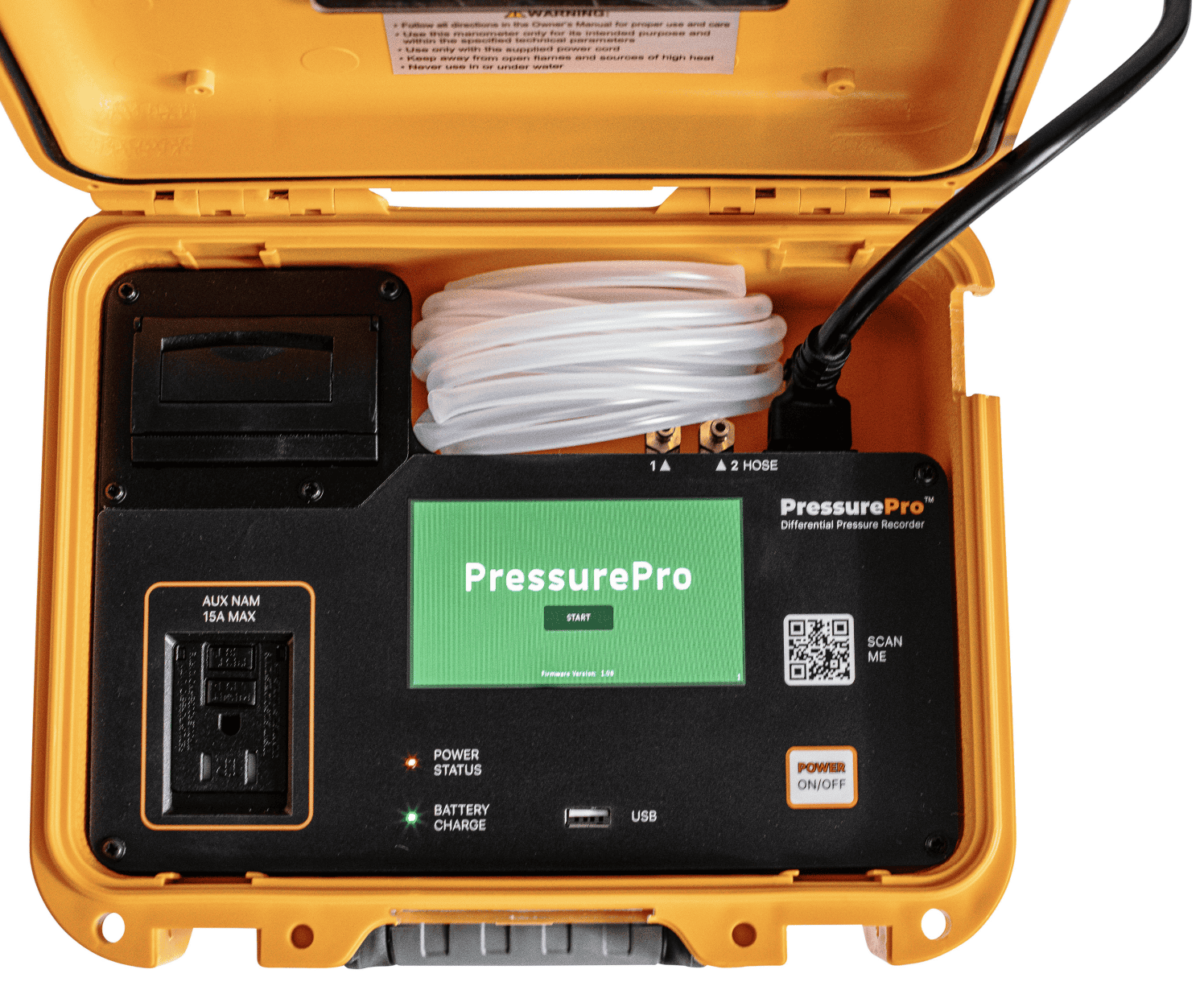
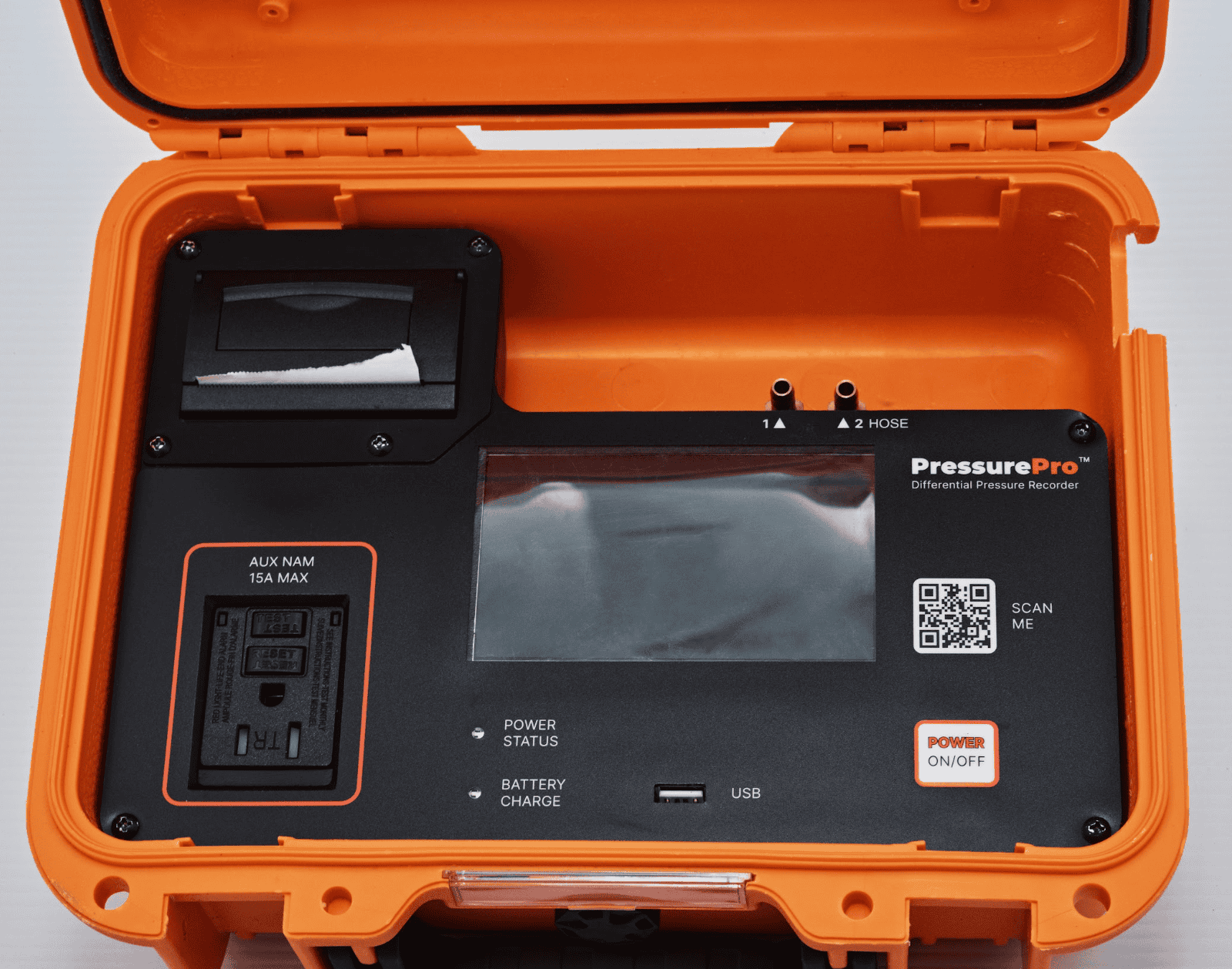
- A digital recording manometer, such as the PressurePro Differential Pressure Recorder: Does what a basic manometer does, but also logs readings continuously, timestamps them, triggers high/low alarms, and produces a printable or exportable record — the documentation most job specifications and regulations actually require.
In short: the negative air machine does the work, the manometer measures whether that work is succeeding, and a recording manometer proves it over time.
Why Negative Pressure Monitoring Matters for Contractors
- It's frequently a regulatory or specification requirement, not just good practice. Depending on the hazard, monitoring and documentation may be required by federal regulation (asbestos), state rule, an industry consensus standard, healthcare facility guidance, or your specific project's written specification — the applicable requirement depends on the job type.
- It's your defense in an audit or dispute. A timestamped log is often the only proof that containment held throughout the job, especially if a clearance test is questioned later.
- It protects your crew and the client's occupants. A failed or unmonitored negative pressure enclosure is one of the most common root causes of cross-contamination incidents.
- It affects clearance and reoccupancy timelines. Inconsistent readings or gaps in the record can delay third-party clearance testing and reoccupancy.
Differential Pressure Monitoring for Asbestos Abatement
For Class I asbestos work using a negative pressure enclosure (NPE), OSHA's non-mandatory Appendix F to 29 CFR 1926.1101 sets out the specific performance criteria historically used to demonstrate a compliant NPE:
- A minimum of -0.02 inches of water column (WC) pressure differential, relative to outside pressure, maintained within the enclosure and evidenced by manometric measurements
- At least 4 air changes per hour (ACH) within the enclosure
- The enclosure kept under negative pressure continuously throughout its use
- Air movement directed away from employees performing the work, toward the HEPA filtration/exhaust
Many state asbestos abatement rules build on this same baseline and add specific monitoring procedures — for example, requiring the recording manometer to be checked at set intervals (commonly every 2 hours) during work shifts, zeroed before work begins each day, and calibrated at least annually, with a backup unit placed in service within 24 hours of a failure. Requirements can vary by state, so always confirm the exact figures in your project specification and the regulations governing your job's location.
Differential Pressure Monitoring in Healthcare and Isolation Environments
Airborne Infection Isolation Rooms (AIIRs) — negative pressure rooms used for patients with airborne infectious disease — follow a different baseline, set by CDC/HICPAC infection control guidance and incorporated into ASHRAE Standard 170 and the Facility Guidelines Institute (FGI) healthcare construction guidelines:
- A minimum pressure differential of roughly 2.5 pascals (about 0.01 inch of water column), negative relative to the corridor or anteroom
- A minimum airflow differential between exhaust and supply of at least 10%, or 100 CFM, whichever is greater
- Commonly 12 or more air changes per hour, per ASHRAE 170 and FGI guidelines
- Continuous monitoring while the room is occupied, with visual and/or audible alarming
These figures are healthcare-specific and shouldn't be applied to asbestos, mold, or general demolition containment — the governing standard, and the equipment required to meet it, differs by application. Always confirm the requirement against the current edition of ASHRAE 170/FGI and your facility's own specification.
Other Applications: Mold Remediation and General Dust Containment
For professional mold remediation, ANSI/IICRC S520 defines containment levels (limited, full, modified full, and large-scale) scaled to project size and risk, with full containment requiring HEPA-filtered negative air. Minimum air change rates are commonly cited around 4 ACH for full containment, but specifics can shift between editions of the standard — verify the exact figure in the current S520 edition and reference guide before relying on it for a job specification.
For general dust or demolition containment without a specific regulatory driver, industry practice commonly targets somewhere in the 4–10+ ACH range depending on the contaminant, with the manometer confirming that a measurable negative differential is actually being achieved and held.
How to Set Up and Monitor a Negative Pressure Containment
| Step | What to Do |
|---|---|
| 1. Seal the containment | Establish critical barriers and a sealed enclosure (poly sheeting, taped seams, sealed HVAC penetrations) appropriate to the containment level required for the hazard and project size. |
| 2. Position the negative air machine or air scrubber | Set up HEPA-filtered negative air equipment sized to achieve the air changes per hour required by your governing standard, and exhaust to a safe, approved location outside the containment. |
| 3. Place the manometer correctly | Position the differential pressure recorder so its reference tubing measures true containment pressure versus the clean, uncontaminated reference area — not a hallway or anteroom that may itself be under altered pressure. |
| 4. Zero and calibrate before starting | Zero the manometer each day before work begins. Have the unit calibrated at least annually, or more often if your project specification requires it. |
| 5. Confirm the target differential | Verify the reading meets or exceeds the minimum differential required by your governing standard (see the application-specific sections above) before work begins. |
| 6. Monitor continuously and log readings | Use a continuous recording manometer, or take and log manual readings on the interval your specification requires. Set high/low alarm thresholds so deviations are caught immediately. |
| 7. Keep a backup plan | Have a spare or backup recording manometer available in case the primary unit fails mid-project. |
| 8. Retain the record | Keep the printed or digital pressure log on-site and available for inspection, and retain it as part of your project documentation for clearance testing, client reporting, and audit defense. |
Manual Manometer vs. Digital Recording Manometer
Contractors generally monitor negative pressure one of two ways:
- Manual/analog manometer (Magnehelic-style gauge): Lower upfront cost, no power required, straightforward to read. Best suited to small jobs or as a backup unit, since compliance depends entirely on staff manually reading and logging the gauge at the required interval — there's no automatic alarm or digital record.
- Digital recording manometer: Continuously records and timestamps pressure readings, triggers audible/visual alarms on deviation, and produces a printable or exportable compliance log automatically. This removes the risk of a missed manual reading and gives you a defensible record without extra paperwork.
For any job with a strict monitoring interval, a continuous documentation requirement, or a large or long-duration containment, a digital recording manometer is the more reliable choice — and increasingly what specifications and clients expect to see on-site.
Choosing the Right Differential Pressure Recorder
| Feature | Basic Manometer | PressurePro Differential Pressure Recorder | Omniguard 6 |
|---|---|---|---|
| NIST-traceable accuracy certificate | Not typically included | Included | Included |
| Continuous digital data logging | No | Yes | Yes |
| Remote connectivity | No | Wi-Fi | Cellular + Wi-Fi |
| On-board printer | No | Yes, quick-swap | Yes |
| Best for | Small jobs, backup unit | Standard-to-large containment jobs needing an on-site, self-contained recording unit | Multi-site or remote projects needing off-site/real-time monitoring |
For most abatement and remediation contractors running standard containment jobs, the PressurePro Differential Pressure Recorder covers the core requirement — NIST-traceable accuracy, continuous logging, alarms, and a printable record — in a self-contained unit. If you're managing multiple active sites or need to check pressure readings remotely without a site visit, the Omniguard 6 adds cellular connectivity on top of the same core monitoring function. For light-duty spot checks or as a low-cost backup unit, a basic differential pressure manometer is a reasonable supplement, but shouldn't be your only monitoring method on a job with a continuous-recording requirement.
Browse the full range in Room Pressure Monitors or pair your monitor with the right negative air machine to hit your required air changes per hour.
Common Mistakes to Avoid
- Referencing the wrong "outside" pressure. Measuring against an anteroom or hallway that isn't truly ambient/clean-side air gives a false reading.
- Skipping the daily zero. A manometer that isn't zeroed each day can drift and report a differential that doesn't actually exist.
- Relying on memory for manual readings. Missed interval readings are one of the most common documentation gaps found in post-job audits.
- Undersizing the negative air machine. Even a correctly placed manometer can't compensate for an enclosure that physically can't reach or hold the required air changes per hour.
- No backup unit on-site. A single point of failure on your monitoring equipment can stall a job or force undocumented downtime.
- Applying the wrong standard's numbers. Asbestos, healthcare, and mold containment each have their own governing thresholds — don't carry a figure from one application over to another.
FAQ
What is a differential pressure recorder?
A differential pressure recorder, or recording manometer, is an instrument that measures and logs the air pressure difference between two spaces — typically a containment area and the clean space around it — over time, often with alarms and a printable or digital record.
What is a recording manometer used for?
It's used to verify and document that a containment area is being held at the required negative pressure throughout a job, which is a common requirement for asbestos abatement, mold remediation, and healthcare isolation rooms.
What is the difference between a manometer and a negative air machine?
A negative air machine creates negative pressure by exhausting filtered air from the containment. A manometer measures whether that negative pressure is actually being achieved and maintained — the two perform different jobs and are both needed.
What is the minimum negative pressure required for asbestos abatement?
For Class I asbestos work using a negative pressure enclosure, OSHA's Appendix F to 29 CFR 1926.1101 references a minimum of -0.02 inches of water column, with at least 4 air changes per hour, maintained continuously. State rules may add specific monitoring intervals on top of this baseline.
What is the minimum negative pressure required for a healthcare isolation room? CDC/HICPAC guidance, incorporated into ASHRAE 170 and FGI healthcare guidelines, commonly specifies a minimum differential of about 2.5 Pa (0.01 inch WC) relative to the corridor, with 12 or more air changes per hour typical. This applies specifically to healthcare isolation rooms, not general containment.
How often does a recording manometer need to be calibrated?
Many state asbestos rules require calibration at least annually, plus zeroing at the start of each workday. Follow the specific calibration schedule required by your governing regulation or project specification.
Does a differential pressure recorder continuously log pressure?
A basic analog manometer does not log data — someone has to read and record it manually. A digital recording manometer logs pressure readings continuously and automatically, which is what most continuous-monitoring specifications are looking for.
How do contractors document negative pressure for a job?
Typically through a continuous digital log from a recording manometer, or through manual readings taken and logged at a required interval, retained as part of the project's compliance documentation for inspection or clearance testing.
What should I look for when buying a recording manometer?
NIST-traceable accuracy, continuous data logging with sufficient storage, audible/visual alarms, a printable or exportable record, and a monitoring interval and calibration schedule that match what your governing standard or project specification requires.
Where can I buy a differential pressure recorder?
Spycor Environmental carries the PressurePro Differential Pressure Recorder and the cellular-enabled Omniguard 6, along with basic manometers, in its Room Pressure Monitors category.