
Posted by Spycor LLC on Oct 20th 2026
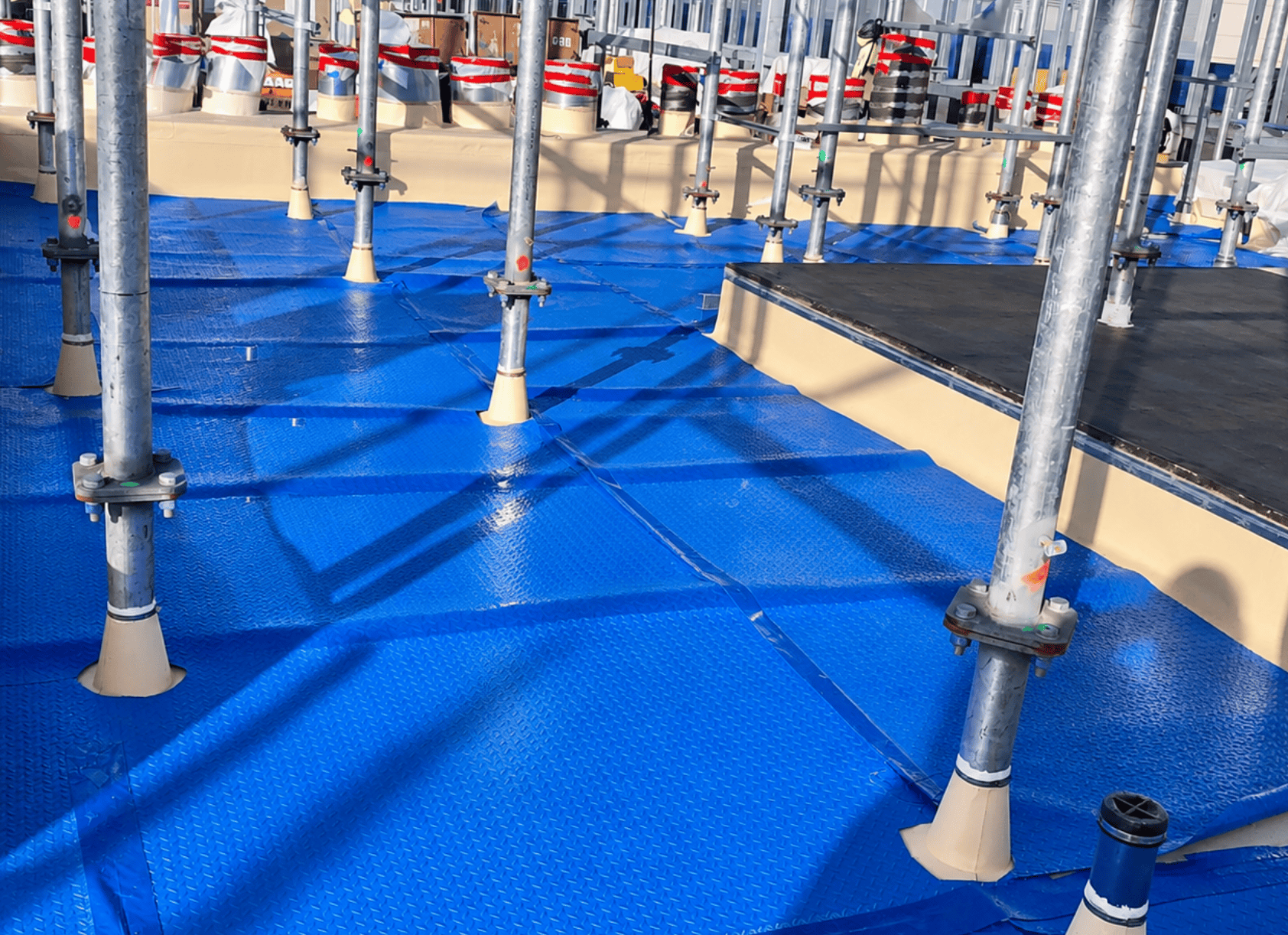
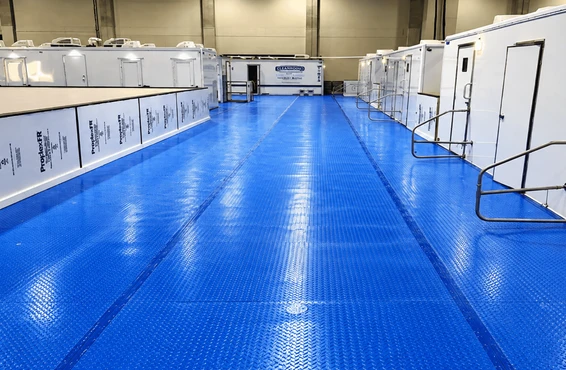
Plan temporary surface protection for power plant outages by zone. For nuclear refueling outages and other scheduled maintenance, use Cover Guard 40 mil 72" × 120' flame-retardant diamond plate on laydown areas, scaffold staging, and heavy cart routes, 25 mil in general work areas, and 10 mil on foot-traffic walkways, subject to your site's specifications. Cover Guard's catalog states that all of its blue flame-retardant products are certified to NFPA 701. That certification supports, but does not replace, your site's own approval. Estimate rolls by zone, add seam tape for every joint, and order by the skid early enough that material is approved and staged before the outage starts.
Why Power Plant Maintenance Floor Protection Matters During Outages
A refueling or maintenance outage compresses weeks of work into a tight window, with large contractor crews, carts, scaffolding, and equipment moving through coated floors and finished areas at once. Every gouge in a floor coating becomes extra repair work that competes with the critical path. Industrial temporary surface protection that installs fast, stays in place, and comes up clean protects both the plant's surfaces and the outage schedule.
Any temporary material brought into a plant is also subject to the site's fire protection program and transient combustible controls. For flame-retardant floor protection requirements and material characteristics, see our industrial fire-retardant floor protection guide.
Nuclear Outage Floor Protection: Site Requirements to Clear Before You Order
- Fire protection approval. Submit Cover Guard's NFPA 701 documentation to the site fire protection group for review as a transient combustible. NFPA 701 test results alone do not establish suitability for a nuclear facility, so site-specific approval is still required.
- Procurement and QA documentation. If your purchasing or quality group needs product documentation with the order, contact Spycor Environmental before ordering to confirm what's available.
- Radiologically controlled areas. If protection will be used inside an RCA, follow your site's radiation protection requirements for bringing material in, using it, and removing it, including whether it can be released for reuse.
- Housekeeping and foreign material exclusion. Plan where protection starts and stops so seams stay taped and edges don't create trip points or loose material near open systems.
Which Surfaces Need Protection During an Outage?
Area or surface |
Typical risk during the outage |
Protection approach |
|---|---|---|
| Coated or epoxy floors along material routes | Gouges from carts, pallet jacks, and dropped tools | Continuous 40 mil runs with taped seams |
| Laydown, staging, and turbine deck work areas | Heavy equipment, scaffold components, point loads | 40 mil covering the full footprint |
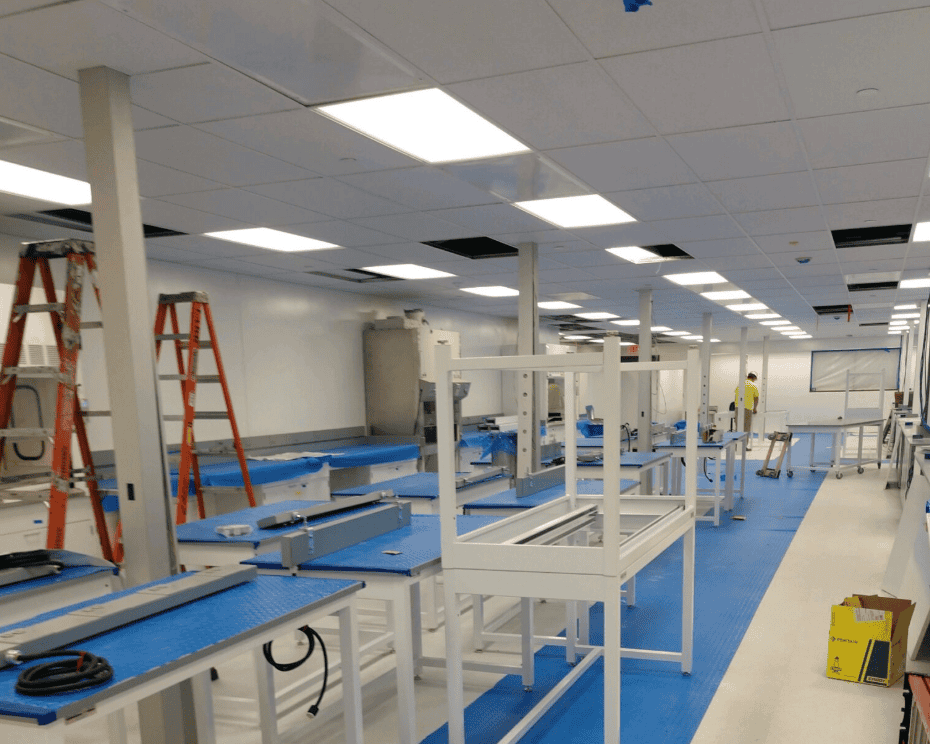
| Control rooms, offices, and finished corridors | Foot traffic, debris, tracked-in grime | 10 mil along walking paths |
| Walls, panels, and vertical finishes along routes | Scuffs and impacts from carried material | 20 or 30 mil smooth-finish rolls |
| Equipment, fixtures, and fittings near the work | Overspray, debris, impact | Cut-to-fit sheets to wrap or cover |
How to Choose Flame-Retardant Floor Protection Thickness by Traffic
Cover Guard's flame-retardant range comes in 10, 25, and 40 mil diamond plate and 20 and 30 mil smooth finish. Thicker material gives more puncture and impact resistance. Use this guide as a starting point and confirm against your project specification.
Zone |
Traffic and loads |
Suggested Cover Guard FR product |
|---|---|---|
| Laydown, scaffold staging, heavy cart routes | Heavy equipment, scaffolding, loaded carts | 40 mil diamond plate, 72" × 120' (or 36" × 120' for narrow routes) |
| General work areas | Mixed foot and cart traffic | 25 mil diamond plate (36" or 72" × 180') |
| Walkways, corridors, control rooms | Mostly foot traffic | 10 mil diamond plate (36" or 72" × 393', or 36" × 100' short roll) |
| Walls, panels, counters, vertical surfaces | Contact and scuffing | 20 mil (48" × 100') or 30 mil (36" × 100') smooth finish |
The embossed diamond plate texture is designed to add traction underfoot. If your site requires documented slip-resistance testing, request current test data from the manufacturer. The blue color identifies the flame-retardant version on site, and Cover Guard is resistant to water and most chemicals and solvents. Full product details are in the Cover Guard product catalog.
How to Estimate Rolls and Seam Tape for Large Outages
Measure each zone, divide by the coverage of the roll you plan to use, and round up. Add an allowance for seams, cuts, and obstructions. The table shows gross area before that allowance, using 72" rolls.
Area to cover |
40 mil 72" × 120' (720 sq. ft./roll) |
25 mil 72" × 180' (1,080 sq. ft./roll) |
10 mil 72" × 393' (2,358 sq. ft./roll) |
|---|---|---|---|
| 5,000 sq. ft. | 7 rolls | 5 rolls | 3 rolls |
| 10,000 sq. ft. | 14 rolls | 10 rolls | 5 rolls |
| 17,280 sq. ft. | 24 rolls (2 skids + 6) | 16 rolls (1 skid + 7) | 8 rolls |
| 25,000 sq. ft. | 35 rolls (3 skids + 8) | 24 rolls (2 skids + 6) | 11 rolls (1 skid + 2) |
| 50,000 sq. ft. | 70 rolls (7 skids + 7) | 47 rolls (5 skids + 2) | 22 rolls (2 skids + 4) |
| Roll weight | 152 lbs. | 140 lbs. | 120 lbs. |
Coverage, roll weights, and 9 rolls per skid for 72" rolls are from the Cover Guard product catalog.
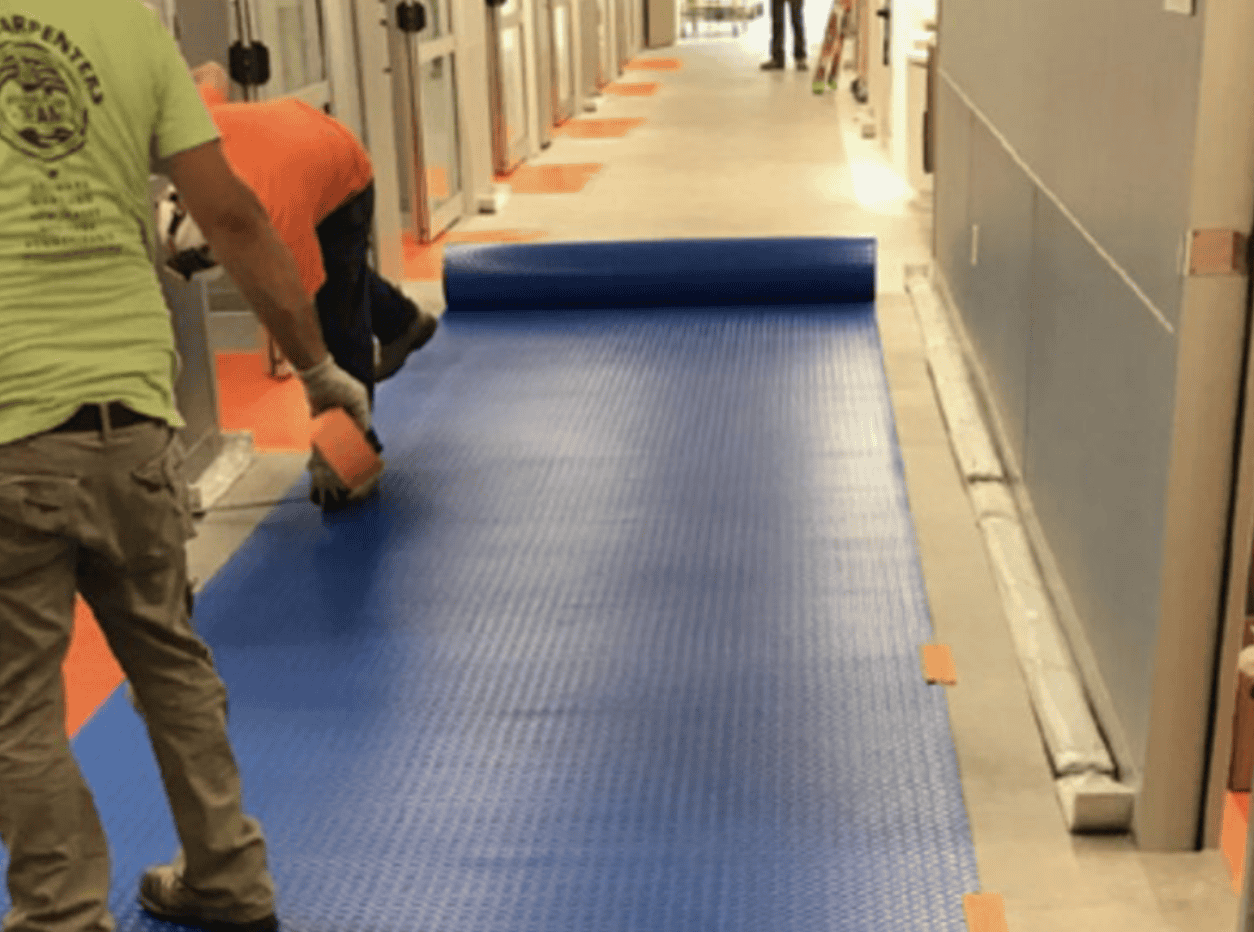
Worked example: a 100' × 60' laydown area (6,000 sq. ft.) in 40 mil. With 72" (6') rolls, the area takes 10 runs of 100 ft. Each 120 ft. roll covers one run, so you need 10 rolls. The 10 runs create 9 seams of 100 ft. each, or 900 linear ft. of seam. At 165 ft. per roll of Cover Guard seam tape, that's 6 rolls of tape.
Plan for handling, too. At 152 lbs. per 72" roll of 40 mil, 24 rolls weigh 3,648 lbs. before pallet and packaging weight. Factor that into delivery, receiving, rigging, and how material moves through the plant's access points.
Shop Cover Guard 40 mil 72" × 120' FR
How to Plan Bulk Purchases Before a Power Plant Outage
- Take off each zone early. Use the outage plan to measure laydown areas, routes, and finished spaces, then assign a thickness to each.
- Clear site approvals first. Get fire protection review of the NFPA 701 documentation and confirm any procurement documentation before the purchase order goes out.
- Order by the skid. 72" rolls ship 9 per skid, which simplifies receiving, staging, and inventory.
- Build in shipping time. Spycor freight deliveries typically take 1–8 business days depending on product and location, so order well ahead of the outage start.
- Stage by zone. Label pallets by area so crews can lay protection on day one.
- Plan for reuse where allowed. Cover Guard can be cleaned and reused, so roll and store intact material from non-restricted areas for the next outage.
Which Cover Guard Should You Buy?
Buyer |
Recommended products |
Why |
|---|---|---|
| Nuclear power facilities and utility maintenance groups | 40 mil 72" × 120' by the skid, plus seam tape | Heaviest FR protection for laydown and equipment routes, with the fewest seams |
| Power generation maintenance and outage contractors | 40 mil 72" for heavy zones, 25 mil 72" for work areas | Matches protection to each zone of the outage plan |
| Industrial safety and MRO distributors supplying plants | 40 mil 72" and 25 mil 72" in skid quantities | Stock the sizes plants order for outage season. Contact Spycor for volume and reseller pricing |
| Industrial facility maintenance teams | 25 mil or 10 mil 72" rolls | Reusable protection for planned shutdowns and recurring maintenance |
Bottom line: make Cover Guard 40 mil 72" × 120' the core of your outage order for laydown and heavy routes, add 25 mil 72" × 180' for general work areas and seam tape for every joint, and compare all sizes on the Cover Guard Temporary Surface Protection page.
Planning an outage order or stocking for resale?
Contact Spycor Environmental for volume quotes and delivery timing.
Frequently Asked Questions
What Cover Guard thickness is best for a nuclear outage laydown area?
40 mil diamond plate is the heaviest option in the Cover Guard flame-retardant range and the usual choice for laydown areas, scaffold staging, and heavy cart routes. Confirm the choice against your site and project specifications.
Is Cover Guard approved for use in nuclear power plants?
Approval is made by each site. Cover Guard's catalog states its blue flame-retardant products are certified to NFPA 701, which you can submit to the site fire protection group for review. NFPA 701 alone does not establish suitability for a nuclear facility.
How many rolls of Cover Guard 40 mil 72" do I need?
Divide the area by 720 sq. ft. per roll and round up, before waste and seams. For example, 10,000 sq. ft. needs 14 rolls, and 25,000 sq. ft. needs 35 rolls (3 skids plus 8 rolls).
How much seam tape do I need?
Add up the linear feet of every seam and divide by 165 ft. per roll of Cover Guard seam tape. For example, 900 linear ft. of seams needs 6 rolls.
Can Cover Guard be reused for the next outage?
Cover Guard can be cleaned and reused. Material used inside radiologically controlled areas must follow your site's release requirements before reuse.