
Posted by Spycor LLC on Apr 15th 2025
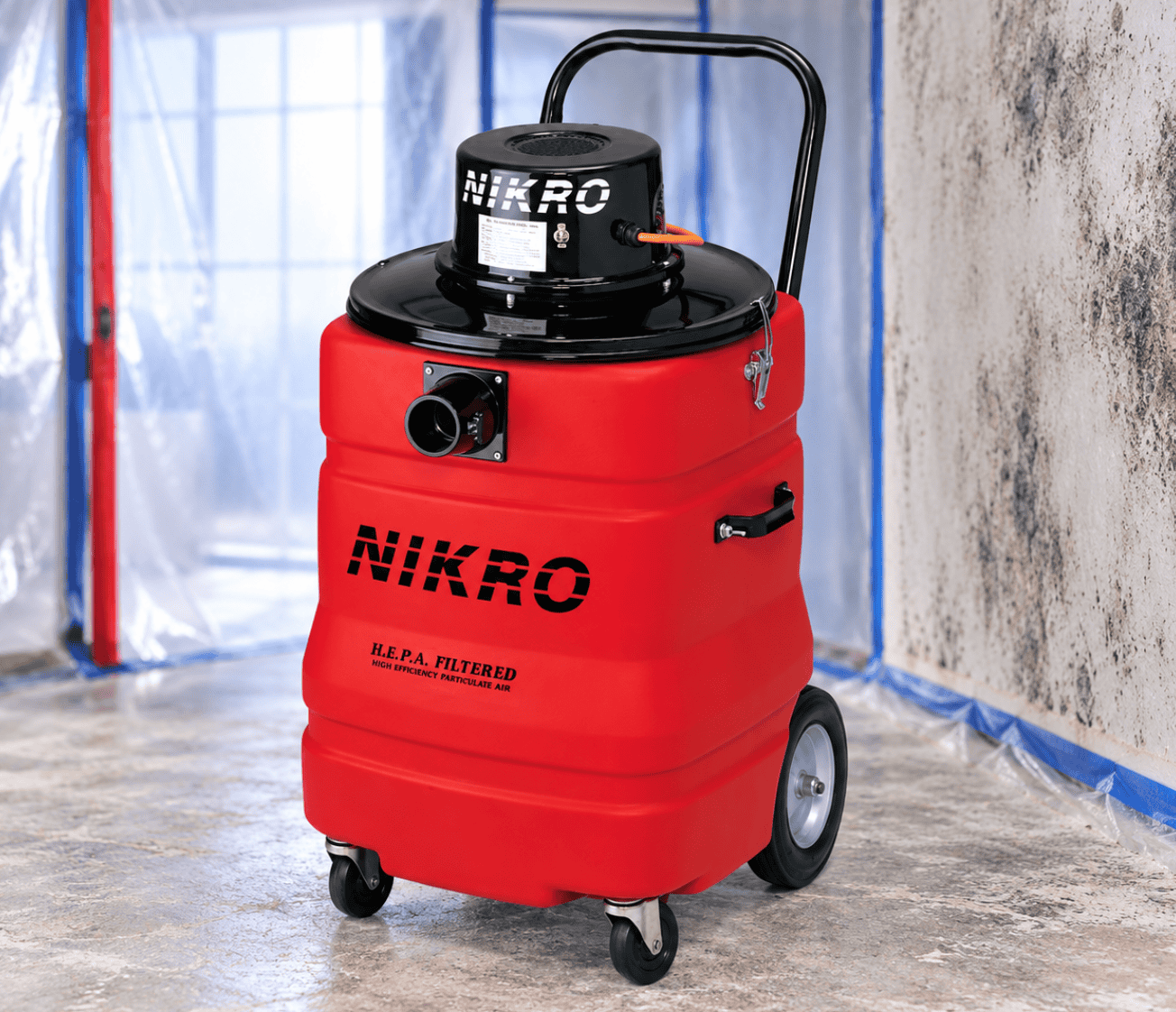
The best HEPA vacuum for professional mold, flood and asbestos cleanup is the NIKRO PD15110, a 15-gallon dry unit with a 99.99% HEPA filter, 115 CFM and 110 inches of water lift. For flood jobs where you also pick up water, choose its wet/dry twin, the NIKRO PW15110. Whatever you buy, look for a HEPA filter tested to 99.97% at 0.3 microns, sealed so no air bypasses it.
Mold remediation, water-damage restoration and asbestos abatement all produce fine, hazardous dust that an ordinary shop vacuum blows back into the room. A professional HEPA vacuum captures that dust and holds it inside a sealed housing until it can be disposed of.
This guide compares seven professional HEPA vacuums from NIKRO, Abatement Technologies and Nilfisk that Spycor Environmental supplies to remediation and abatement contractors. We compare them on filtration efficiency, airflow (CFM), water lift, capacity, weight and wet/dry capability, then match each one to the job it does best. Every HEPA and ULPA vacuum Spycor sells meets or exceeds OSHA/EPA critical filter standards, with HEPA filters individually tested to IEST-RP-CC001.
Best HEPA Vacuums for Mold, Flood, and Asbestos Compared
The NIKRO PD15110 and PW15110 lead on filtration (99.99% at 0.3 microns) and capacity. The V8000WD moves the most air, and the GD930 PRO and BP00288 trade capacity for low weight.
|
Model |
Best for |
Type |
Capacity (gal) |
Airflow (CFM) |
Water lift (in) |
HEPA rating @ 0.3 µm |
Weight (lb) |
|---|---|---|---|---|---|---|---|
|
Best overall; mold and asbestos |
Dry |
15 |
115 |
110 |
99.99% |
53 |
|
|
Flood and water-damage cleanup |
Wet/dry |
15 |
115 |
110 |
99.99% |
65 |
|
|
Compact dry |
Dry |
10 |
112 |
107 |
99.97% |
25 |
|
|
Compact wet/dry |
Wet/dry |
10 |
112 |
107 |
99.97% |
36 |
|
|
Portable wet/dry canister |
Wet/dry |
8 |
135 |
92 |
99.97% |
32 |
|
|
Occupied buildings, detail cleaning |
Dry |
4 |
≈74 (35 L/s) |
≈92 (23 kPa) |
HEPA H13, 99.97% |
17.6 |
|
|
Overhead, attics, wall cavities |
Dry backpack |
— |
95 |
88 |
99.97% |
16 |
At a glance
- Best overall for mold and asbestos: NIKRO PD15110 (15 gal, dry)
- Best for flood and water damage: NIKRO PW15110 (15 gal)
- Best compact: NIKRO PD10088 (10 gal, 25 lb)
- Best compact wet/dry: NIKRO PW10088 (10 gal)
- Best portable wet/dry canister: Abatement Technologies V8000WD (8 gal, 32 lb)
- Best for occupied buildings and detail work: Nilfisk Euroclean GD930 PRO (57 dB(A))
- Best lightweight: NIKRO BP00288 Back-Pak (16 lb)
-
Best for large commercial losses: NIKRO HD55110 (55 gal)
Top-Rated HEPA Vacuums for Remediation Contractors
NIKRO PD15110: Best Overall HEPA Vacuum for Mold and Asbestos
The NIKRO PD15110 is the best all-round choice because it pairs a 99.99% HEPA filter with enough capacity for whole-house mold jobs. A 2 HP motor delivers 115 CFM and 110 inches of water lift.
Its 5-stage filtration (collection bag, filter protector, Dacron filter bag, impaction filter, final HEPA) keeps the HEPA from loading up early on heavy debris. The polyethylene tank is dent- and corrosion-proof, and an optional conversion kit (#860818) adds wet pickup.
- Choose it if: you run multi-room or whole-house mold jobs on dried materials.
- Skip it if: you need to carry the unit up ladders or into attics. At 53 lb, it is a cart machine.
- Also used for asbestos work: see Best HEPA Vacuum for Asbestos Removal: NIKRO PD15110.
NIKRO PW15110: HEPA Vacuum for Flood and Water Damage
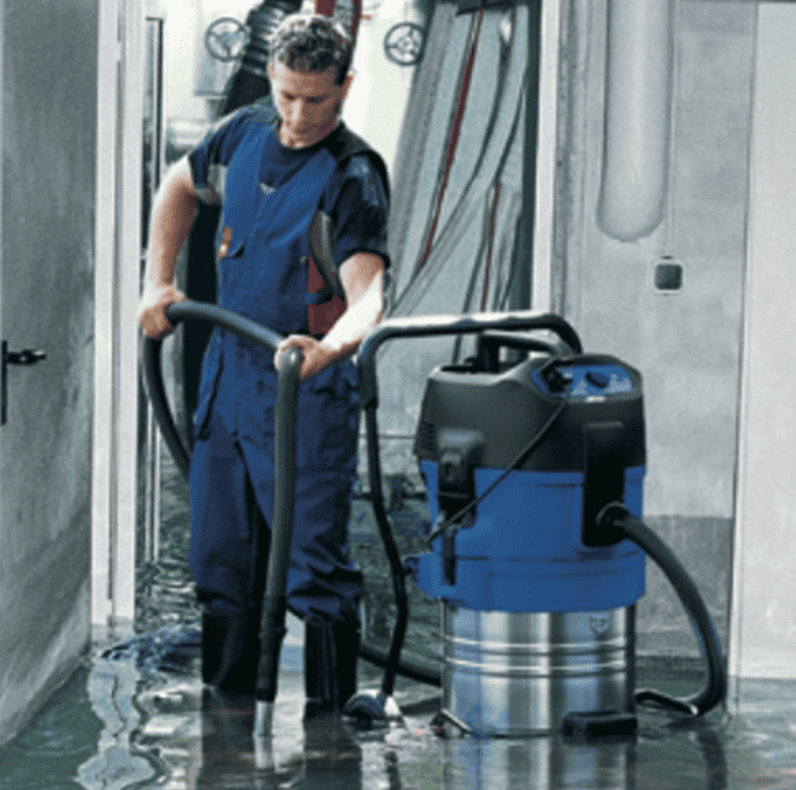
The NIKRO PW15110 is the wet/dry version of the PD15110, with the same 99.99% HEPA rating, 115 CFM and 110-inch water lift. It picks up residual water and wet debris on flood and leak losses, then handles the mold cleanup that follows.
- Choose it if: your work starts on water-loss jobs and you want one machine for both phases.
- Skip it if: your jobs are dry. At 65 lb it is the heaviest unit here.
NIKRO PD10088: Best Compact HEPA Vacuum for Mold
The NIKRO PD10088 delivers 112 CFM and 107 inches of water lift from a 25 lb, 10-gallon unit. That is close to the 15-gallon models' performance at half the weight.
It uses the same 5-stage design with a 99.97% HEPA filter and includes a 5-piece tool kit. Kit #861119 converts it to wet pickup.
- Choose it if: you work single rooms, bathrooms, crawlspaces or small commercial suites.
- Skip it if: you clear large debris volumes and want fewer bag changes.
NIKRO PW10088: Best Compact Wet/Dry HEPA Vacuum
The NIKRO PW10088 is the wet/dry version of the PD10088: 112 CFM, 107-inch water lift, 99.97% HEPA, 36 lb, with a 6-piece tool kit.
- Choose it if: you handle small water-damage jobs and want one compact unit.
- Skip it if: you need 99.99% filtration. Step up to the PW15110.
Abatement Technologies V8000WD: Best Portable Wet/Dry Canister
The V8000WD packs 135 CFM, the highest airflow in this group, into a 32 lb, 8-gallon canister. Its water lift is 92 inches, and its HEPA filter is rated 99.97% at 0.3 microns.
A built-in Push & Clean system clears the filter without tools, which helps hold suction through a long mold job. It is ETL tested and certified for electrical safety.
- Choose it if: you need wet/dry capability in a unit one tech can carry between floors.
- Skip it if: you need more than 8 gallons of capacity per load.
- Full review: Why the V8000WD Is the Best HEPA Wet/Dry Vacuum for Mold Remediation.
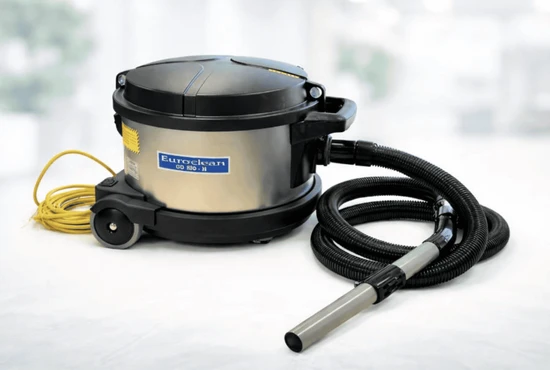
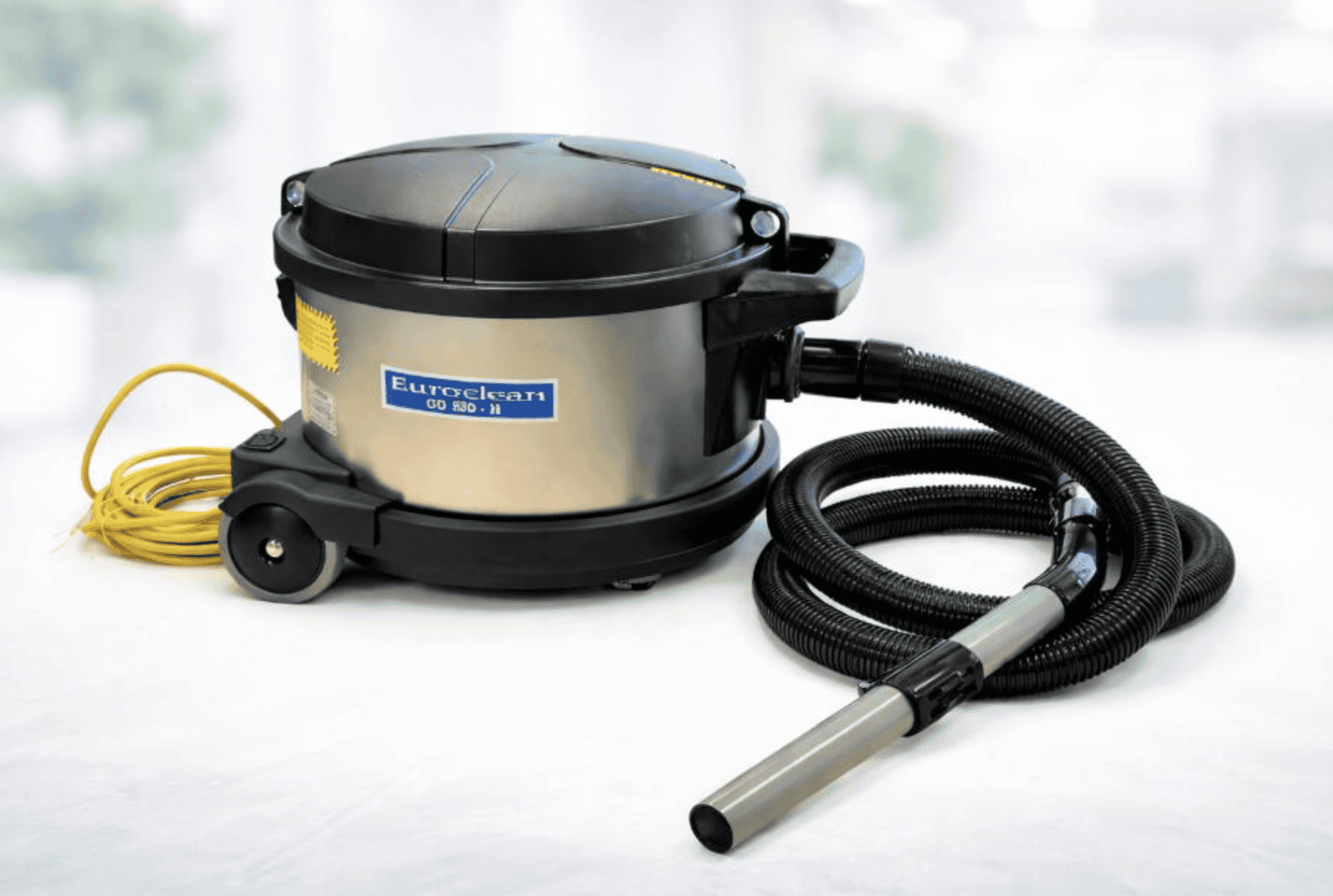
Nilfisk Euroclean GD930 PRO: Best for Occupied Buildings
The Euroclean GD930 PRO is the quietest option here, at a 57 dB(A) sound pressure level. That makes it suited to mold work in occupied homes, offices and healthcare spaces.
It uses an upstream H13 HEPA filter mounted in the lid and a 3.96-gallon fleece bag. At 17.6 lb, it is the tool for final detail cleaning before clearance, not bulk debris removal.
- Choose it if: you need a quiet, light unit for post-remediation detail cleaning or occupied spaces.
- Skip it if: you need wet pickup or bulk capacity.
NIKRO BP00288 Back-Pak: Best Lightweight HEPA Vacuum
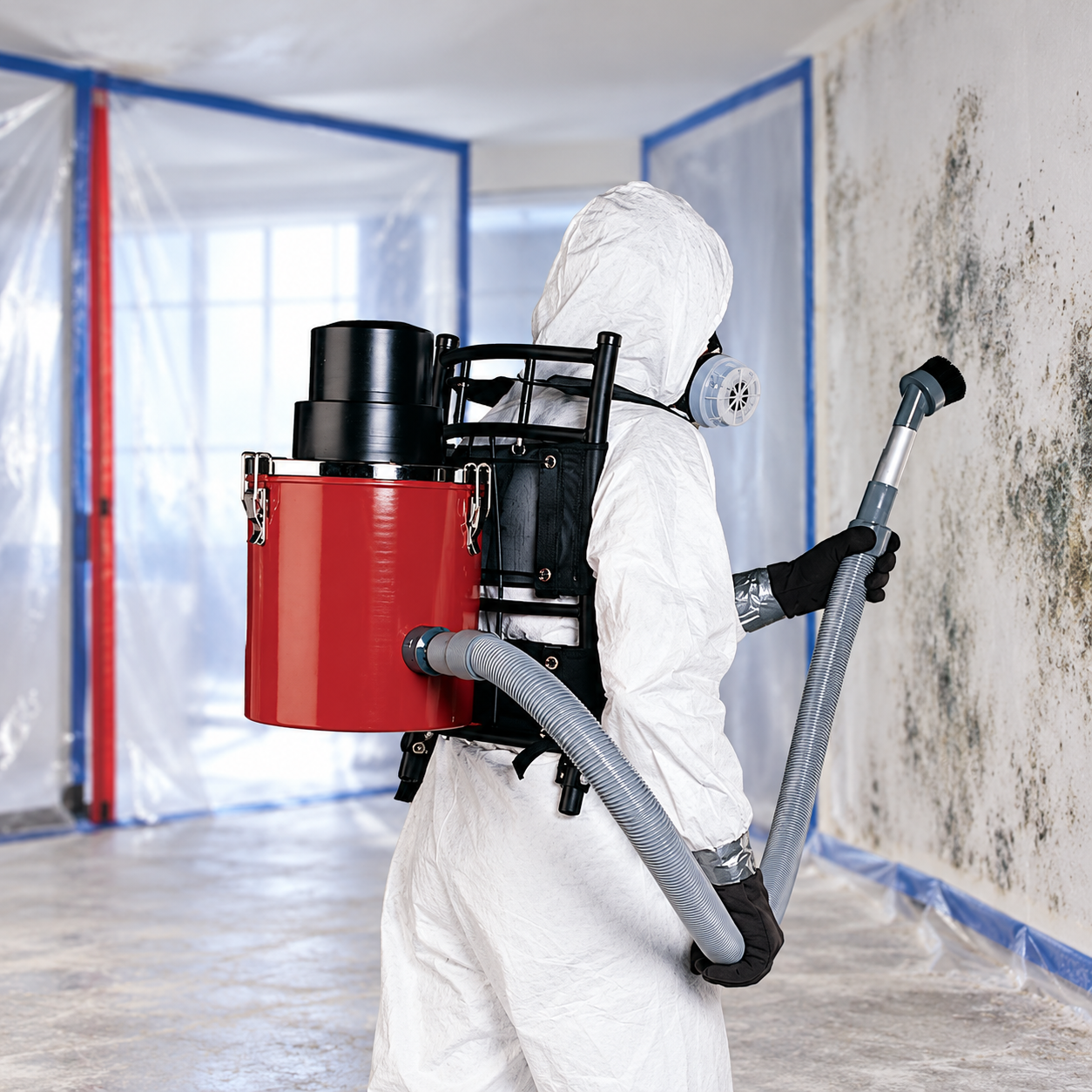
The NIKRO BP00288 weighs 16 lb, the lightest unit here, and is worn on the back. It delivers 95 CFM and 88 inches of water lift through a 99.97% HEPA filter.
It ships with a hose, crevice tool, dust brush, utility tool and 2-piece wand.
- Choose it if: you vacuum wall cavities, ceilings, attics or anywhere a canister cannot follow you.
- Skip it if: you need wet pickup or high debris volume.
Best HEPA Vacuum for Mold Remediation
Best pick: NIKRO PD15110 for whole-house jobs, NIKRO PD10088 for single rooms, and the GD930 PRO for final detail cleaning in occupied spaces.
A HEPA vacuum removes settled mold spores and contaminated dust from surfaces. Most spores are several microns across, larger than the 0.3-micron particle size HEPA filters are rated at. A vacuum without a sealed, tested HEPA filter lets fine spores pass through and out the exhaust, spreading contamination beyond containment.
What the standards say:
- EPA states that it does not regulate mold, and there is no OSHA standard specific to mold.
- EPA's mold remediation guidance recommends HEPA vacuuming for final cleanup, after contaminated materials are removed and the area is thoroughly dried.
- ANSI/IICRC S520 is the industry standard of care for professional mold remediation, and some states license mold remediators.
In practice, treat a HEPA vacuum as essential equipment on every mold job. A common sequence before clearance testing is HEPA vacuum, damp wipe, then HEPA vacuum again.
HEPA vacuuming does not remove the moisture source or growth inside porous materials such as drywall and insulation, which usually have to be removed. It also only cleans surfaces. Pair it with an air scrubber to capture airborne spores and a negative air machine to keep containment under negative pressure, sized with Spycor's Air Flow Calculator.
Best HEPA Vacuum for Flood and Water Damage Cleanup
Best pick: NIKRO PW15110 for most water-loss jobs, the V8000WD when one tech has to carry the unit, and the PW10088 for small leaks.
Flood cleanup runs in three phases, and the first needs a different machine:
- Bulk water removal. Standing water goes to a dedicated extractor or pump-out system such as the Abatement Technologies Mega-Pump Water Removal Vacuum System, not a HEPA vacuum.
- Residual water and contaminated debris. A wet/dry HEPA vacuum picks up the remaining water, silt and wet debris without exhausting fine particles back into the space.
- Post-drying cleanup. Once materials are dry, a HEPA vacuum removes settled dust and any mold that started before drying finished.
Speed matters because EPA advises drying water-damaged materials within 24 to 48 hours to prevent mold growth. A wet/dry HEPA unit lets one machine cover phases 2 and 3, which is why the PW15110 is the pick here.
Never run a dry HEPA vacuum on water. Moisture can ruin a HEPA filter that is not designed for wet use. Use a wet/dry HEPA model, or fit the PD15110 or PD10088 with its wet conversion kit, and follow the manufacturer's filter setup for wet mode. Water-damage work follows the ANSI/IICRC S500 standard.
Best HEPA Vacuum for Asbestos Removal
Best pick: NIKRO PD15110 for most abatement jobs, the NIKRO HD55110 (55 gal) for large commercial or demolition projects, and the BP00288 for overhead and cavity work.
Unlike mold, asbestos cleanup has hard federal requirements. OSHA's construction asbestos standard, 29 CFR 1926.1101, requires HEPA-filtered vacuums alongside wet methods and prompt bagging of waste. EPA's asbestos NESHAP (40 CFR 61, Subpart M) also governs renovation and demolition work.
OSHA and EPA do not certify or approve vacuum models. Compliance depends on the filter's tested performance and how the vacuum is used. Look for:
- A HEPA filter certified by the manufacturer to at least 99.97% efficiency at 0.3 microns, individually tested
- A sealed housing so no air bypasses the filter
- Multi-stage pre-filtration, so the HEPA is not overloaded by bulk debris
Check local rules too. Some air districts permit asbestos HEPA vacuums one unit at a time. California's Mojave Desert AQMD, for example, requires that units be emptied inside a negative air enclosure and that filters and collected waste be disposed of as friable asbestos waste.
Asbestos abatement must be done by trained, and where required licensed, professionals with proper PPE and containment. For a full breakdown, see Best HEPA Vacuum for Asbestos Removal: NIKRO PD15110.
How to Choose a Professional HEPA Vacuum
Choose on filtration first, then job type, then size and weight. Check these five things before you buy:
- A tested HEPA filter, not "HEPA-type." Look for a stated efficiency of at least 99.97% at 0.3 microns, individually tested.
- Sealed housing. A HEPA filter only works if air cannot bypass it, so confirm the unit is gasketed and all exhaust passes through the HEPA.
- Pre-filtration stages. Bags, Dacron filters and impaction filters catch debris before it reaches the HEPA and extend its life.
- Dry or wet/dry. Match it to whether your jobs include water.
- Capacity vs. portability. Bigger tanks mean fewer changes; lighter units reach more places.
What Size HEPA Vacuum Do Contractors Need?
For most residential and light-commercial jobs, a 10- or 15-gallon HEPA vacuum balances capacity and portability. Many crews carry one 15-gallon unit plus a backpack or 4-gallon canister for detail work.
|
Job size |
Recommended size |
Spycor models |
|---|---|---|
|
Overhead, wall cavities, attics |
Backpack |
|
|
Detail cleaning, occupied spaces |
4 gal canister |
|
|
Single room, bathroom, crawlspace |
8–10 gal |
|
|
Multi-room or whole house |
15 gal |
|
|
Large commercial losses, demolition |
55 gal |
Commercial HEPA Vacuum vs. Household HEPA Vacuum
A household HEPA vacuum is not a substitute for a professional unit on remediation or abatement work. Home models are built and tested for allergens on clean floors, and many carry a HEPA filter without a fully sealed housing or individual filter testing. Professional units add sealed housings, individually tested filters, multi-stage pre-filtration and 4- to 55-gallon capacities built for contaminated debris.
HEPA Vacuum vs. Shop Vacuum
A standard shop vacuum without a tested HEPA filter in a sealed housing lets fine particles pass through and out the exhaust. What matters is the filtration and sealing, not the vacuum's style: a wet/dry unit built with true HEPA filtration, such as the PW15110, is suitable.
HEPA Vacuum vs. Air Scrubber
You need both. A HEPA vacuum cleans surfaces. An air scrubber captures airborne particles, and a negative air machine keeps containment under negative pressure. Size the air side with Spycor.com's Air Flow Calculator.
HEPA Vacuum FAQs for Mold, Flood, and Asbestos Cleanup
What is the best HEPA vacuum for mold remediation?
The NIKRO PD15110 is the best overall HEPA vacuum for mold remediation, with a 99.99% HEPA filter, 115 CFM and a 15-gallon tank. For mold that follows water damage, choose the NIKRO PW15110 wet/dry.
What is the best HEPA vacuum for asbestos removal?
The NIKRO PD15110 suits most asbestos abatement jobs because of its 99.99% HEPA filter and 5-stage filtration. For large commercial or demolition projects, step up to a 55-gallon NIKRO HD55110.
What is the best HEPA vacuum for flood cleanup?
The NIKRO PW15110 is the best HEPA vacuum for flood cleanup because it handles residual water and the mold cleanup that follows. Remove standing water first with a dedicated extractor such as the Mega-Pump.
Does OSHA or EPA require a HEPA vacuum?
For asbestos, yes: OSHA 29 CFR 1926.1101 requires HEPA-filtered vacuums. For lead renovation work, EPA's RRP rule requires HEPA vacuums that meet its definition. For mold, no federal rule applies, but EPA guidance and ANSI/IICRC S520 call for HEPA vacuuming.
Are HEPA vacuums OSHA-certified?
No. OSHA and EPA do not certify vacuum models. Compliance depends on a tested HEPA filter of at least 99.97% at 0.3 microns, a sealed housing and correct work practices.
Can I use a dry HEPA vacuum on water?
No. Moisture can damage a HEPA filter not designed for wet use. Use a wet/dry HEPA vacuum such as the PW15110, PW10088 or V8000WD, or a dry NIKRO fitted with its wet conversion kit.
Is 99.99% HEPA better than 99.97% HEPA?
Both meet the HEPA standard. A 99.99% filter, as on the PD15110 and PW15110, lets fewer particles through at 0.3 microns, which adds margin on asbestos and heavy mold jobs.
What size HEPA vacuum is best for contractors?
A 10- or 15-gallon unit covers most residential and light-commercial work. Add a backpack or 4-gallon canister for overhead and detail cleaning, and a 55-gallon unit for large losses.
Can a household HEPA vacuum be used for mold or asbestos?
It is not recommended. Household units are not built with sealed housings, individually tested filters or capacity for contaminated debris, and they do not meet asbestos work-practice requirements.
How often should I replace the HEPA filter?
Replace it when suction stays low after pre-filters are changed, when it is damaged or wet beyond its design, or on the manufacturer's schedule. See our commercial HEPA filter replacement guide.