Posted by Spycor LLC on Aug 21st 2026
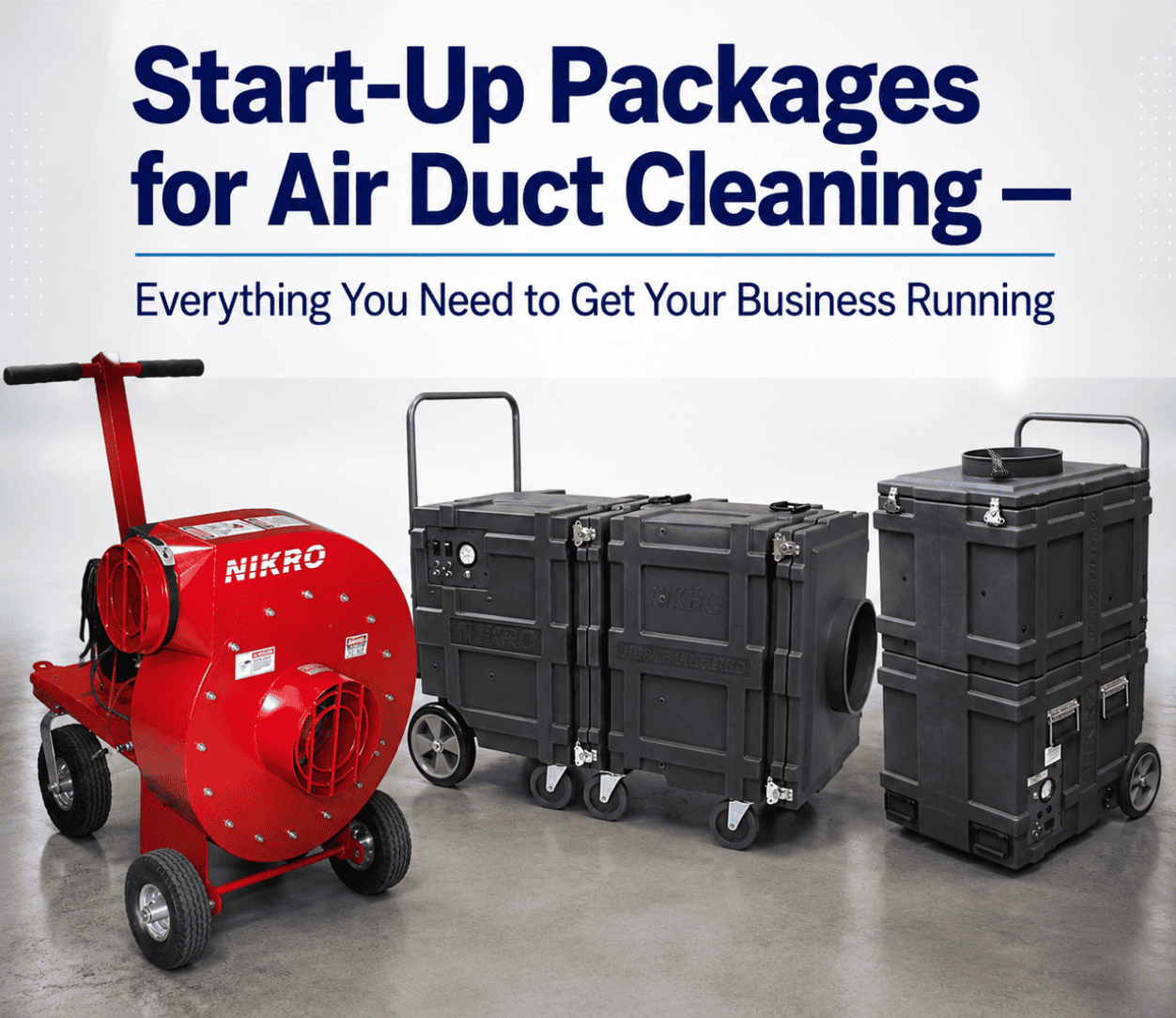
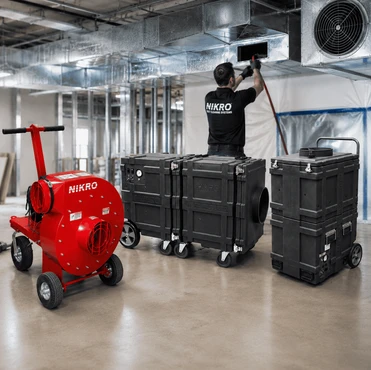
To start an air duct cleaning business, you'll typically need a vacuum collection system, an air compressor, duct-cleaning brushes and agitation tools, hoses and connection accessories, access and repair tools, and appropriate safety equipment. Depending on the services you plan to offer, you may also want a HEPA vacuum, a fogger for sanitizing, and inspection tools. Rather than sourcing each component separately, many contractors choose a pre-configured start-up package that combines compatible, matched equipment into one system. This guide breaks down what each component does and how to choose the right setup for your business.
Air Duct Cleaning Equipment Checklist
| # | Category | What It Does |
|---|---|---|
| 1 | Vacuum Collection System | Creates negative pressure inside the duct run and captures dislodged debris so it doesn't blow back into the home or building |
| 2 | Air Compressor | Powers pneumatic whip and blast tools that dislodge debris from duct walls |
| 3 | Brushes & Agitation Tools | Mechanically scrubs duct interiors; interchangeable brush heads for different debris types |
| 4 | Hoses, Flex Duct & Connections | Connects the vacuum to the ductwork through a cut access point without losing suction |
| 5 | Access & Repair Equipment | Lets you cut, inspect, and reseal access points without damaging the system |
| 6 | Safety, HEPA & Sanitizing Equipment | Protects your crew, and lets you offer post-cleaning antimicrobial treatment as a service add-on |
1. Vacuum Collection System
The vacuum is the core of the system: it holds the duct run under negative pressure while brushes or pneumatic tools dislodge debris, so loosened material is captured rather than pushed into the living space. Vacuum collection systems in this category are commonly rated in CFM (cubic feet per minute) at "Free Air" — the manufacturer's rated airflow with no duct or filter resistance attached. Higher CFM generally means more capacity for larger duct runs and bigger jobs, though NADCA's cleaning standard itself is defined by outcome (source-removal cleaning under continuous negative pressure, verified by post-clean inspection) rather than a single fixed CFM threshold — so the right CFM for you depends more on the scale of jobs you plan to take than any universal minimum.
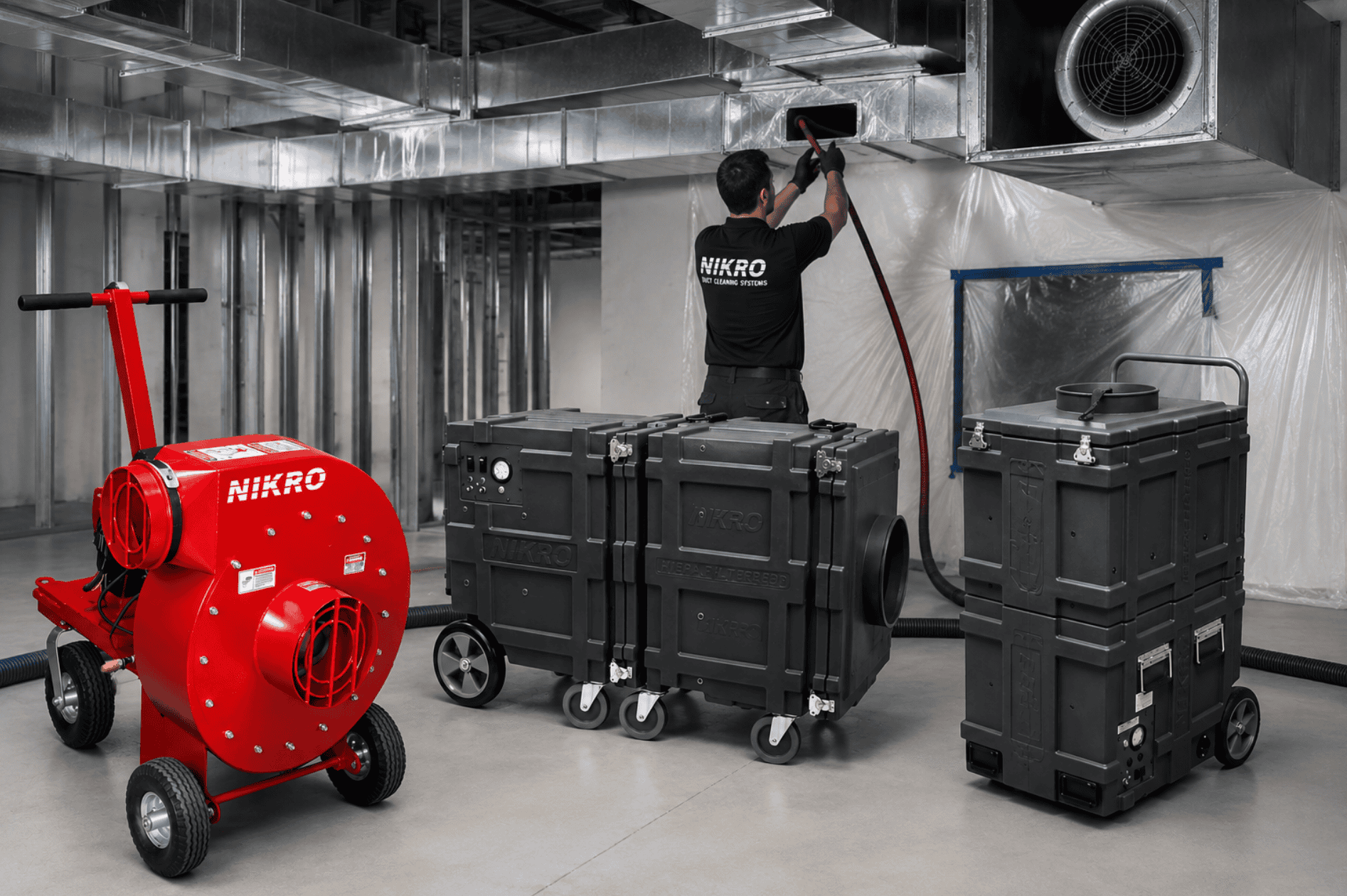
Example: NIKRO's PDC2400 (2,500 CFM Free Air) and PDC4000 (5,000 CFM Free Air) systems, and the HP20GAS 20 HP gasoline-powered system, represent three different capacity tiers within one manufacturer's lineup.
2. Air Compressor
The compressor supplies compressed air to pneumatic whip and blast tools, which do the actual work of knocking debris loose from duct interior surfaces. Compressors in start-up packages generally fall into two categories:
- Electric compressors — plug into standard site power, quieter, lower CFM/PSI output (e.g., a 115V unit rated 10.5 CFM displacement, 150 PSI)
- Gasoline compressors — run independent of site power, higher output (commonly 9 HP Honda-engine units rated around 24.4 CFM displacement, 175 PSI, up to larger units)
3. Brushes & Agitation Tools
Rotary brush systems mechanically scrub the interior duct surface. Kits typically include interchangeable brush heads in multiple diameters and two material types — nylon brushes for lighter debris, and silicon carbide brushes for caked-on or heavier buildup — mounted on a flexible inner rod (commonly 20').
4. Hoses, Flex Duct & Connections
To connect the vacuum system to the customer's ductwork, you need flex duct (commonly sold in 8" and 12" diameters), duct mounting flanges, and quick-connect hose clamps. This hardware seals the connection at the cut access point so the system maintains negative pressure throughout the run.
5. Access & Repair Equipment
Cleaning most duct systems requires cutting a temporary access point, then resealing it afterward. This category includes hole cutters and uni-bits for cutting access points, metal patches and self-tap zip screws for resealing, and cap plugs for temporarily capping registers during cleaning.
6. Safety, HEPA & Sanitizing Equipment
This category covers what protects your crew and what lets you offer sanitizing as part of the service: HEPA-filtered vacuums for fine-particulate cleanup, ULV foggers and antimicrobial duct sanitizer for post-cleaning treatment, and basic PPE such as shoe covers. Sanitizing equipment is generally optional rather than required to clean a duct system, but including it lets an operator offer antimicrobial treatment as a standard add-on.
How Much Does Air Duct Cleaning Equipment Cost? {#cost}
Some industry sources estimate total equipment start-up costs for a new air duct cleaning business at roughly $10,000–$30,000 (ZenBusiness), though that figure varies by source and isn't tied to a specific, itemized equipment list. Below are current, real prices for five in-stock NIKRO start-up packages sold through Spycor Environmental, so you can see what that range actually buys:
| Package | Price (MSRP) |
|---|---|
| Nikro #1 – Basic | $6,320.36 |
| Nikro #2 – Intermediate | $9,947.00 |
| Nikro #3 – Deluxe | $11,695.00 |
| Nikro #4 – Gasoline Powered | $11,340.00 |
| Nikro #5 – Deluxe Gasoline | $12,995.00 |
Prices as listed on spycor.com at time of publication and subject to change; confirm current pricing on the product page before purchase.
Buy Equipment Individually, or a Start-Up Package?
You can source each equipment category separately — a vacuum from one supplier, a compressor from another, brushes and hoses elsewhere. The trade-off is that you're responsible for making sure every component is compatible: matching compressor PSI/CFM to the tools it needs to run, matching hose and flange diameters to the vacuum's intake, and sourcing safety certifications independently for each part.
A pre-configured start-up package bundles a matched set of components — vacuum, compressor, brush system, hoses, and (in some packages) HEPA vacuum and sanitizing equipment — designed by the manufacturer to work together at a stated CFM/PSI rating. This is a meaningful time and research trade-off for a new operator, though it isn't the only valid approach; some operators, particularly those adding duct cleaning to an existing HVAC or cleaning business, may already own some of these components and prefer to fill gaps individually.
Which NIKRO Start-Up Package Is Right for You?
Spycor Environmental sells five NIKRO start-up packages. Each package's product page states that it is ETL certified to conform to UL and CAN/CSA safety and flammability standards, and that NIKRO's air scrubbers/vacuum motors are NRTL-certified to UL Std. 507 and CAN/CSA Std. #C22.2 No.113 for electrical safety.
| Package | Price (MSRP) | Vacuum System | Power Source | Includes HEPA Vacuum / Fogger / Sanitizer? |
|---|---|---|---|---|
| Nikro #1 – Basic (SKU ADCPKG1) | $6,320.36 | PDC2400 – 2,500 CFM (Free Air) | 115V electric compressor | No |
| Nikro #2 – Intermediate (SKU ADCPKG2) | $9,947.00 | PDC4000 – 5,000 CFM (Free Air) | 9 HP Honda gasoline compressor | No |
| Nikro #3 – Deluxe (SKU ADCPKG3) | $11,695.00 | PDC4000 – 5,000 CFM (Free Air) | 9 HP Honda gasoline compressor | Yes — 10 gal HEPA vacuum, ULV fogger, sanitizer, plus marketing brochures |
| Nikro #4 – Gasoline Powered (SKU ADCPKG4) | $11,340.00 | HP20GAS – 20 HP gasoline system, filter bag collection | 20 HP primary + 9 HP secondary compressor | No |
| Nikro #5 – Deluxe Gasoline (SKU ADCPKG5) | $12,995.00 | HP20GAS – 20 HP gasoline system | 20 HP primary + 9 HP secondary compressor | Yes — 10 gal HEPA vacuum, ULV fogger, sanitizer, plus marketing brochures |
Note on pricing order: Package #4 is priced below Package #3 despite running a larger 20 HP gasoline vacuum system. This is because #3 includes a HEPA vacuum, fogger, sanitizer, and marketing brochures that #4 does not. If you're comparing strictly by vacuum system size, #4 and #5 are the largest. If you're comparing by completeness of kit (fewest add-on purchases needed), #3 and #5 include the most.
How to choose
| Your Situation | Consider | Why |
|---|---|---|
| First time offering duct cleaning, testing the market | Nikro #1 – Basic | Lowest capital outlay of the five packages |
| Ready to offer duct cleaning as a full-time residential service | Nikro #3 – Deluxe | 5,000 CFM system plus sanitizing and marketing materials included |
| Adding duct cleaning to an existing HVAC or cleaning company | Nikro #2 – Intermediate or #3 – Deluxe | 5,000 CFM system; you may already have marketing/sanitizing supplies from your existing business |
| Targeting larger commercial buildings or high-volume routes | Nikro #5 – Deluxe Gasoline | 20 HP system with the full sanitizing/HEPA kit included |
| Want the largest vacuum system at a lower price than Package #5 | Nikro #4 – Gasoline Powered | Same 20 HP motor as Package #5, without the HEPA vacuum/fogger/sanitizer add-ons |
Certification & Safety Standards to Look For
When evaluating any duct cleaning equipment package, check what safety certifications the manufacturer states and what they cover. On each of the five NIKRO packages above, Spycor's product pages state:
- ETL certification — "conform[s] to UL & CAN/CSA safety & flammability standards"
- NRTL certification — stated specifically as applying to "All Nikro Industries Air Scrubbers," certified to comply with UL Std. 507 and CAN/CSA Std. #C22.2 No.113 for electrical safety
These are the certification claims as published on the product pages; if a specific job or client requires certification documentation, request it directly from Spycor or NIKRO before bidding the work.
Ready to Equip Your Business?
Compare all five ETL-certified NIKRO Start-Up Packages, in stock status and current pricing shown on each product page.
Shop Air Duct Cleaning Start-Up Packages →
Questions about which package fits your business? Call 1 (877) 293-0784 or email support@spycor.com.
FAQ
How much does it cost to start an air duct cleaning business?
Some industry estimates put total equipment costs at roughly $10,000–$30,000. As a specific example, NIKRO start-up packages sold through Spycor range from $6,320.36 to $12,995.00 depending on vacuum capacity and included accessories.
What CFM do I need for air duct cleaning?
There's no single universal CFM minimum — NADCA's cleaning standard is defined by the outcome (source-removal cleaning under continuous negative pressure) rather than one fixed CFM number. In practice, manufacturers offer tiered options — for example, 2,500 CFM and 5,000 CFM (Free Air) systems, and larger 20 HP gasoline-powered systems — so the right choice depends on the size and type of jobs you plan to take.
Do I need an air compressor to clean air ducts?
Most professional duct cleaning systems use a compressor to power pneumatic whip and blast tools that dislodge debris, in combination with the vacuum that extracts it. Compressors are typically either electric (site-power-dependent) or gasoline-powered (independent of site power).
What's the difference between an electric and gasoline-powered duct cleaning compressor?
Compressors require an accessible power outlet at the job site and are generally quieter with lower output. Gasoline compressors run independent of site power and are available in a range of higher-output configurations.
Is a duct sanitizer or fogger necessary to start an air duct cleaning business?
It's optional equipment. Including a fogger and sanitizer lets an operator offer antimicrobial treatment as a standard service add-on, which some packages (like NIKRO's Deluxe tiers) include and others don't.
What certifications should air duct cleaning equipment have?
Look for stated ETL certification to UL and CAN/CSA safety and flammability standards, and NRTL certification for electrical safety. Confirm exactly what a given certification covers with the manufacturer or seller before relying on it for a bid or contract requirement.